

Wolfsburg: Autostadt, More than a Car Museum
Visiting Autostadt with a teen? Here’s what surprised us most about Wolfsburg’s automotive wonderland, from the Zeithaus exhibit and Porsche pavilion to giant car towers and quirky Volkswagen souvenirs.
Germany with a Teen: 10-Day Itinerary, Tips & Things to Do
After leaving Hamburg in our rental Cupra, Jack and I drove approximately 3 hours south on the autobahn to Wolfsburg, home of AutoStadt. We spent a quick night at a Premier Inn, whose purple decor oozed Temu vibes, but was entirely clean, serviceable and included a decent breakfast. (During trips, I try to balance “wow” hotels like the PierDrei in Hamburg with mid-priced options like the Premier Inn to make our budget stretch further.)
After breakfast, we headed across the street to explore Autostadt. Autostadt, which recently celebrated its 25th anniversary, is rather hard to explain and like many of my favorite stops in Europe, it was an experience rather than an attraction.
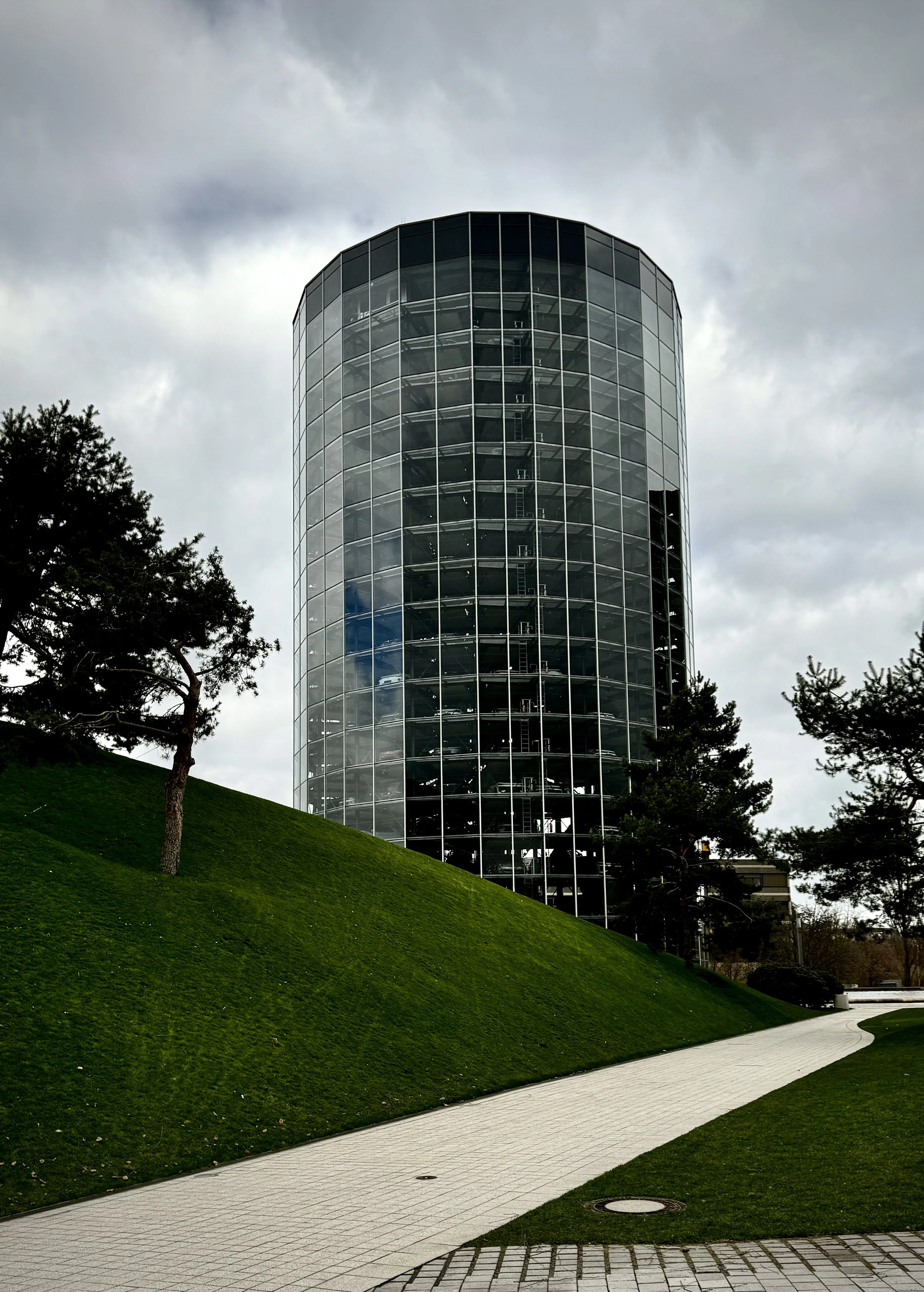
You look carefully and you can see the cars inside
Autostadt was built back in 2000 to be a combined showroom, theme park, auto-terrain driving course, museum AND visitor center! It showcases not just Volkswagen, but also Audi, Porsche, SEAT, Škoda and Lamborghini with a little Bugatti and Bentley on the side, throughout its sprawling campus and multiple brand pavilions.
You may not have heard of Autostadt, but you’re probably familiar with its most recognizable buildings: the AutoTürme; AKA the twin car elevators full of “ready-to-deliver” vehicles.
We entered in the visitor’s building, purchased our tickets and spoke with a guide to determine the best route. There were so many options to consider, including but not limited to:
Zeithaus Museum
Indoor and outdoor playgrounds
Car and motorcycle driving experiences, including a car “terrain park”
Brand pavilions, highlighting each brand
Several on-site restaurants and cafes
Spots to park your own VW camper van!
There was even an attached Ritz-Carlton hotel, which needless to say, we did not visit, but it appeared busy.
Here’s a view inside the visitor’s center. Since it was right before Easter, there was a giant Easter egg that visitors could paint. Jack and I grabbed a map and headed outdoors to the Zeithaus Museum.
Zeithaus translates literally to “time house” and highlights the global evolution of the automobile, beginning with a replica of the 1886 Benz Motorwagen. While I didn’t get a photo of that car, I did take a lot of other photos that you can see in the gallery below.
The interior design of the museum was incredibly intentional. Mirrors on the ceiling allowed you to see the vehicles from so many different angles (especially nice for the convertibles) and the wall decor made my photos look instantly much cooler. Three floors and an open layout made it easier to imagine seeing these cars in their natural “habitats.”
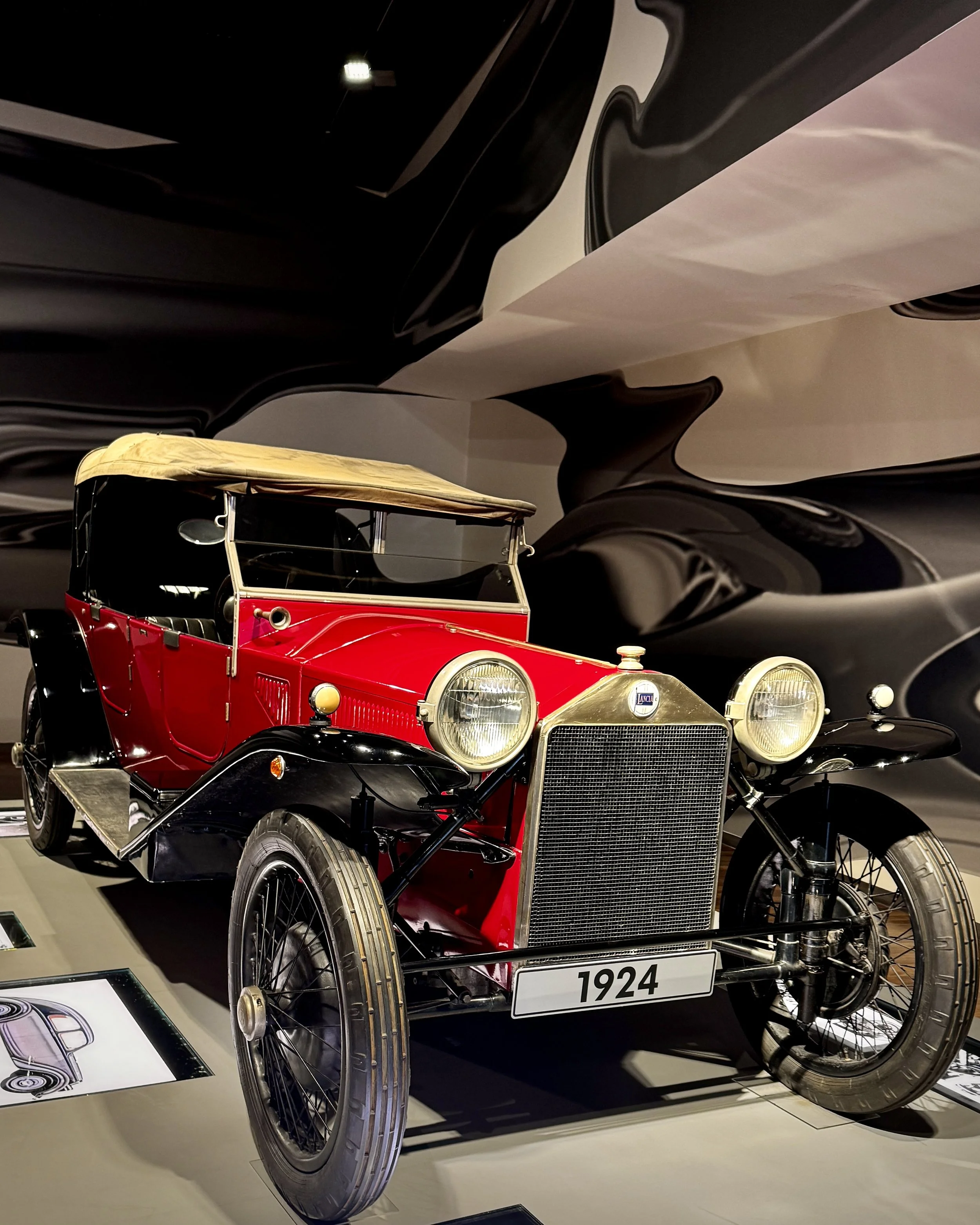
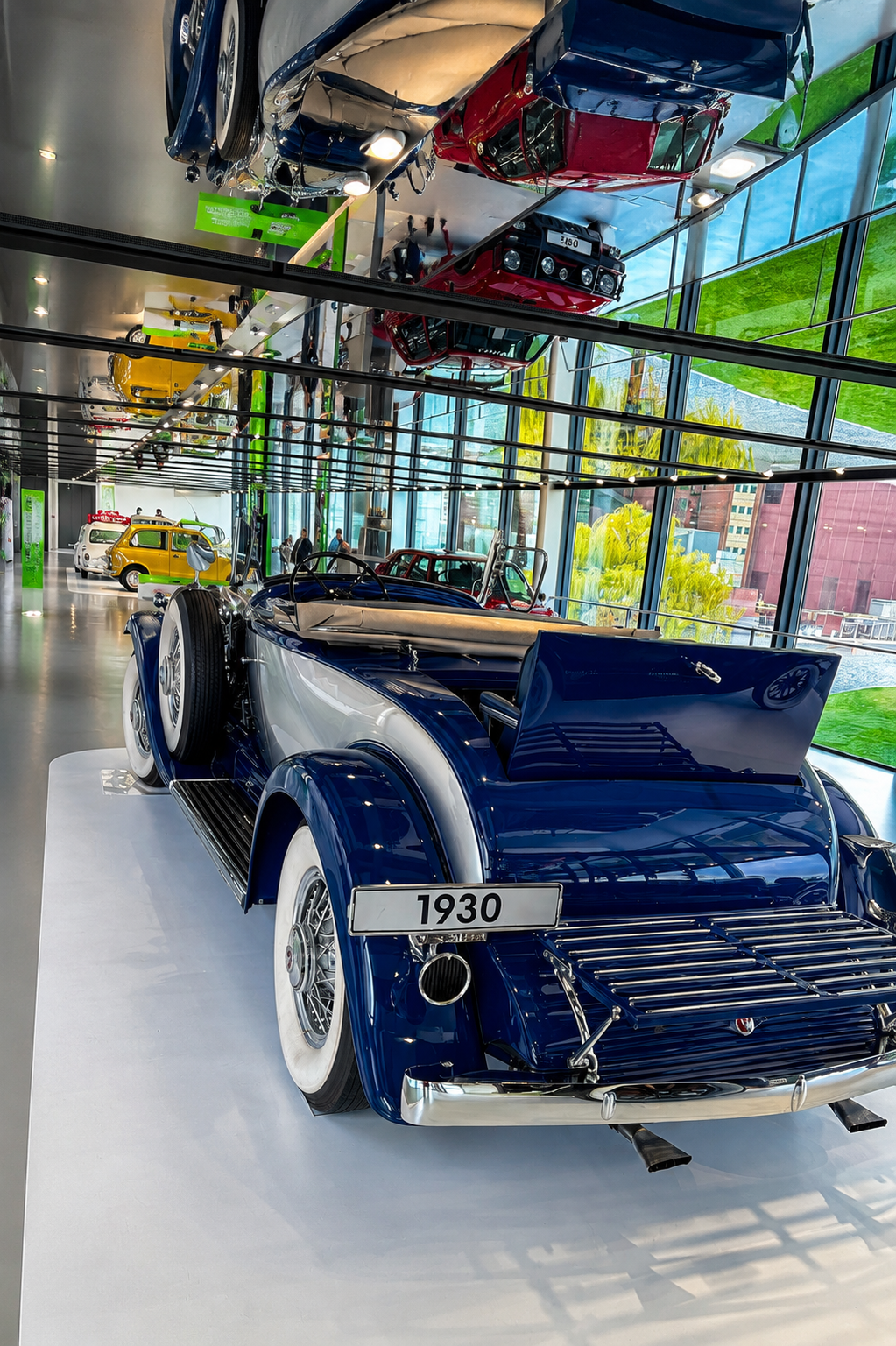
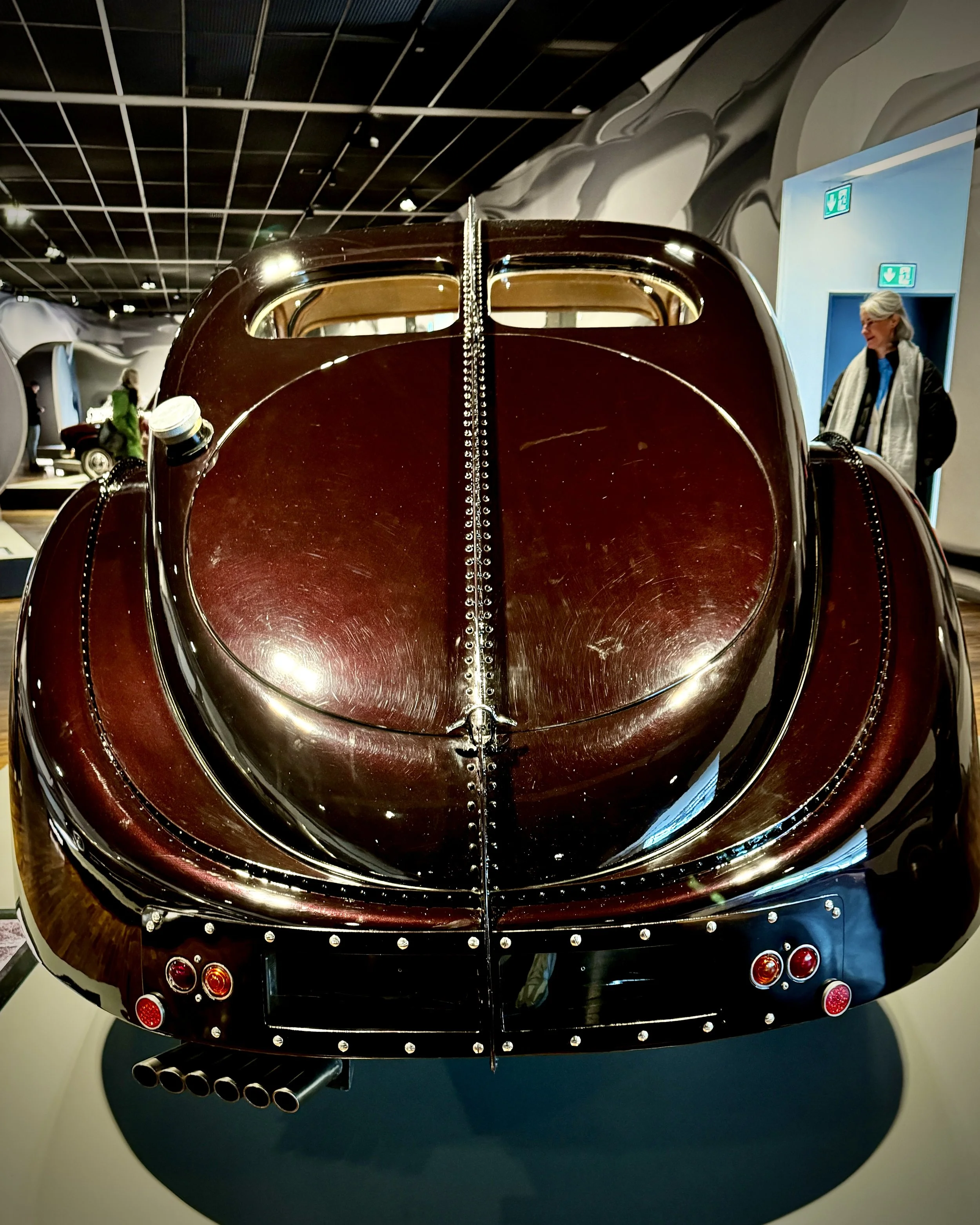
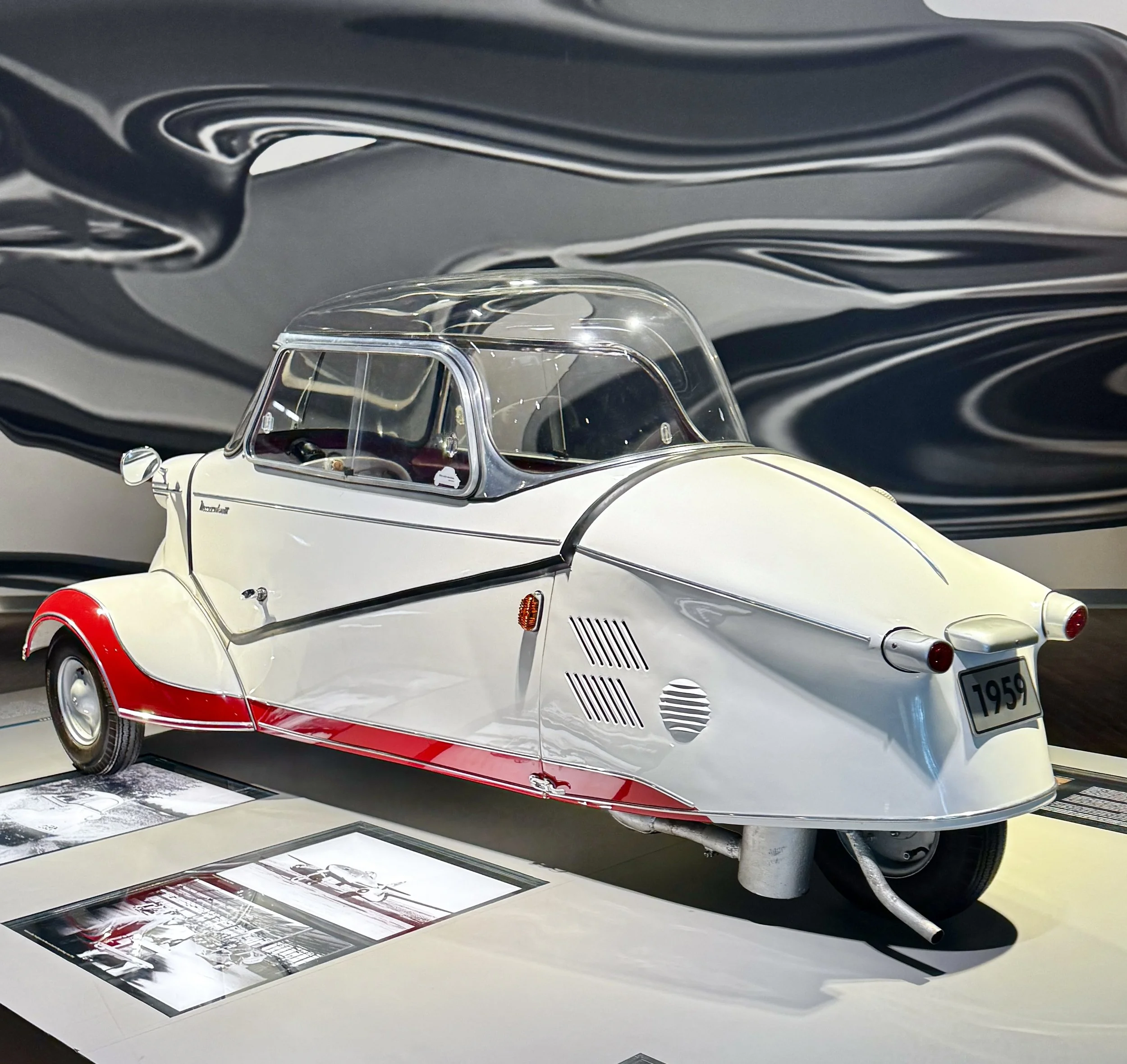
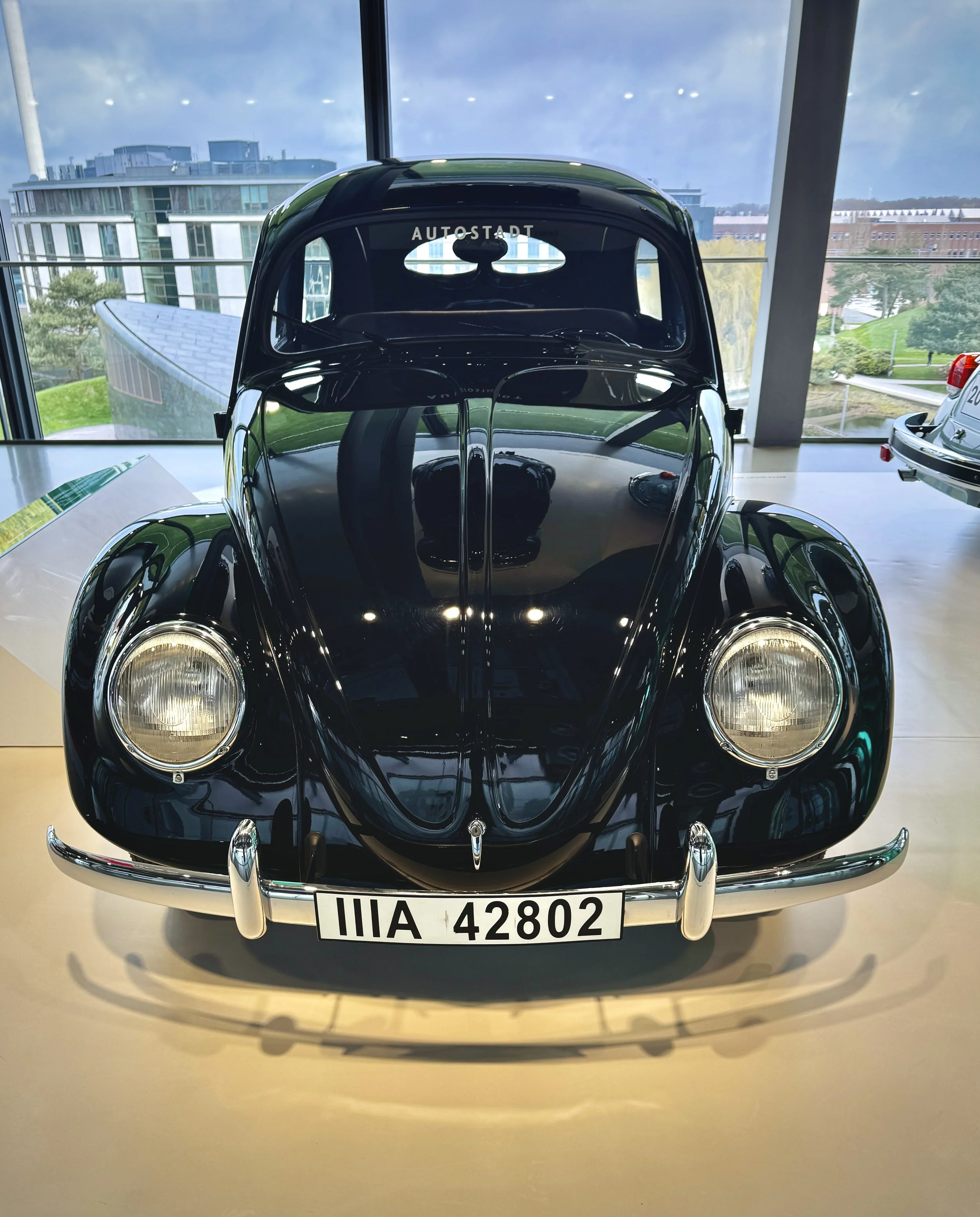
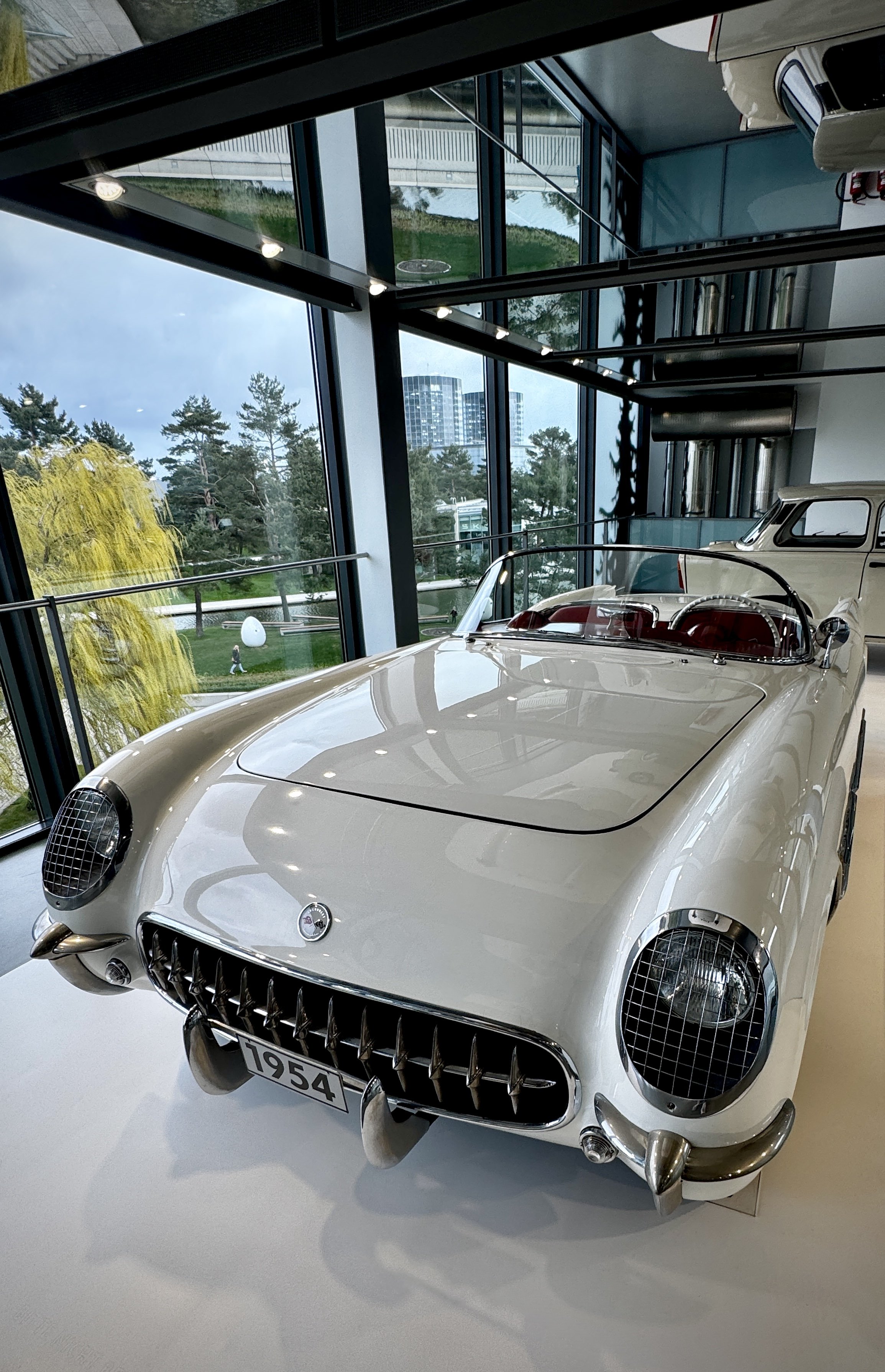
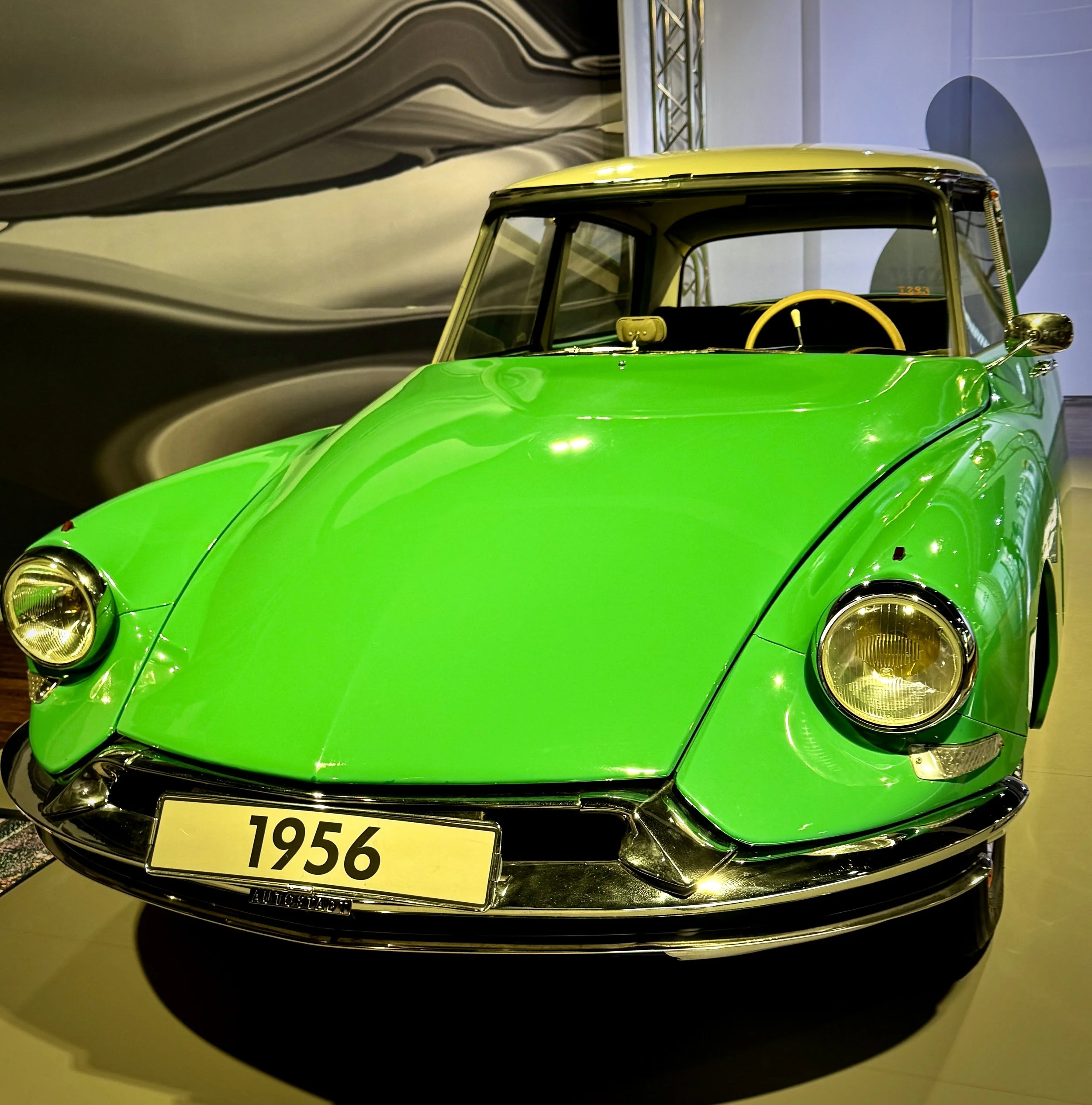
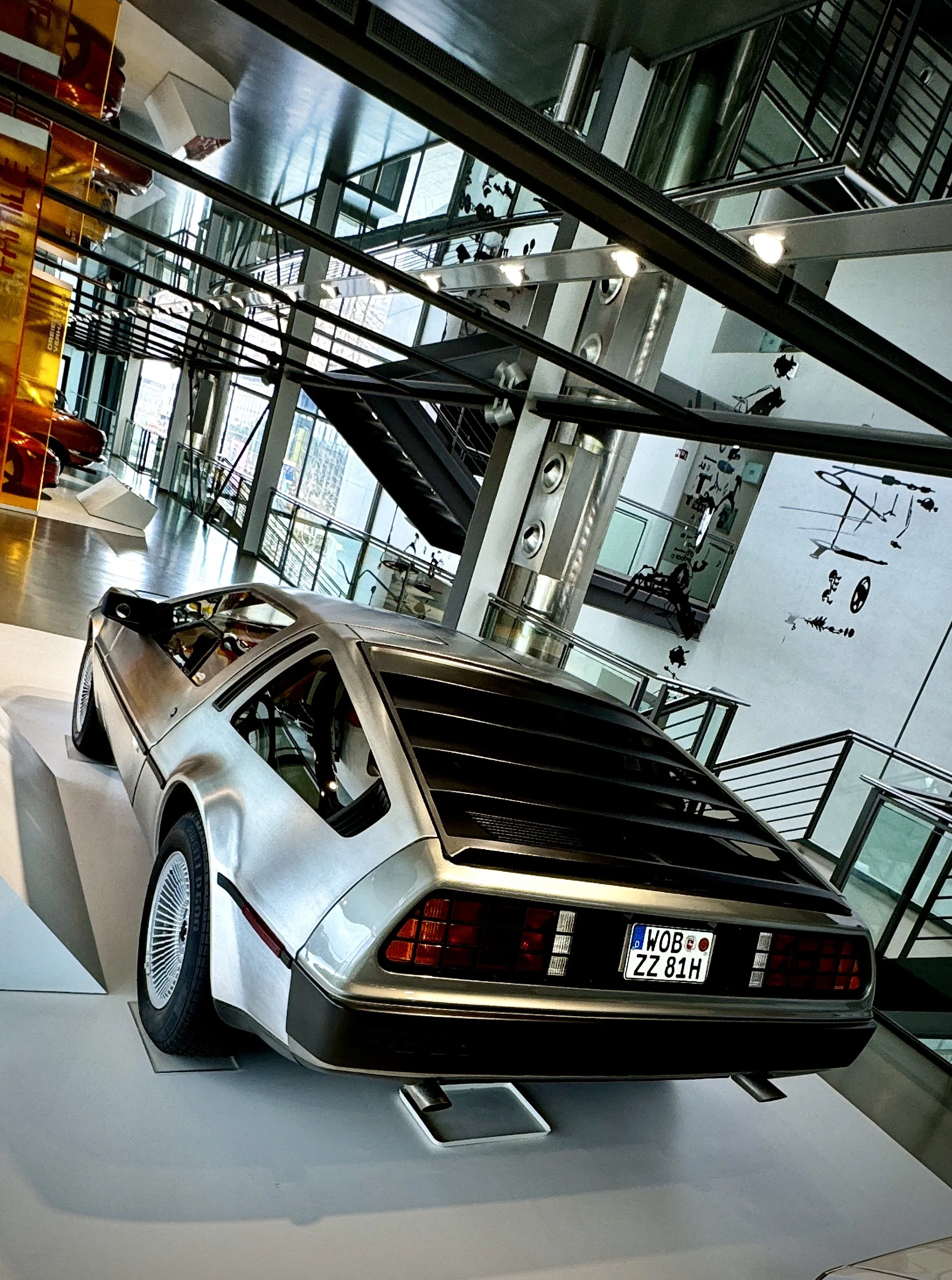
One featured car was the millionth Mini to roll off the assembly line. In the 1960s, Minis were starting to hold their own in international races like Monte Carlo, beating the long-term winners with their sporty handling and speed. Apparently, it was also one of the first compact cars that was stylish, not just inexpensive and could comfortably seat 4 adults because of its sideways engine.
Take a second look at the black objects against the white wall. It’s really hard to tell from this photo, but they were auto parts, hung as giant mobiles. Everything was intentionally designed.
After leaving the Zeithaus, we wandered through the Autostadt grounds and visited most of the brand pavilions; our favorites were Cupra and Porsche. Previous to our trip planning, I had never heard of Cupra, but since our trip was car focused, I knew our rental car had to be up to snuff. One option that kept coming up was Cupra and since it was the same price as a stuffier (and typical VW), I chose that make. It falls under the overall VW brand and was designed to fit the niche between VW and Audi consumers. We LOVED our Cupra and I’m a little sad that they’re not widely available in the US… yet.
The Cupra pavilion was amazing, my favorite part was the red, textured exterior wall. As we got closer, I realized that it was created from Cupra side mirrors! (If you look closely, you can see Jack in the closet mirror.)
The swooping lines of the Porsche pavilion (left photo) reminded me of the curves of the famous 911 and the gray, utilitarian concrete contrasted perfectly with the colorful Porsches inside. Like I said — everything at Autostadt was intentional!
After admiring the spinning Easter egg disco ball near the entrance, we were greeted with this quote by Ferry Porsche, the man who designed the first Porsche.
“In the beginning I looked around but couldn’t find the car I dreamed of, so I decided to build it myself.”
Each pavilion including this one, featured a few cars as well as historical exhibits, photos and videos. I spent more time absorbing the experience rather than taking photos, but I’ve listed a few below. The overall theme in the Porsche pavilion was cheerful and slightly cheeky.
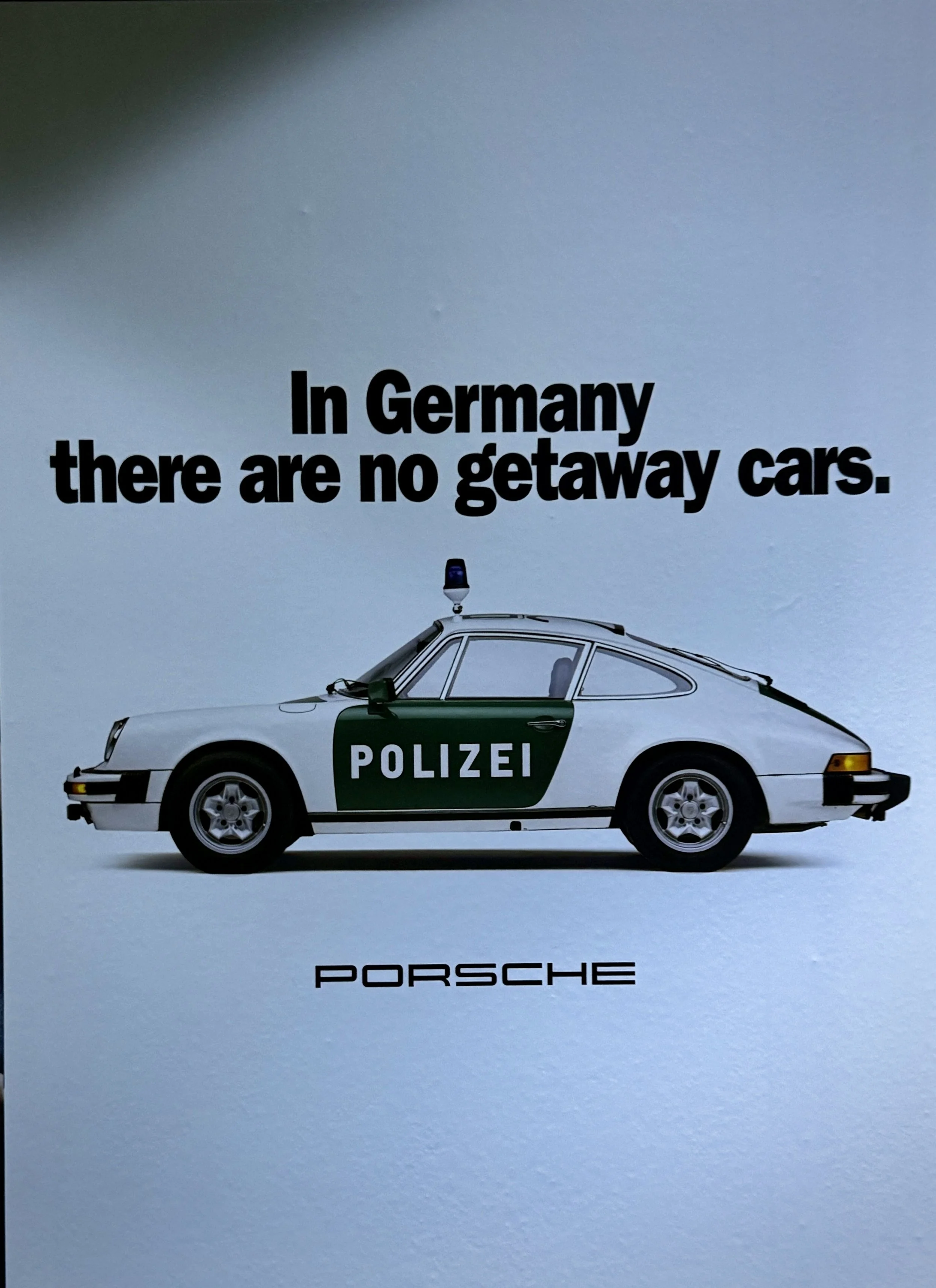
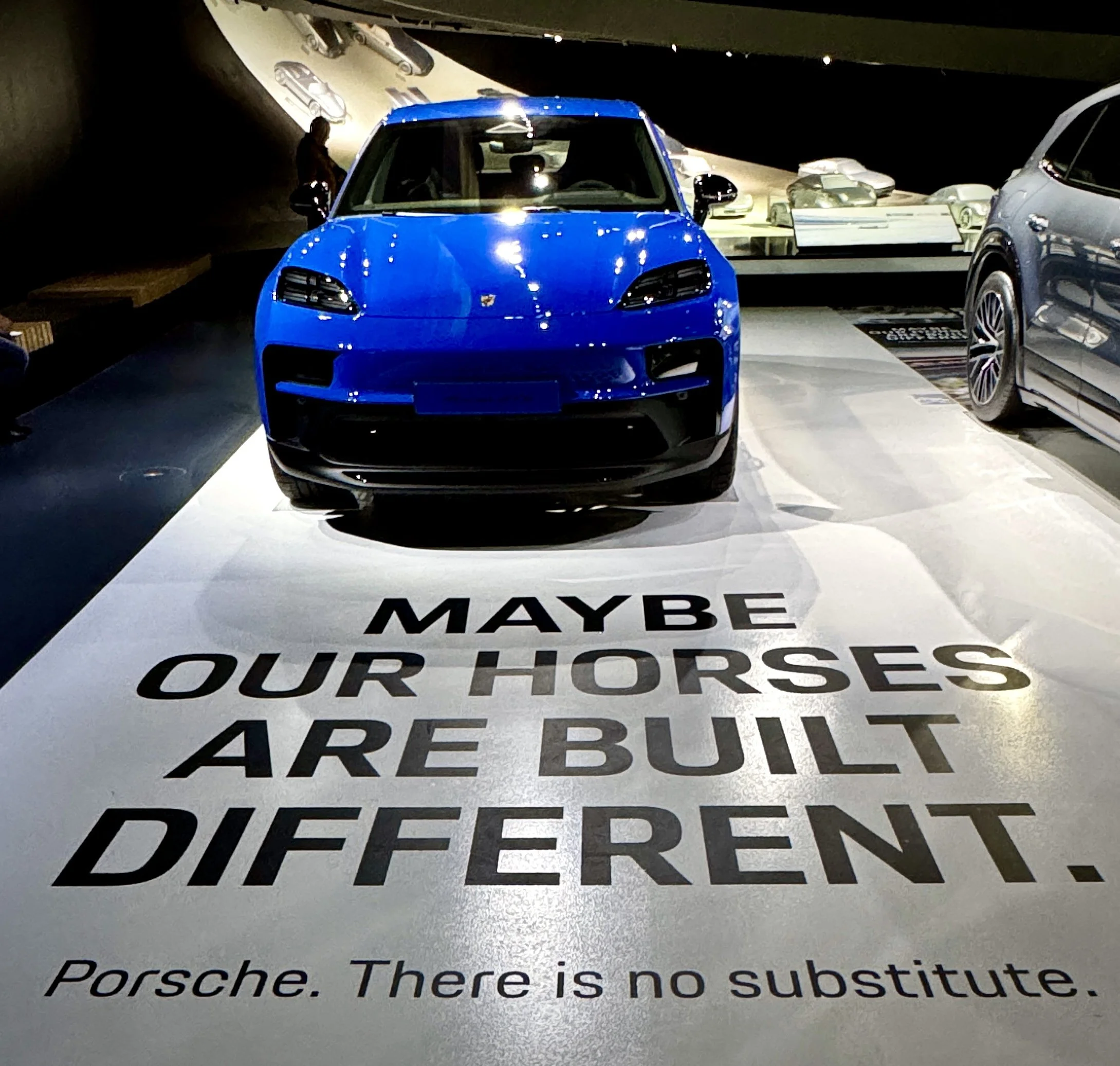
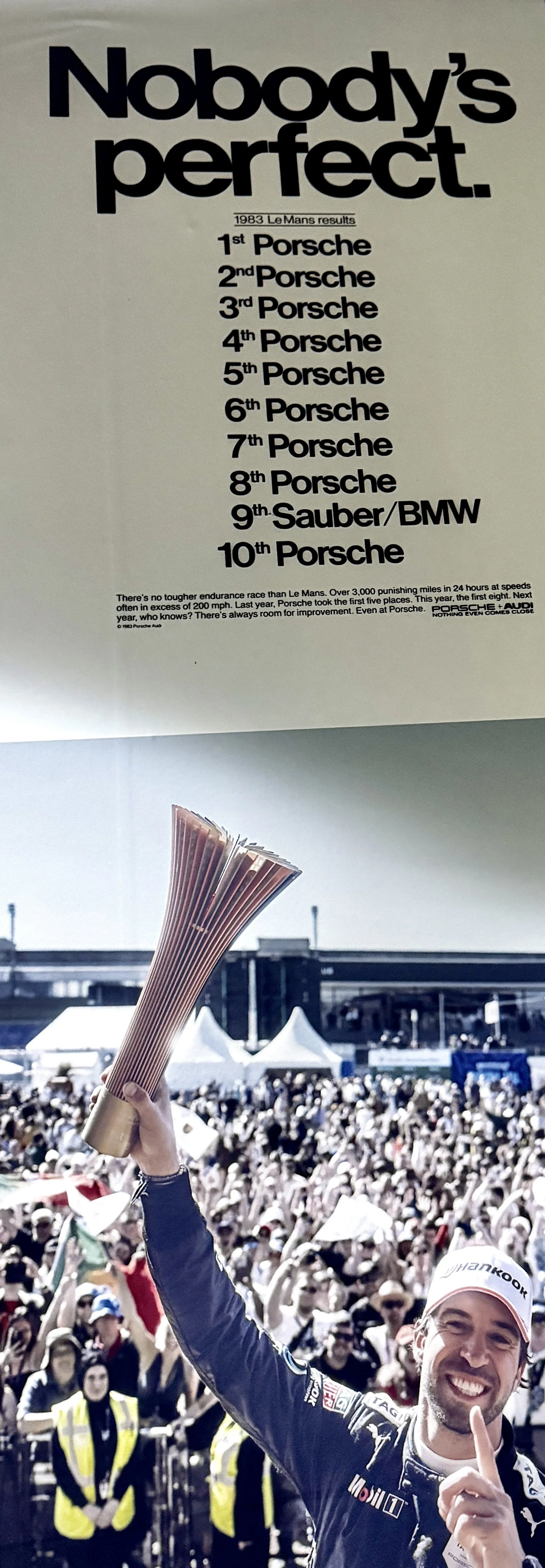
We could’ve spent all day exploring Autostadt. I really wanted to take one of the all-terrain driving lessons, but you had to be proficient in German and I was worried that my shaky German would deteriorate under pressure! I was very jealous when we saw a pickup truck slowly navigating a simulated river — maybe next time if I can maintain a longer DuoLingo streak.
After a quick stop at the main building for lunch and to pickup some souvenirs, we headed south on the Autobahn towards the fairytale village of Rothenburg ob Tauber.
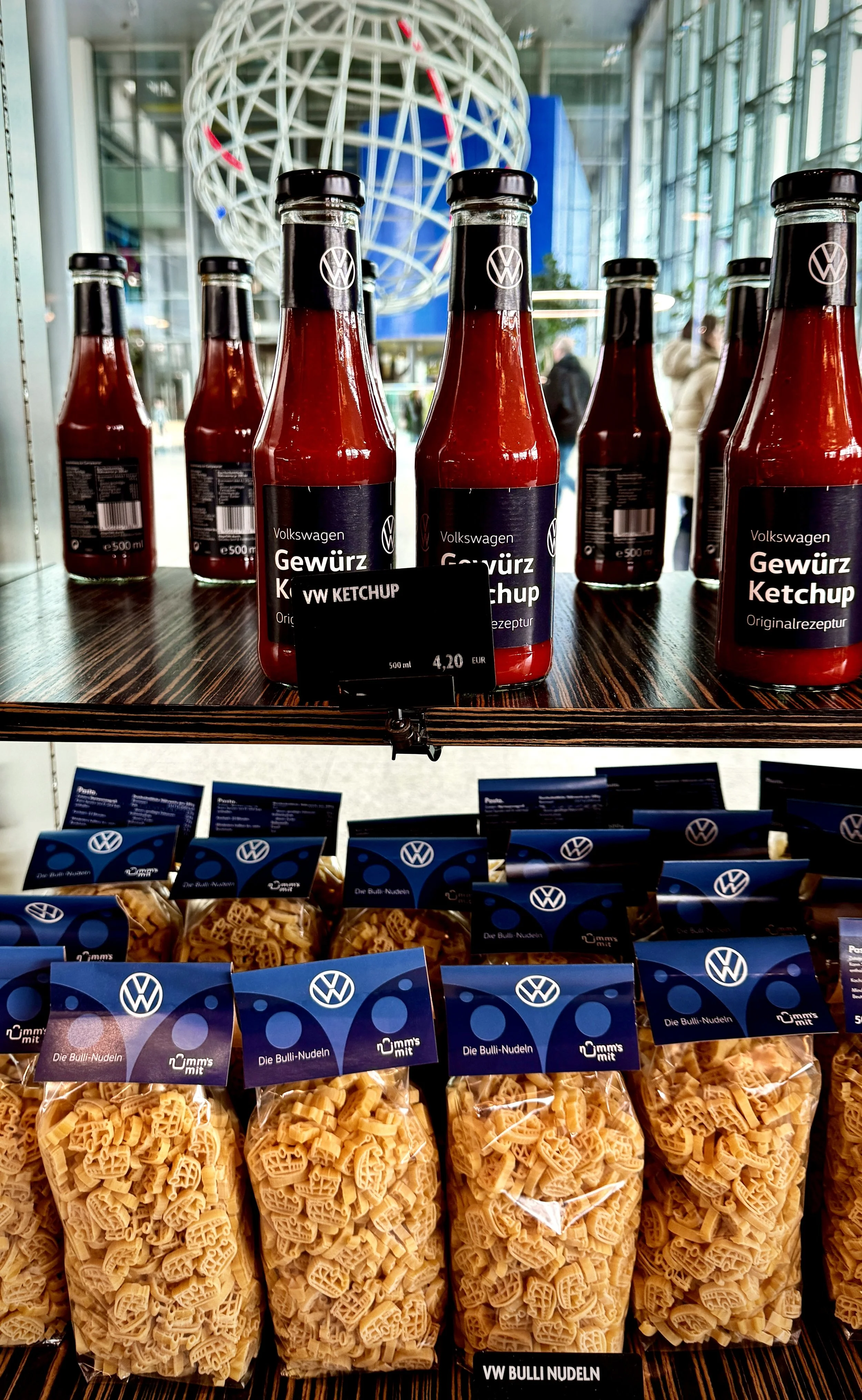
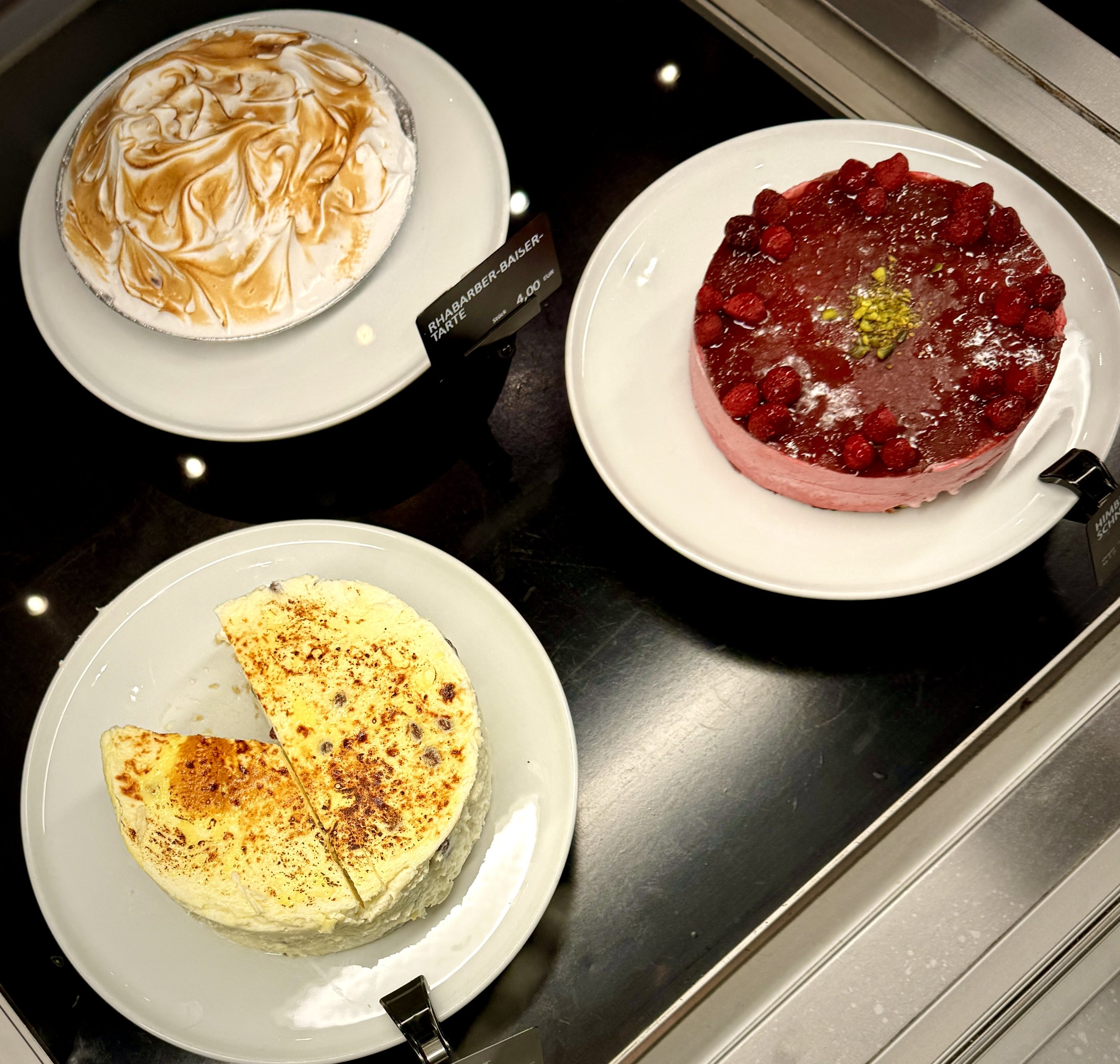
All in all, Autostadt was an excellent addition to our auto and tech themed trip and I’d go as far to say that I’d appeal to far more than just car enthusiasts — especially families. If Jack had been younger, we’d definitely have spent time at the outdoor playground or the kiddie go-kart track. Since we visited just before Easter, the grounds were decorated for the season and many of the displays rotate throughout the year.
It’s hard to explain exactly what Autostadt is because it isn’t just a museum, theme park, showroom or visitor center. Somehow, it’s all of those things at once. We arrived expecting cars and left talking about architecture, clever advertising, unusual souvenirs and German tortes. For us, it turned out to be one of the most memorable stops on our trip.
Coming soon: Fairytale towns with a teen!
Hamburg: Miniatur Wunderland and Tiny Worlds
Visiting Hamburg with a teen? Here’s what surprised us most about Miniatur Wunderland, the Prototyp Museum and Hamburg’s HafenCity district during our Germany road trip.
Germany with a Teen: 10-Day Itinerary, Tips & Things to Do
When Jack, my oldest, was much younger, he loved everything about trains and our home was littered with train detritus. Every room became a parkour course of dodging elaborate tracks and tiny trains. At the library, I rented videos of scenic train vistas that promptly put my husband and I to sleep, but which Jack enjoyed. Somehow, my dad heard about Miniatur Wunderland in Hamburg, Germany and decided he wanted to take Jack for a visit. Although we visited Germany several times, we were never far enough north to visit Hamburg so it was at the top of the list when I began planning our mother-son trip. My dad did not live long enough to take Jack, but I took him, knowing that my dad would’ve been pleased and it was amazing.
Miniatur Wunderland is the largest model train layout in the world with 16,000 trains running on 10 miles of tracks! The layout spans 2 brick warehouse buildings, leftover from Hamburg’s shipping legacy, dating back to the Hanseatic League. I’d read that ticket lines can be long so I booked a package that combined a hotel stay and tickets to Miniatur Wunderland.
We traveled to Hamburg from Berlin via train and upon arrival, it was a quick Uber to our hotel, PierDrei, which was located in the Hafen City district. It was a gloriously sunny Sunday afternoon and people were walking everywhere and sitting at outdoor cafes enjoying the spring weather.
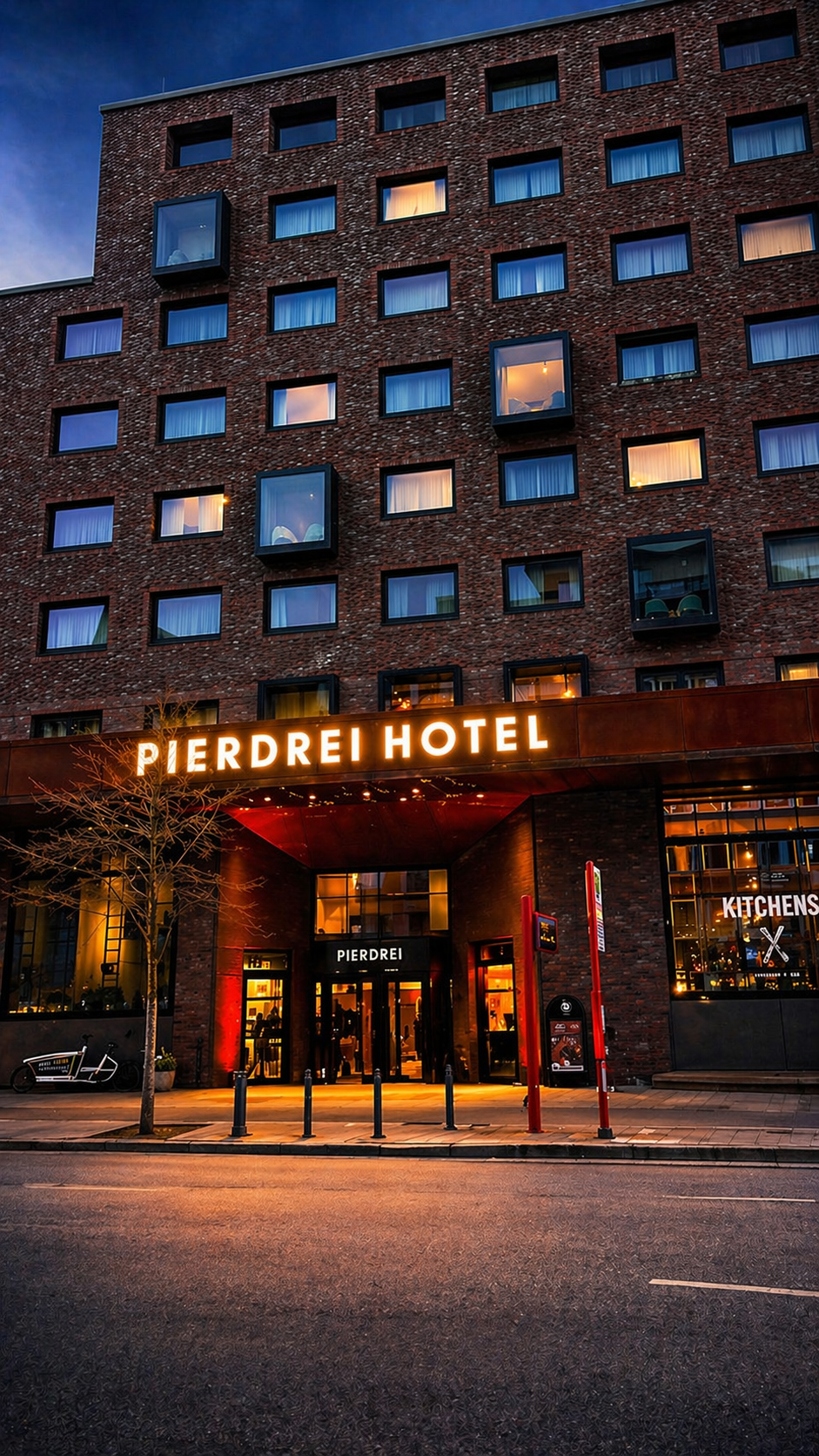
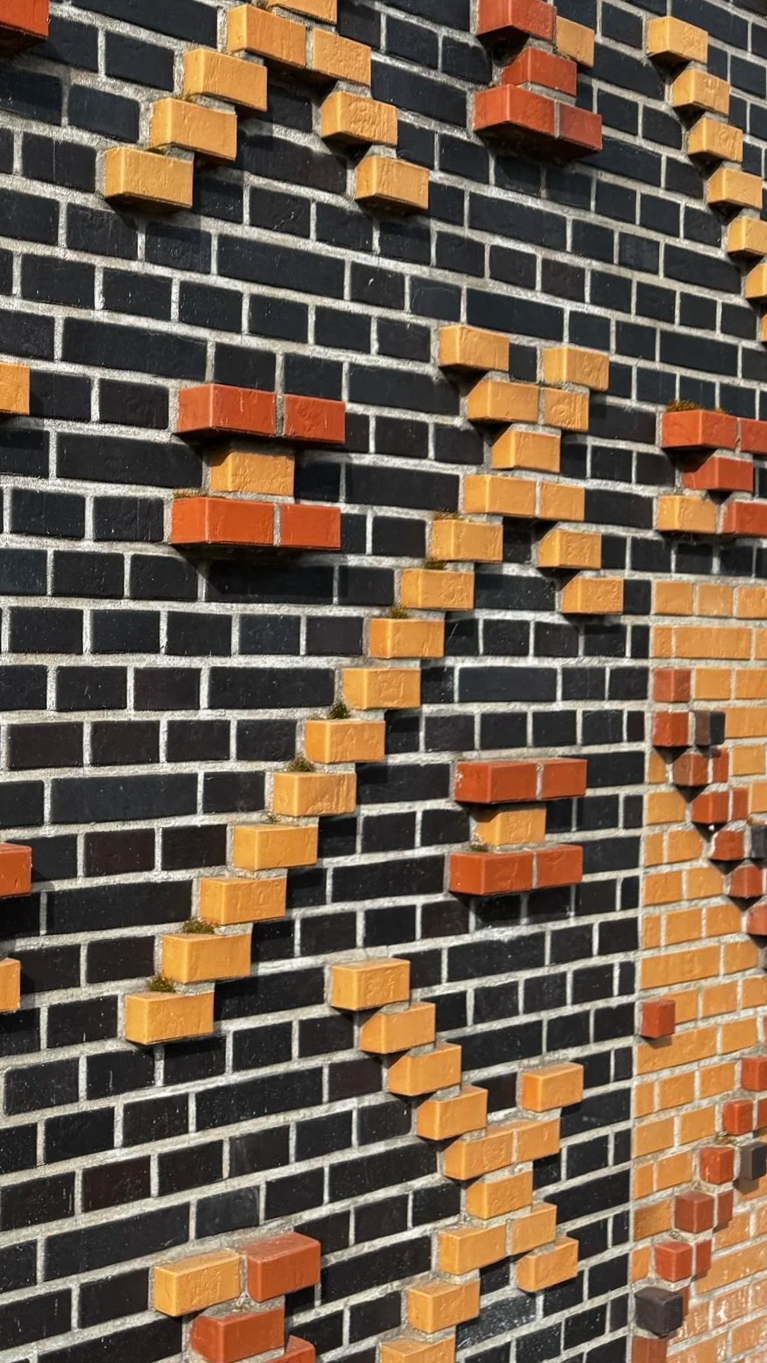
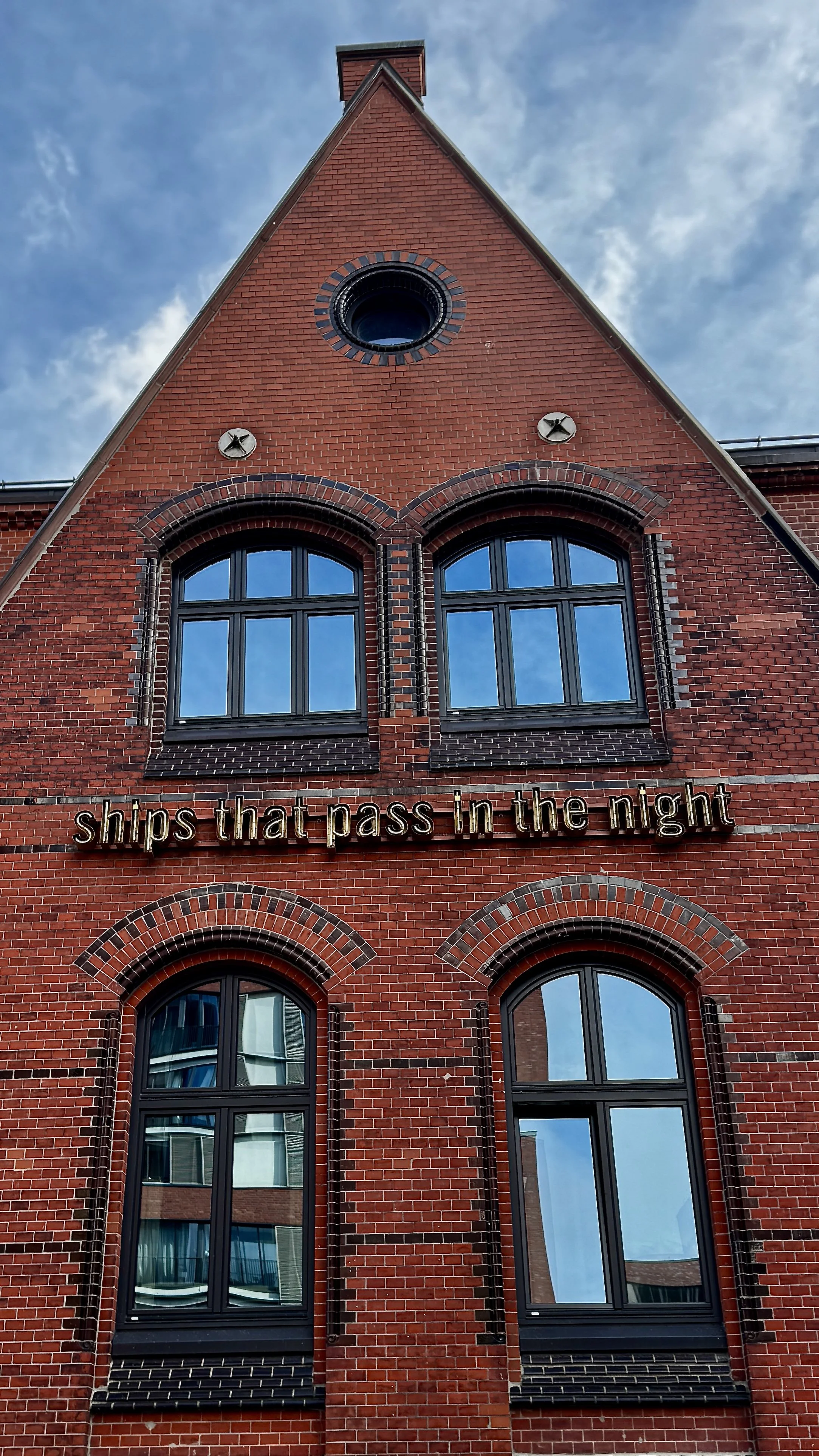
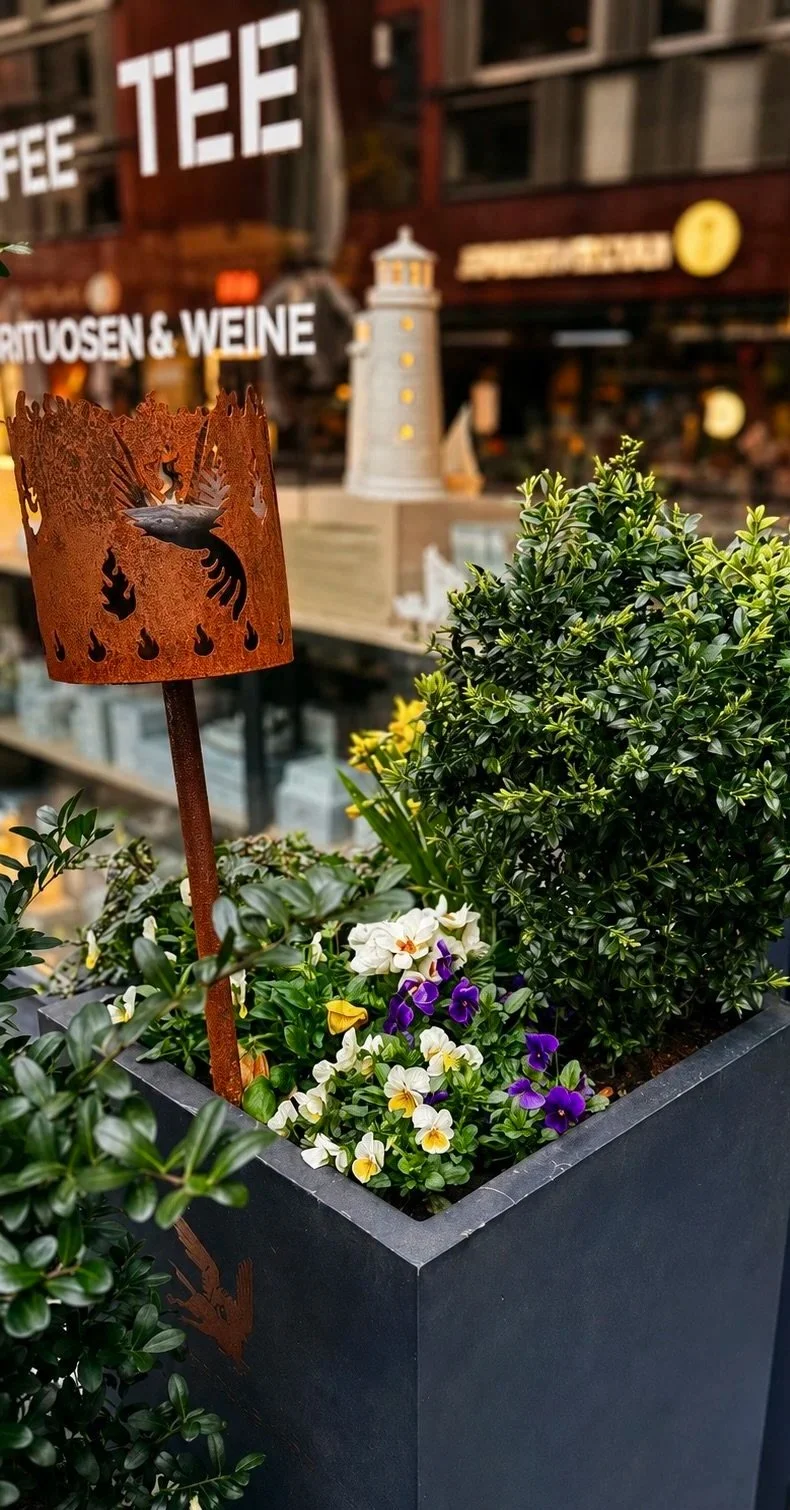
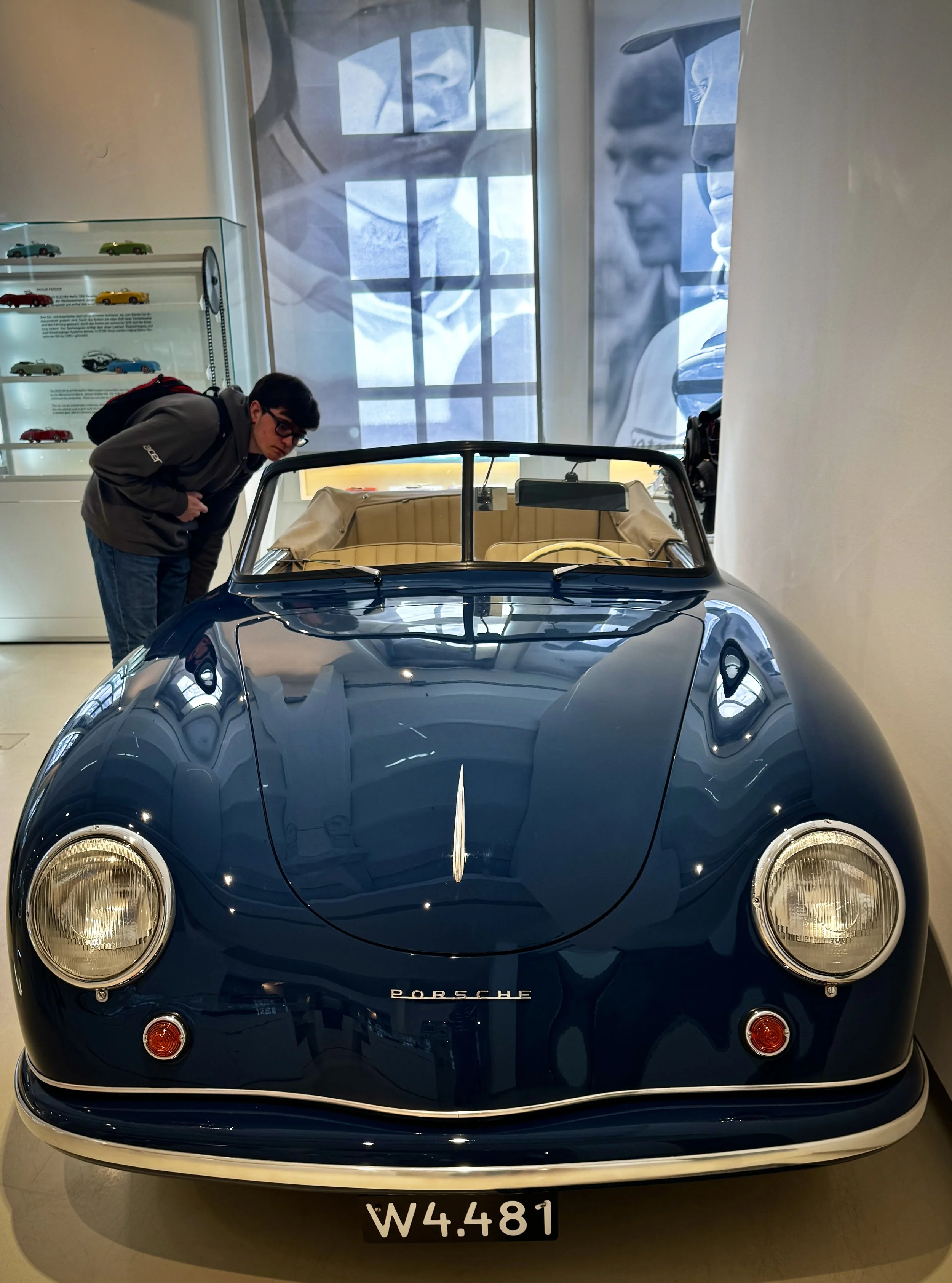
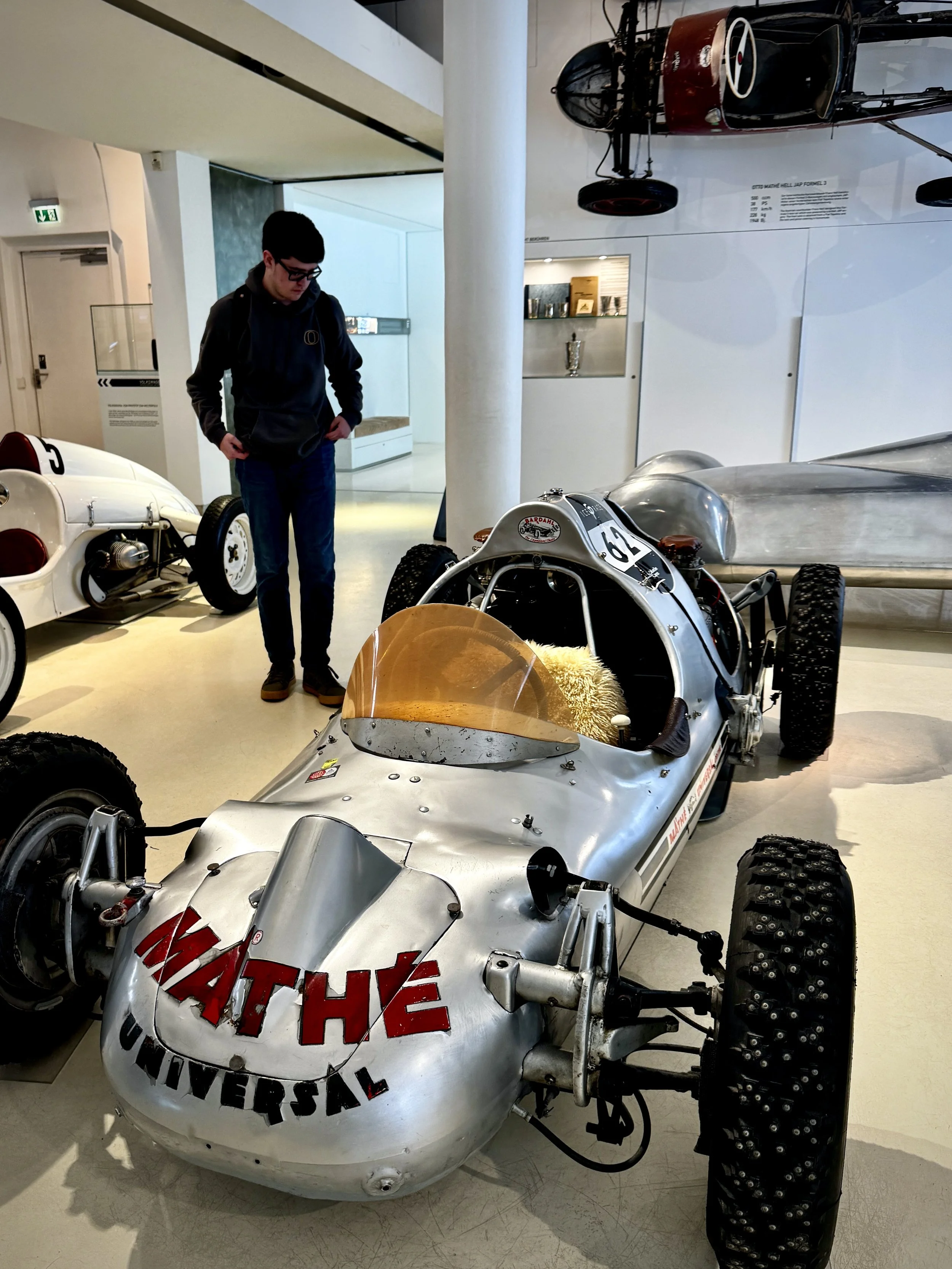
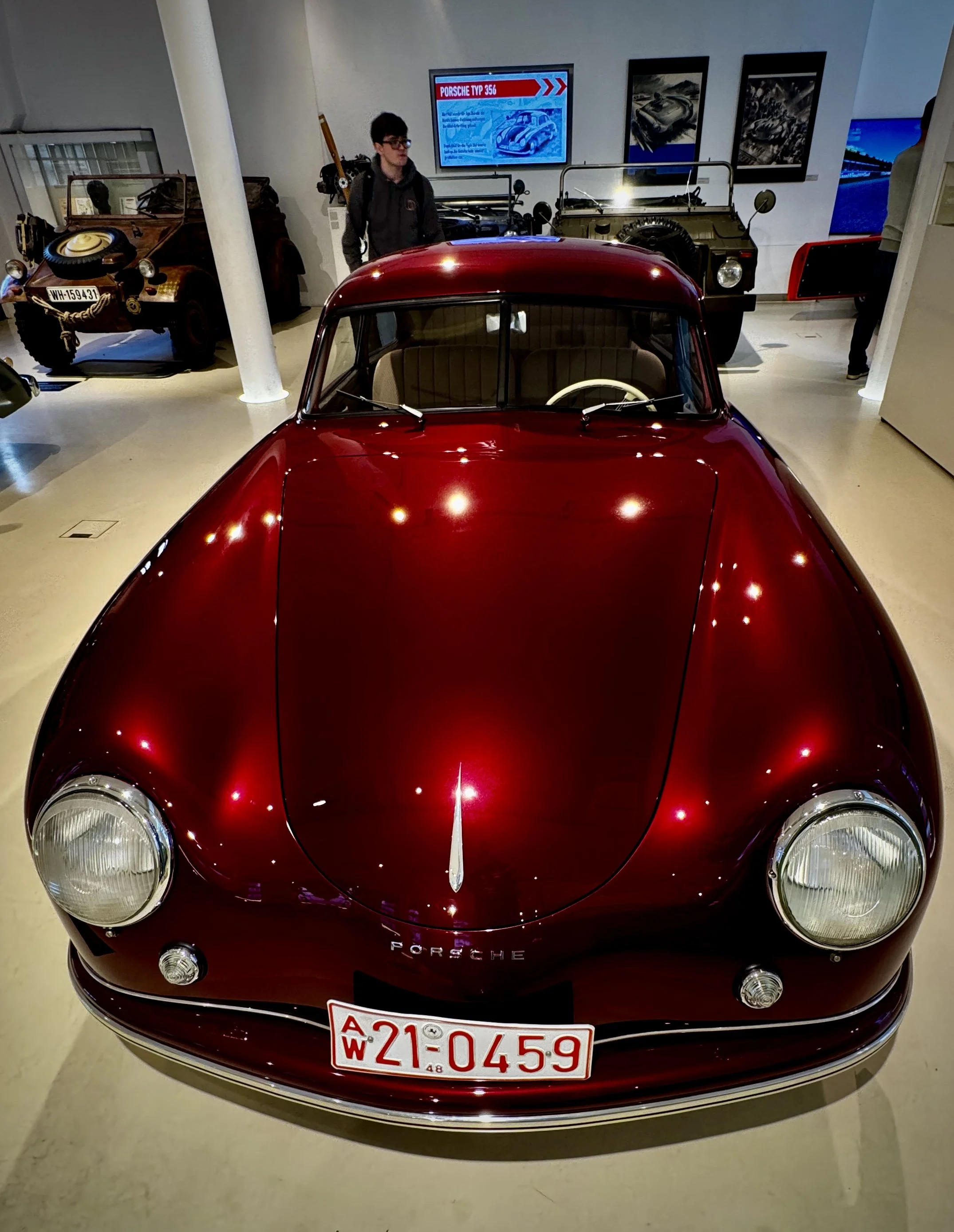
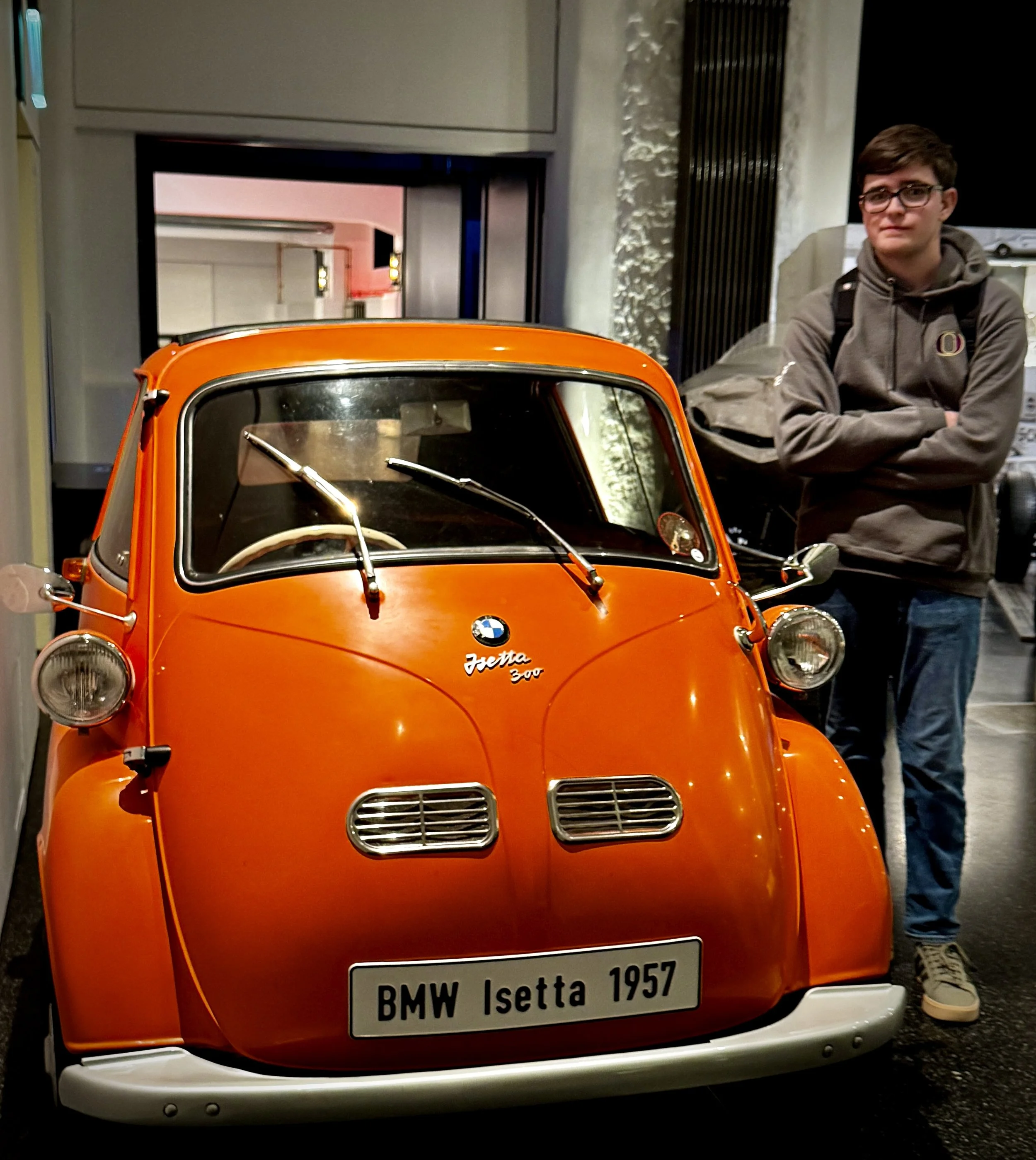
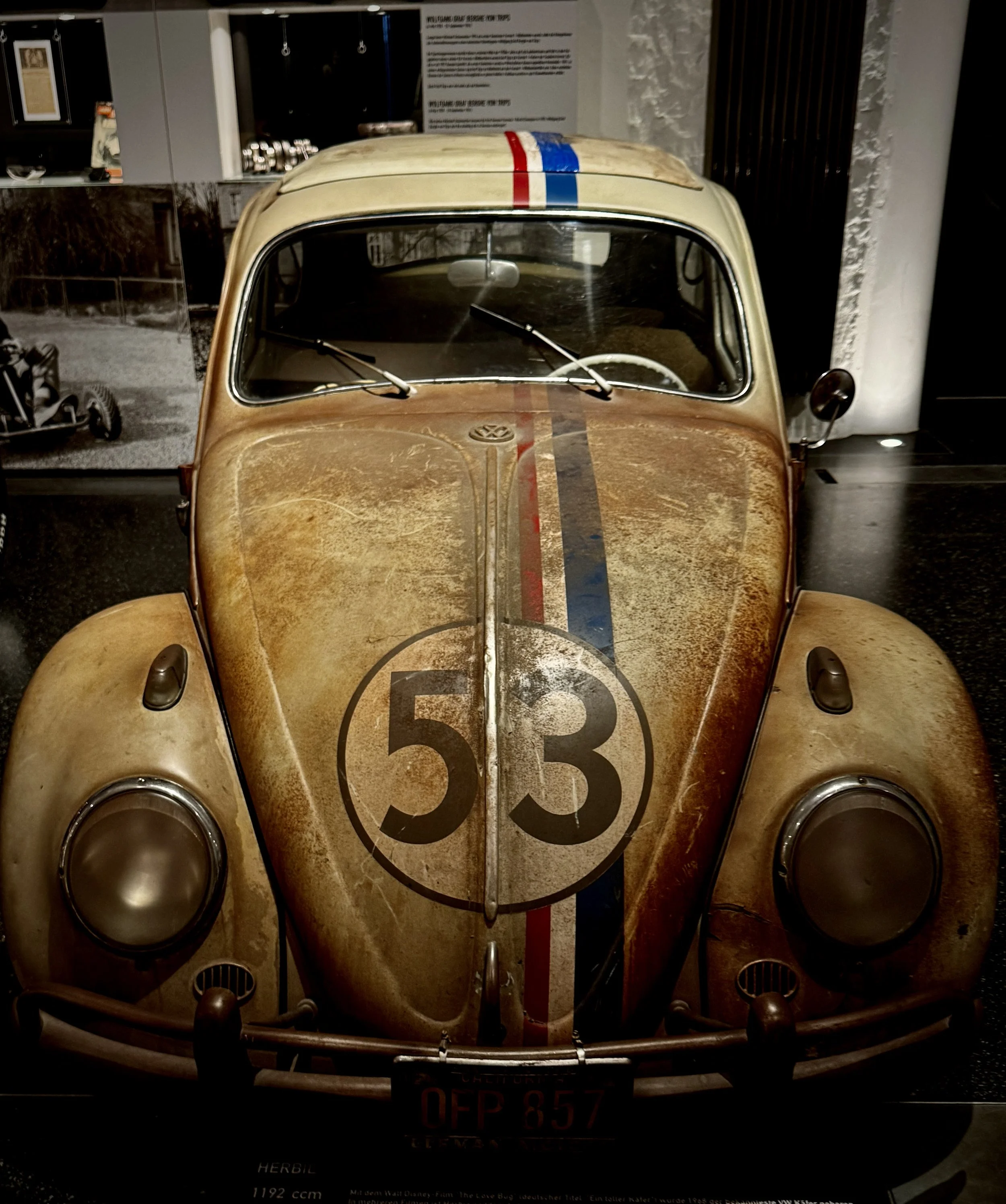
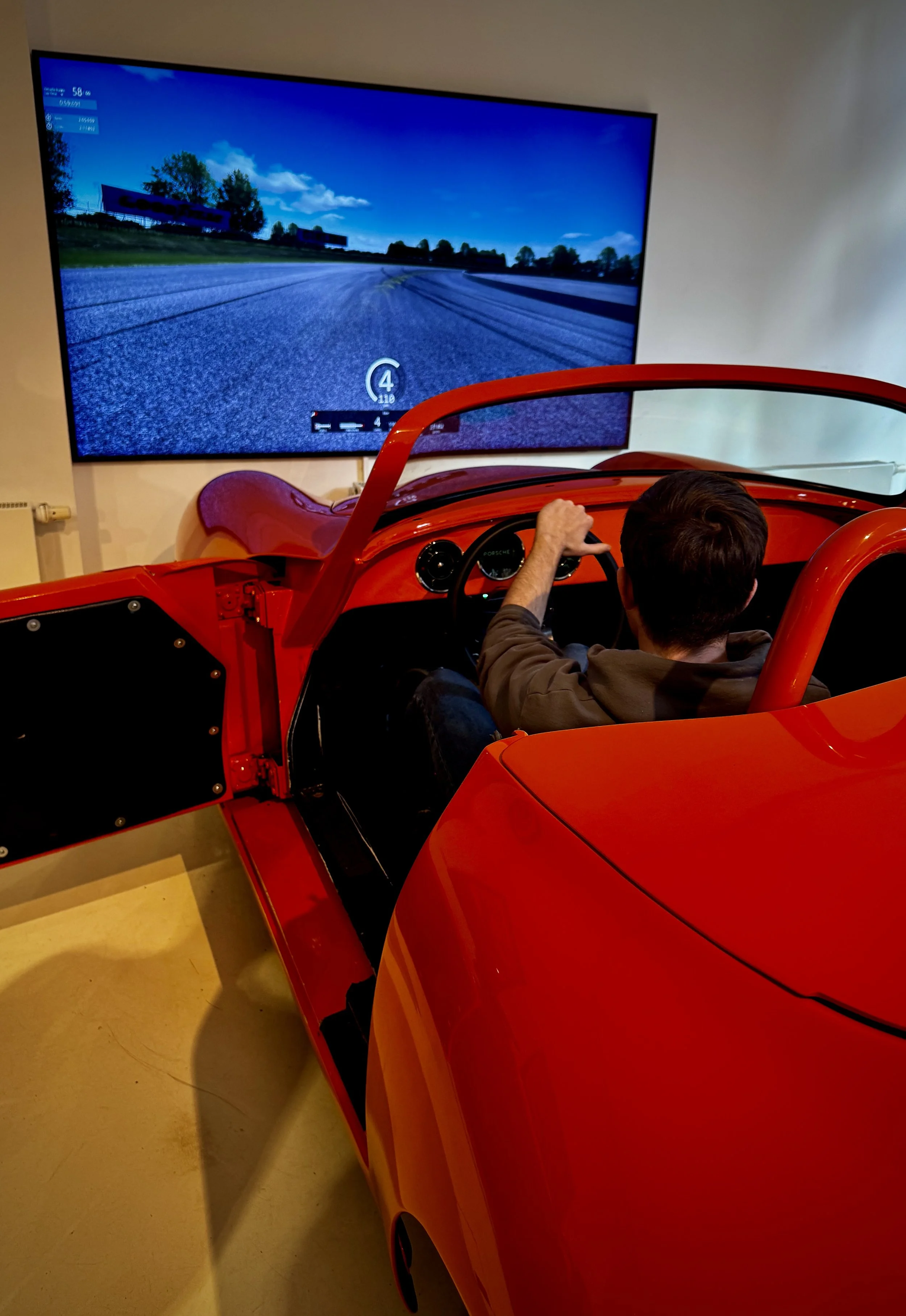
We stopped by our hotel, left our bags in a room that had a fun “dorm room meets cabin theme” and headed out to explore the nearby Car Prototyp Museum. This museum was not very large, but packed a lot of history into its 3 floors. Two car-collecting friends opened the museum back in 2008 and it focused, not just on the autos, but on the people who designed, drove and raced these cars and their stories. It included cars (mainly Porsches and Volkswagens), but also letters, trophies and historical items such as old workshop and pit crew equipment as well as advertising posters. It was a great way to spend a few afternoon hours in Hamburg.
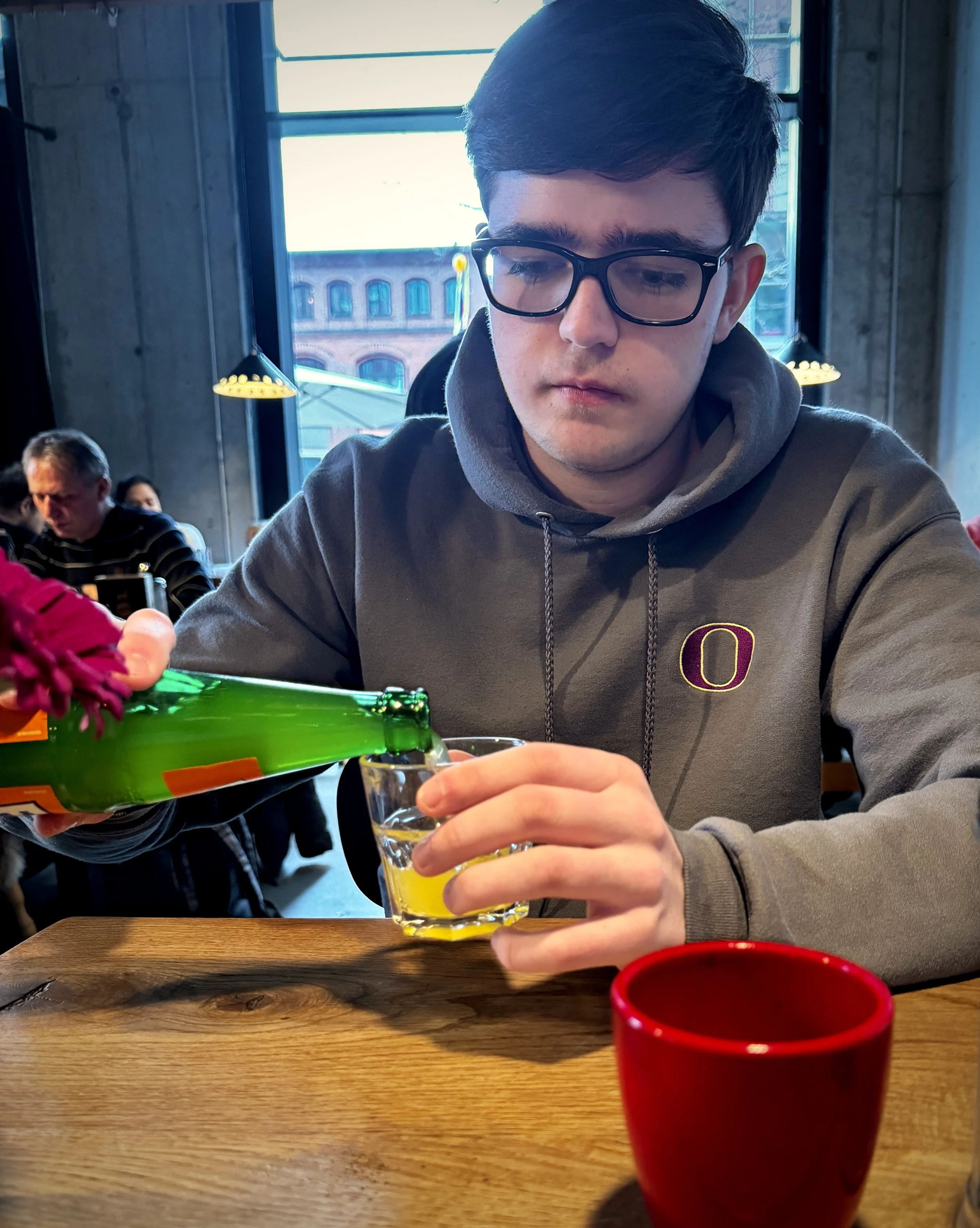
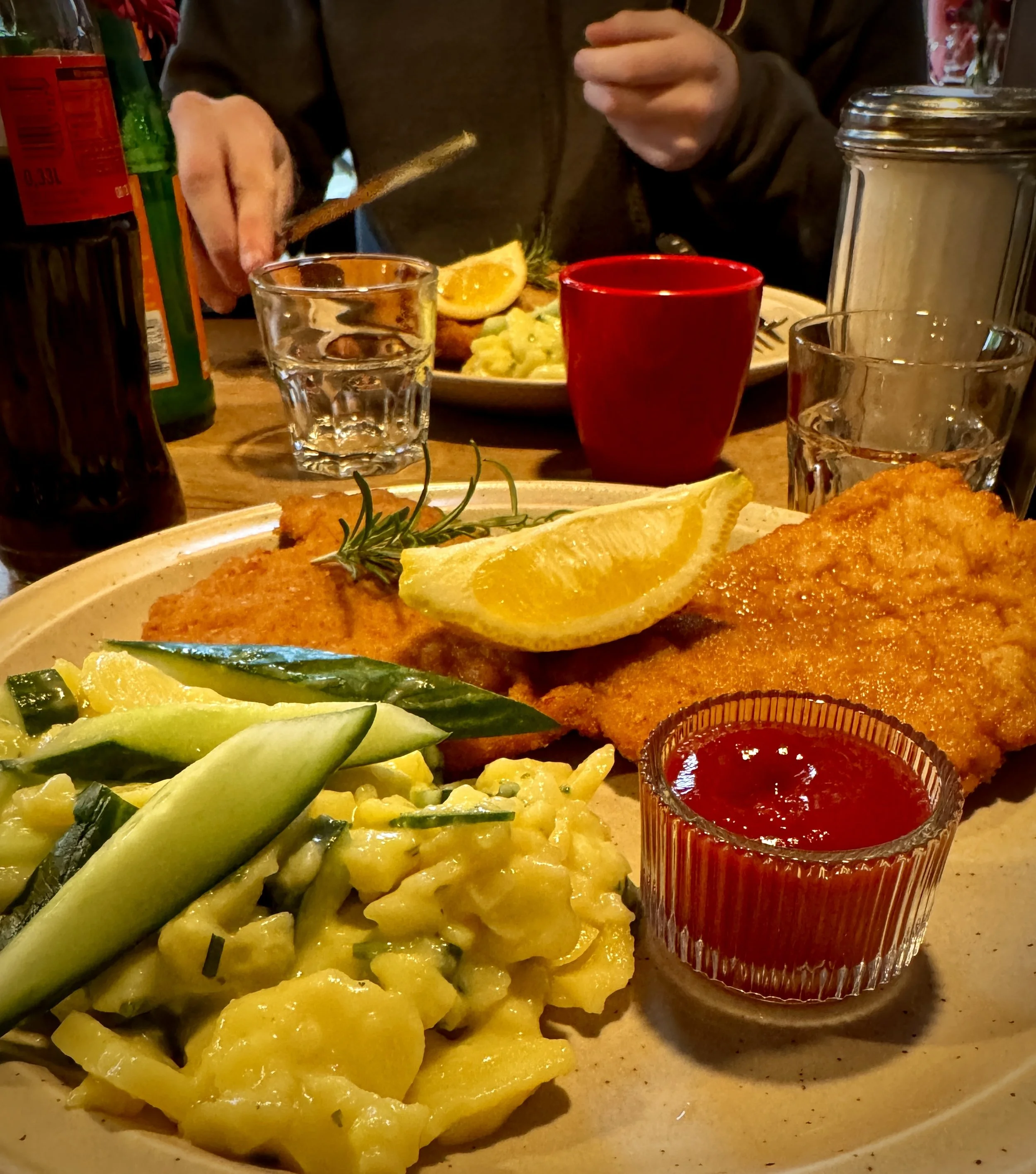
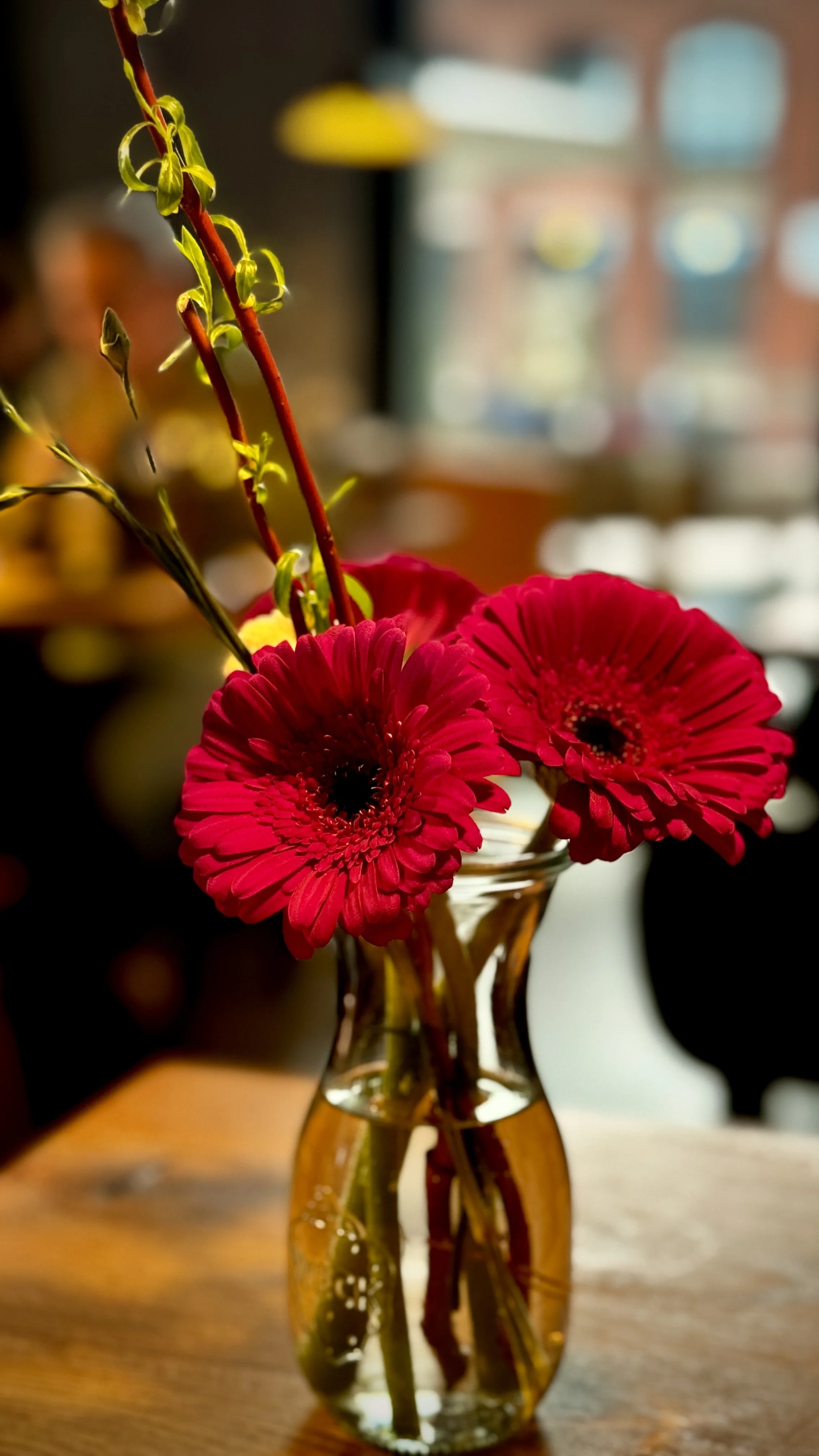
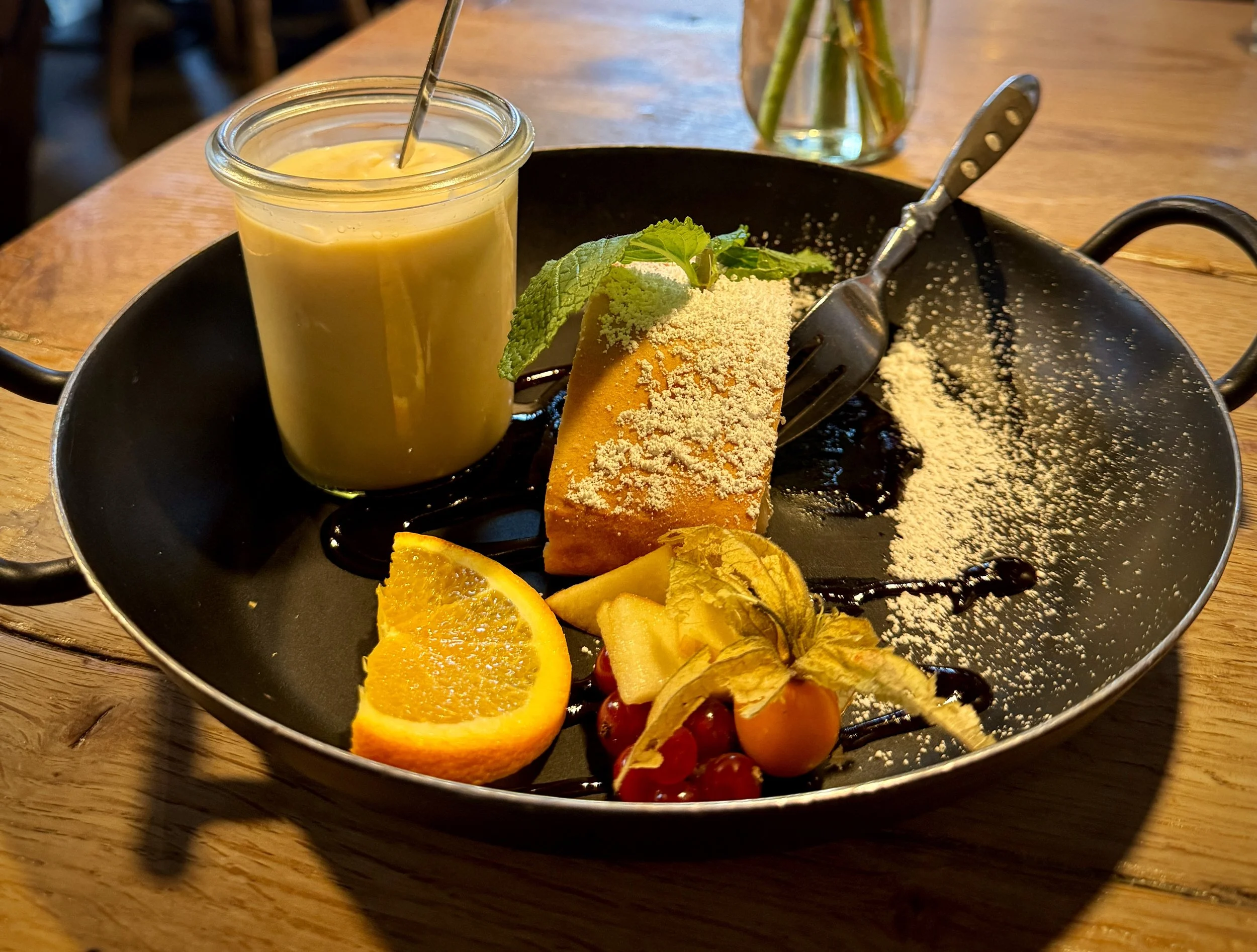
After a quick stop at our hotel, we headed to the Wildes Fraulein, a Tyrolean restaurant whose name translates to something like “wild young woman.” Of course we had to try it and it accepted reservations. The ambiance and decor was all alpine themed and there was even a gondola cabin with seating inside. Each table was decorated with beautiful fresh flowers — and I’m incapable of resisting photographing flowers. Jack and I both ordered the wiener schnitzel with potato salad. Dinner — and later, apfel strudel with vanilla cream — proved to be just as delicious as expected! Afterwards, we headed back to our hotel since we were heading to Miniatur Wunderland early the next morning.
Before I give you the full scoop on Minatur Wuderland, here are a few facts:
Miniatur Wunderland is the largest model train layout in the world with:
1,000+ trains
300,000 miniature figures, including people, animals and even extraterrestrials!
10+ miles of track
Building began in 2000 and the layout continues to expand with the help of 400 employees, who design, code, build, monitor and market. Fifteen (and growing) different sections make up Miniatur Wunderland, each elaborately designed and themed.
And after spending almost five hours there, I can unequivocally say it’s a place that any visitor, even non-train enthusiast, can enjoy.
The people in the skywalk give a sense of just how enormous Miniatur Wunderland really is.
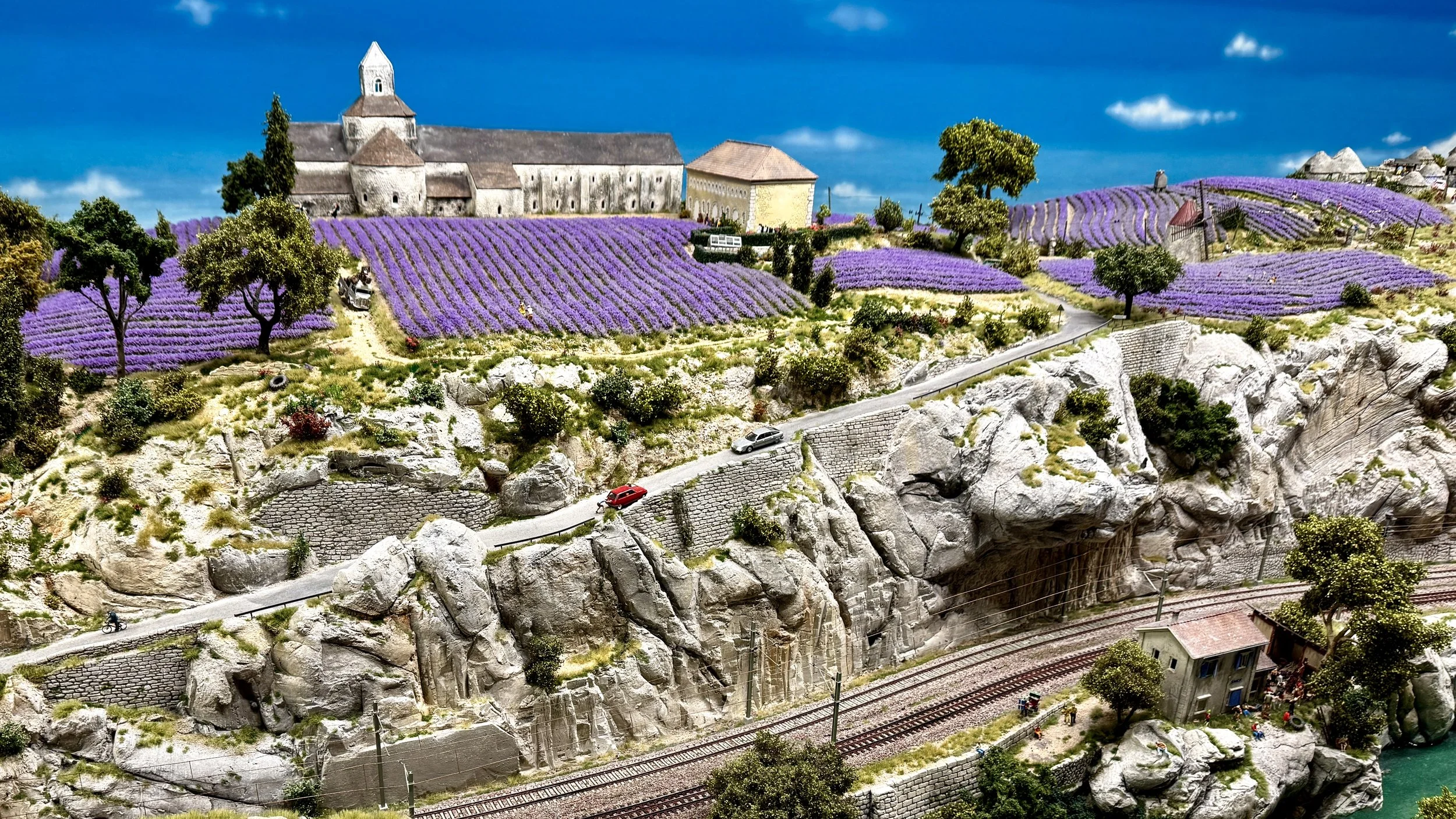
Upon entering Miniatur Wunderland I noticed a gentle lavender aroma, which led me to one of the newest sections: Provence. Take a look at the image below, which is sprinkled with tiny vignettes — like 2 people pushing the red car uphill or the workers harvesting the lavender. Be sure to scroll over the image below to zoom in on these micro scenes! This layout is modeled on an actual location, the Abbey Notre-Dame de Sénanque, which was founded in the 12th century and remains a functioning abbey to this day. This was an amazing introduction to the surprises that lay ahead at Miniatur Wunderland!
From there, we headed to the most popular and complex layouts — the Knuffingen airport.
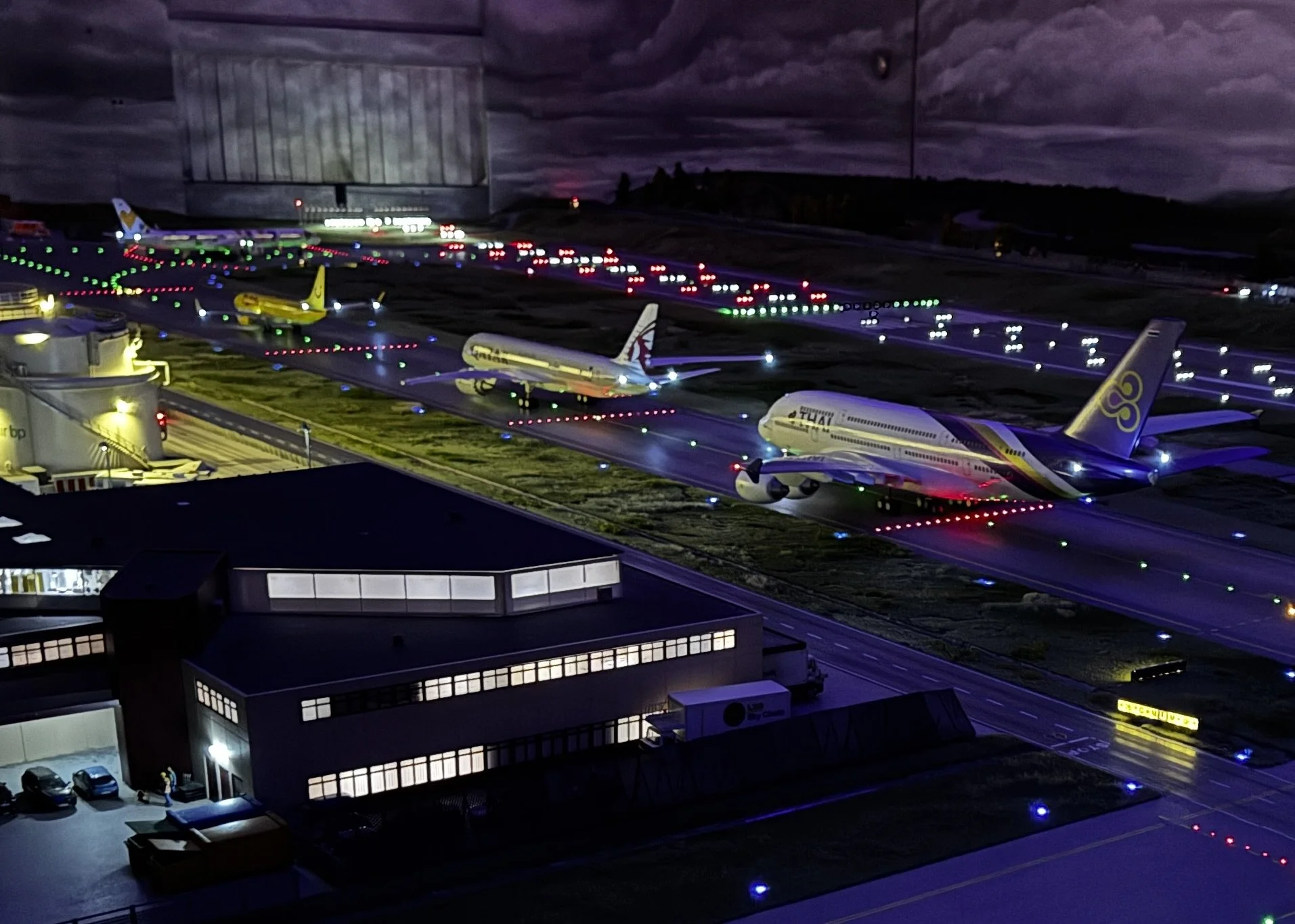
The Knuffingen Airport quickly became one of our favorite parts of Miniatur Wunderland. Watching the miniature planes operate with astonishing realism was mesmerizing.
The video above doesn’t do justice to the true magnitude or complexity of the airport! Everyday, there are around 45 different planes of various sizes and manufacturers that taxi, take off and land and they do it multiple times a day. That comes out to 250 planes cycling through the airport and it’s choreographed to perfection. All Miniatur Wunderland layouts cycle through a daytime and nighttime every 15 minutes and it’s fascinating to see the difference.
If you managed to squish all of the layouts together, it’d cover 17,000 square feet — not including the hallways, control rooms, bathrooms and seating areas. Enormous, right? And yet, each layout is incredibly detailed, which in my opinion, is what sets it apart from other attractions. Let me show you a few things I spotted.
As I began walking through the layout, I noticed the overall layout design, scenery and geographical features. But when I stopped and really looked — I noticed that every square inch tells a different, miniature story.
At first glance, it’s just a farm scene…
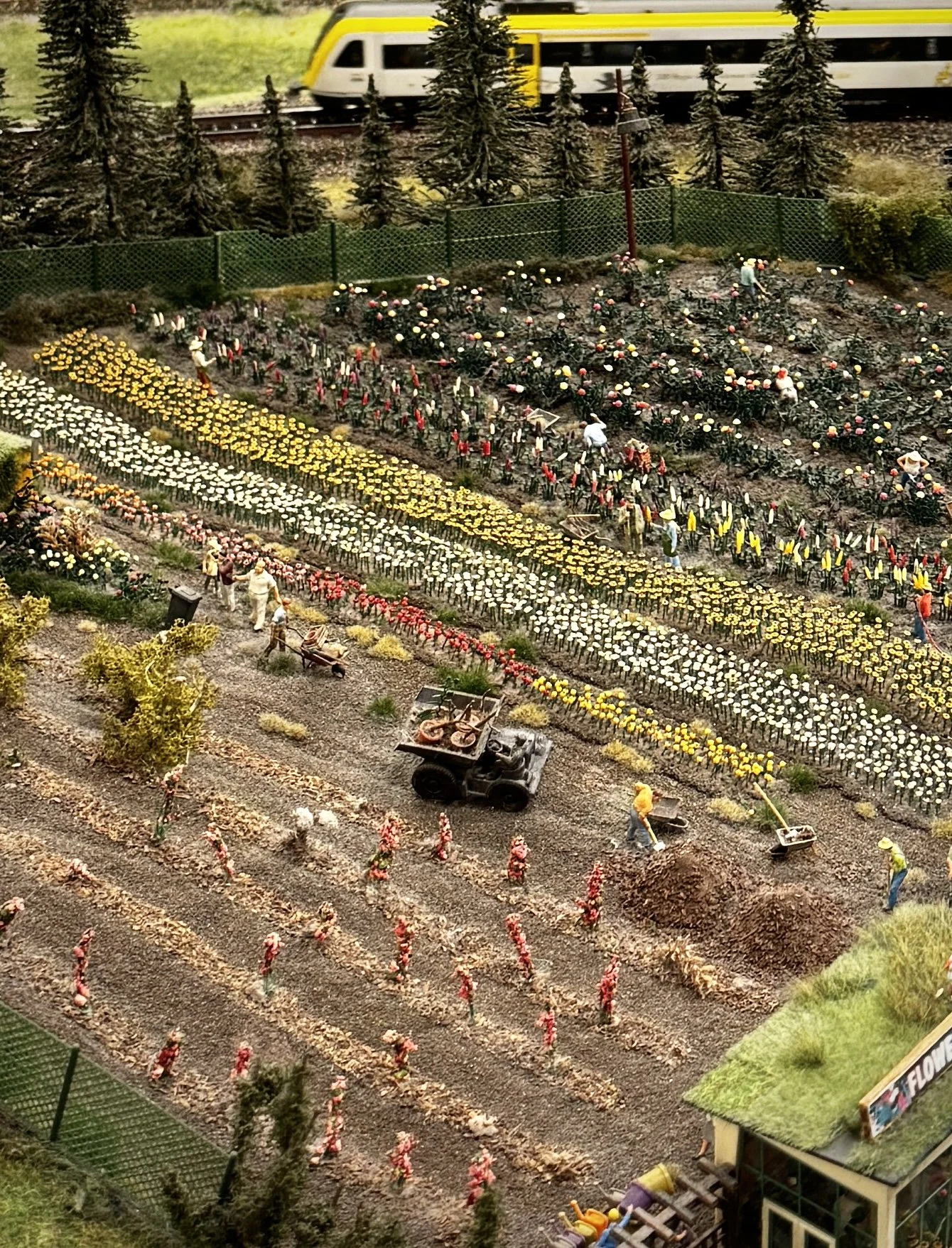
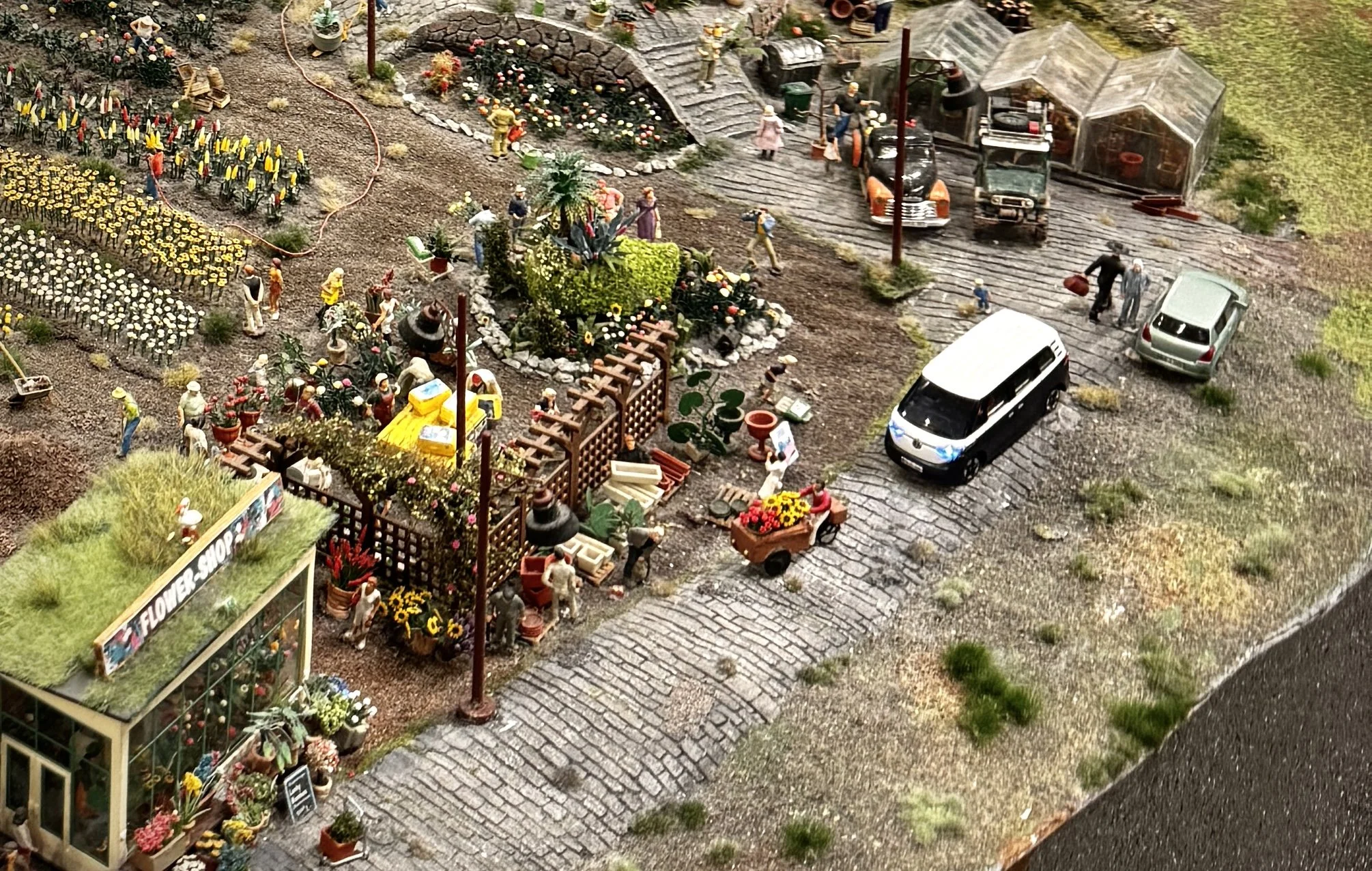
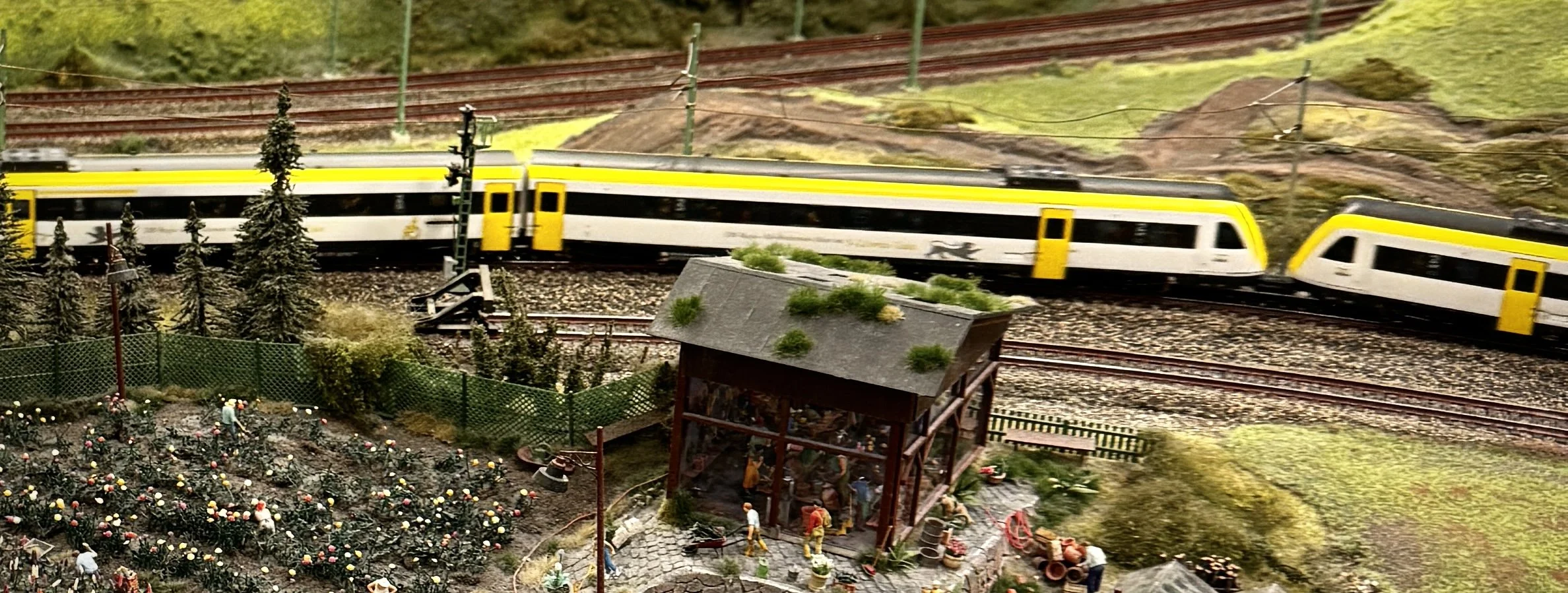
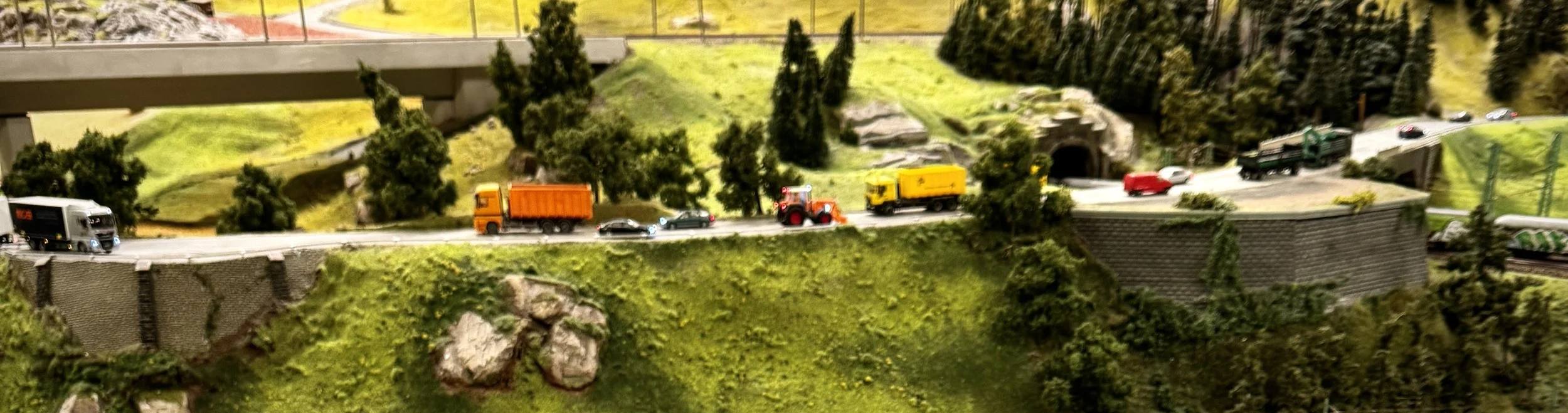
Honestly, I could spend the rest of the year pointing out all of the intricate and delightful little details and theming that made Miniatur Wunderland so terrific, but I’ll content myself with a few photos of the highlights.
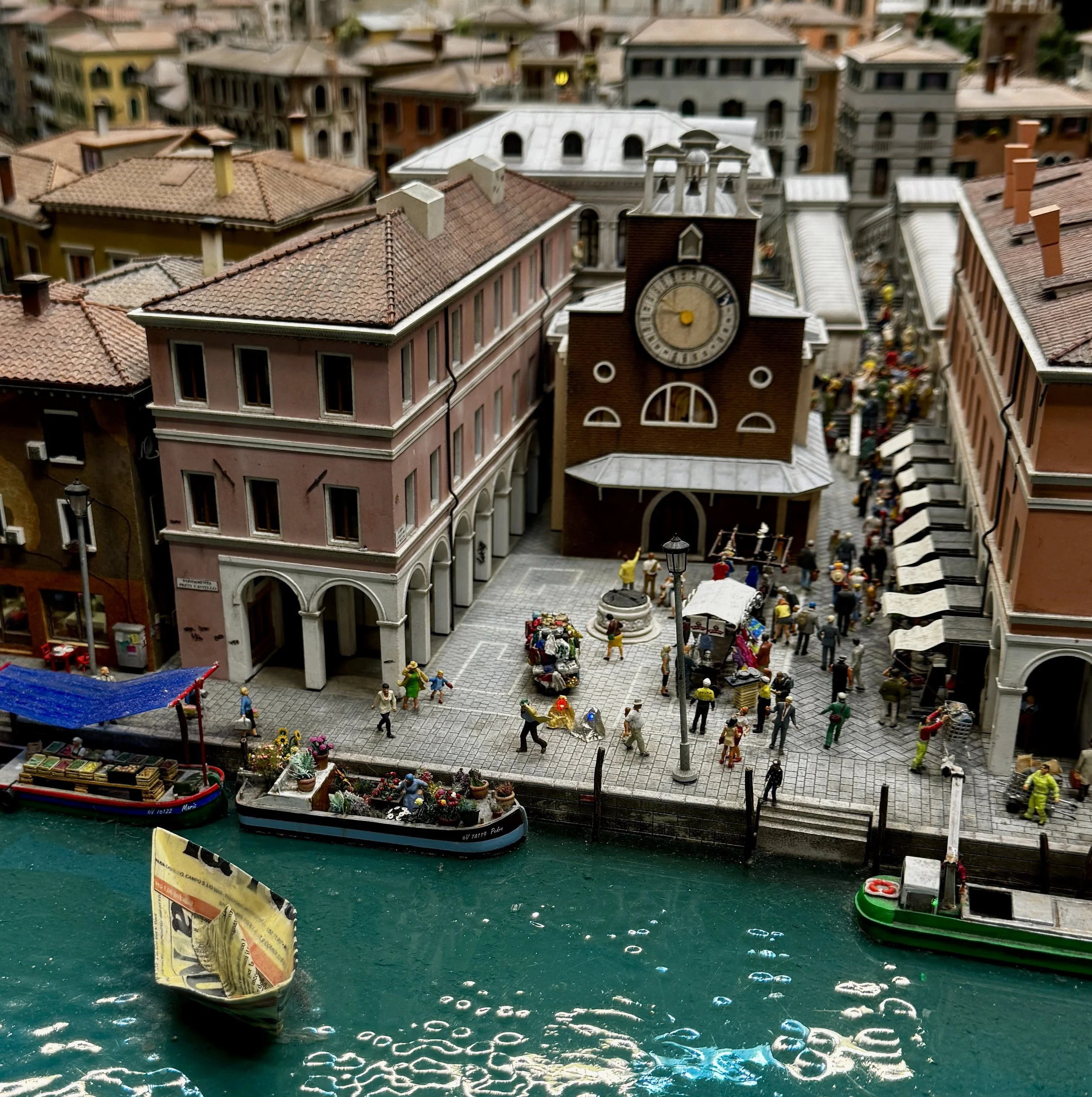
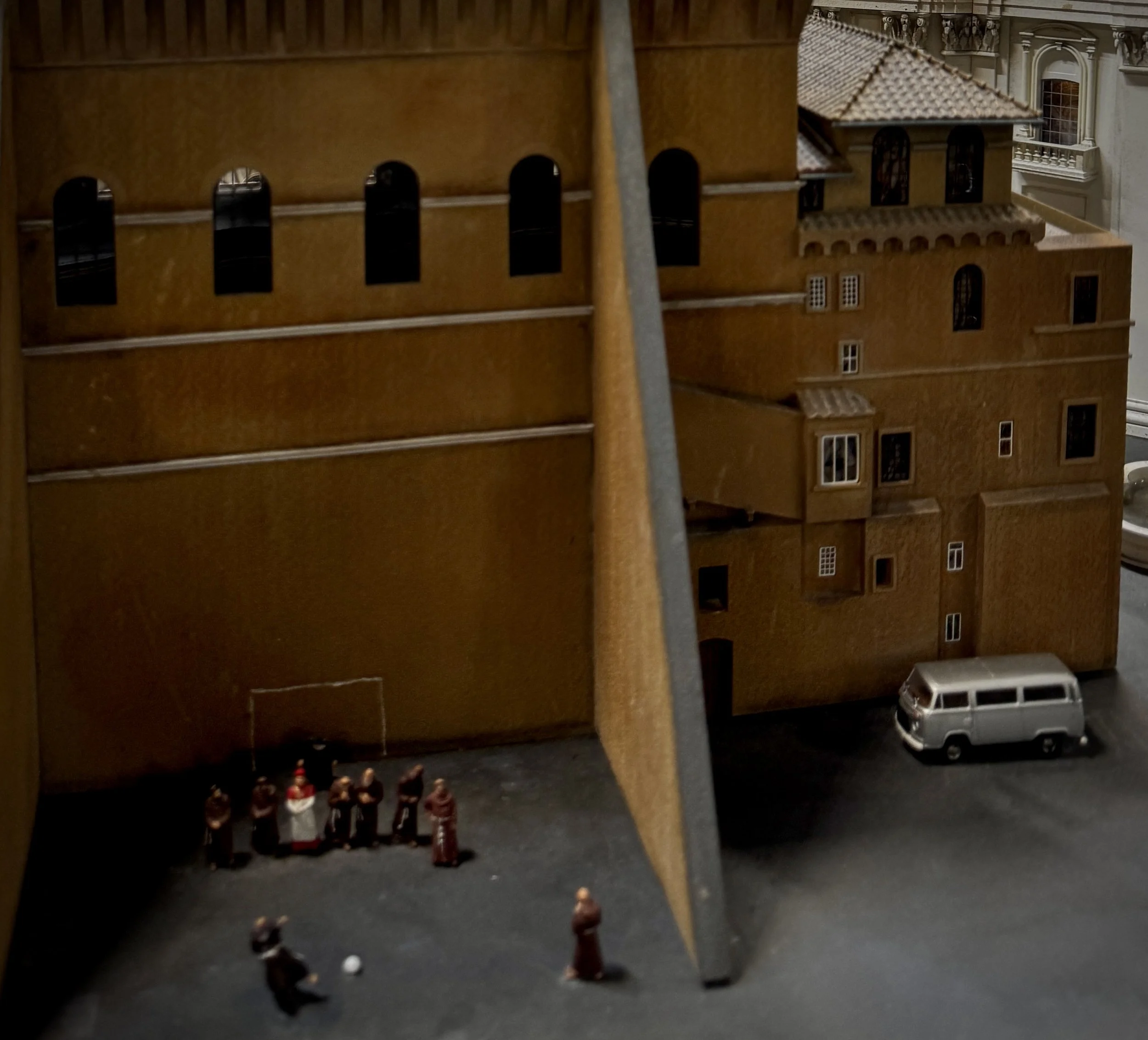
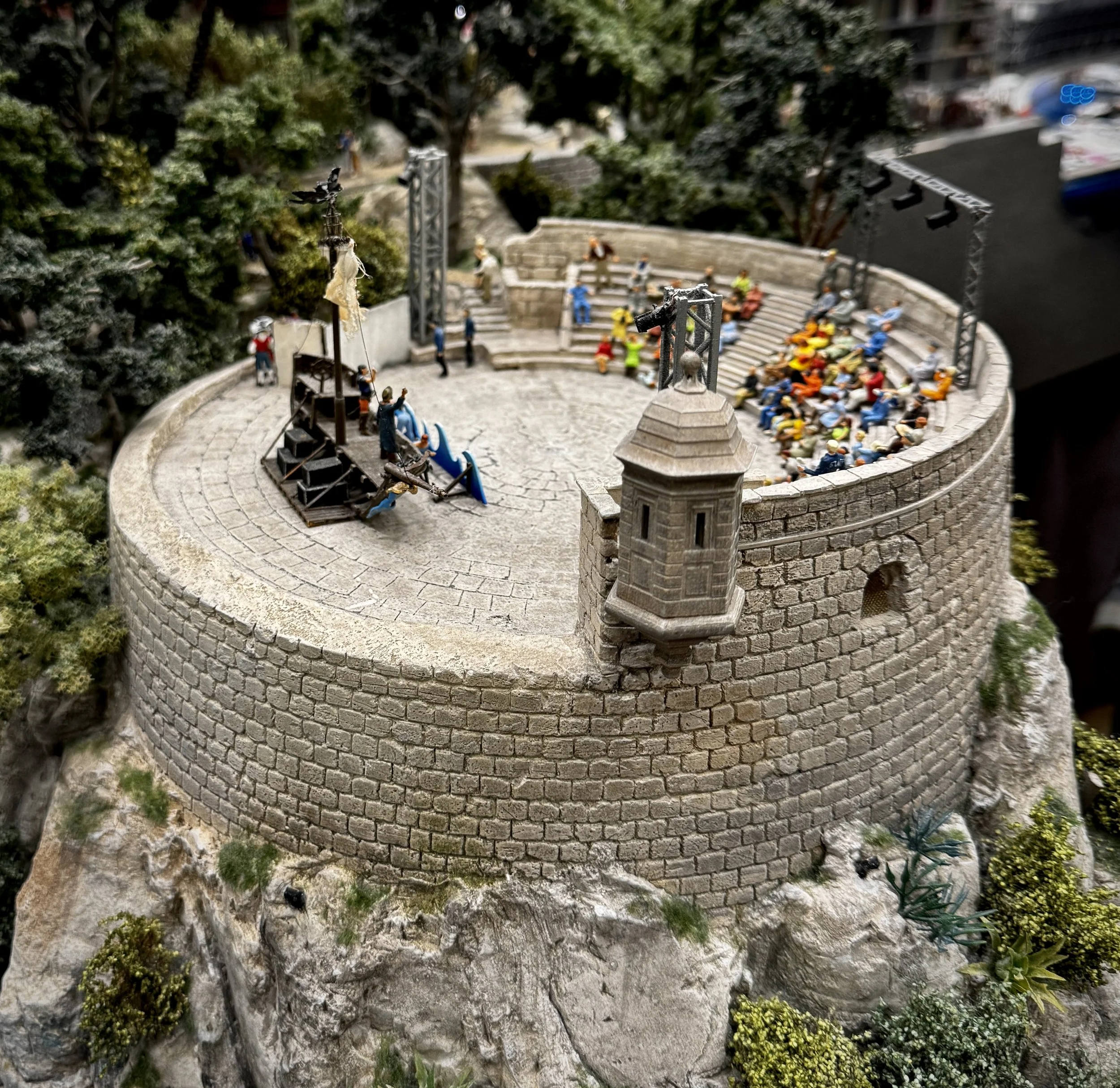
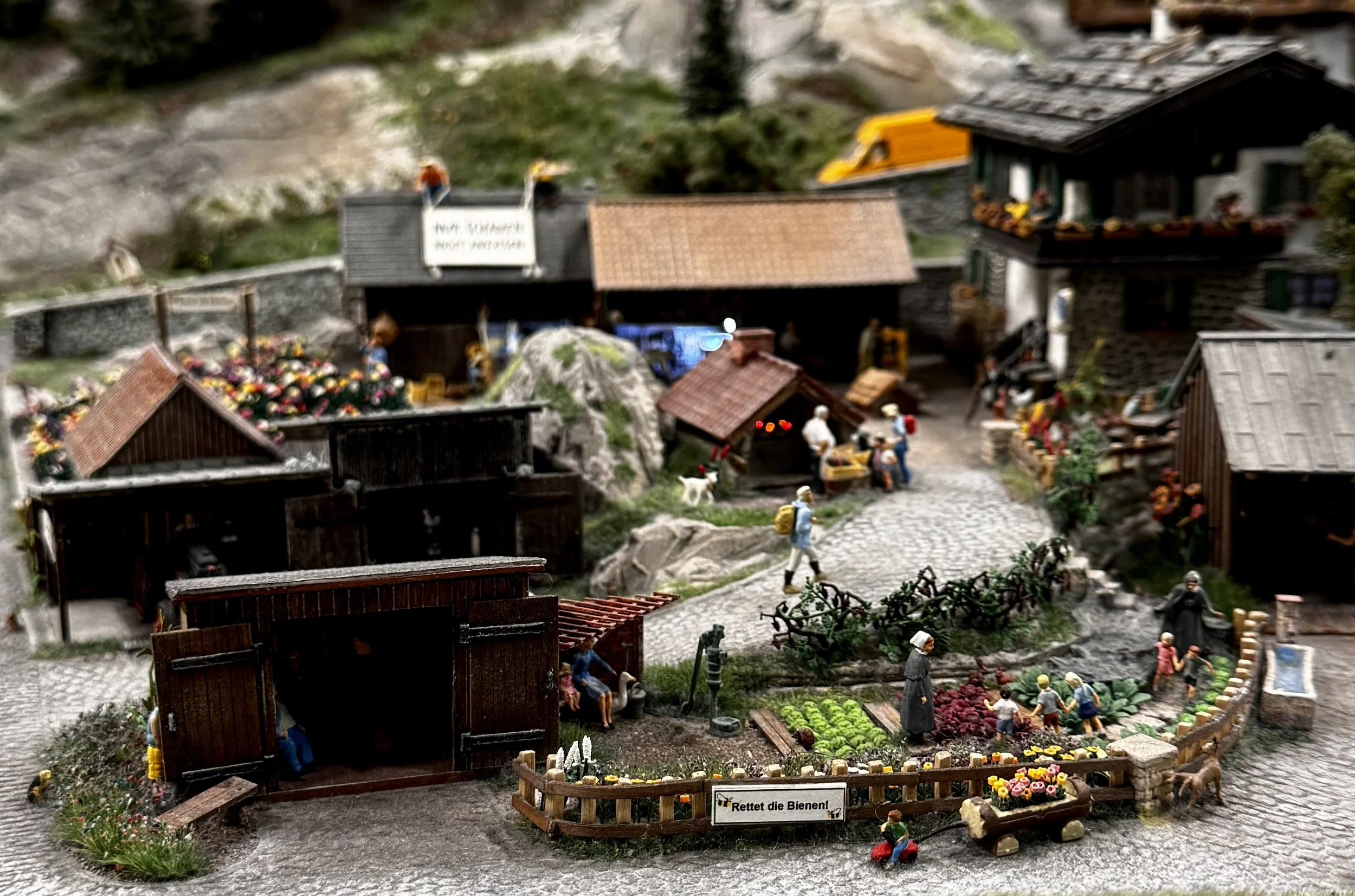
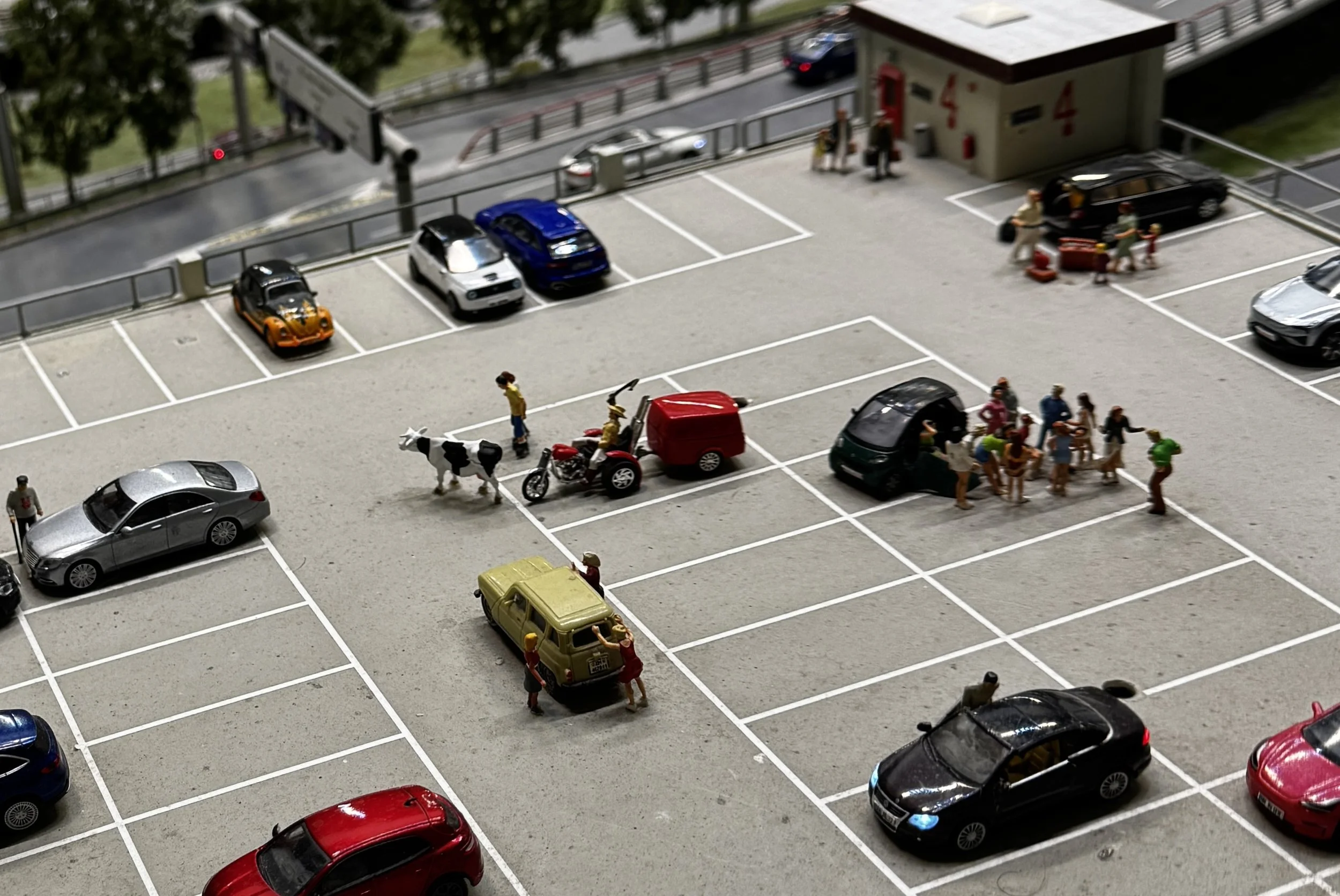
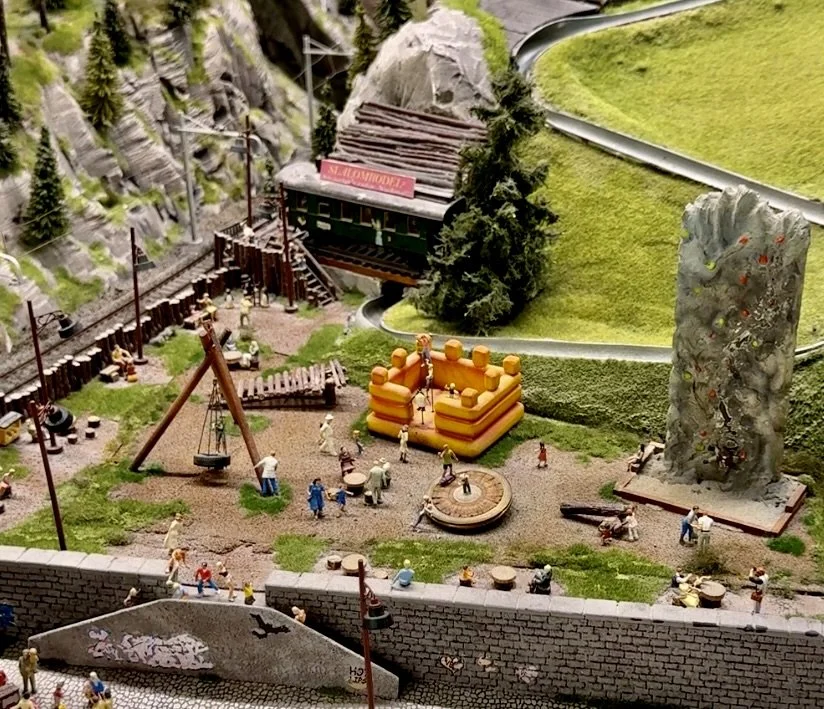
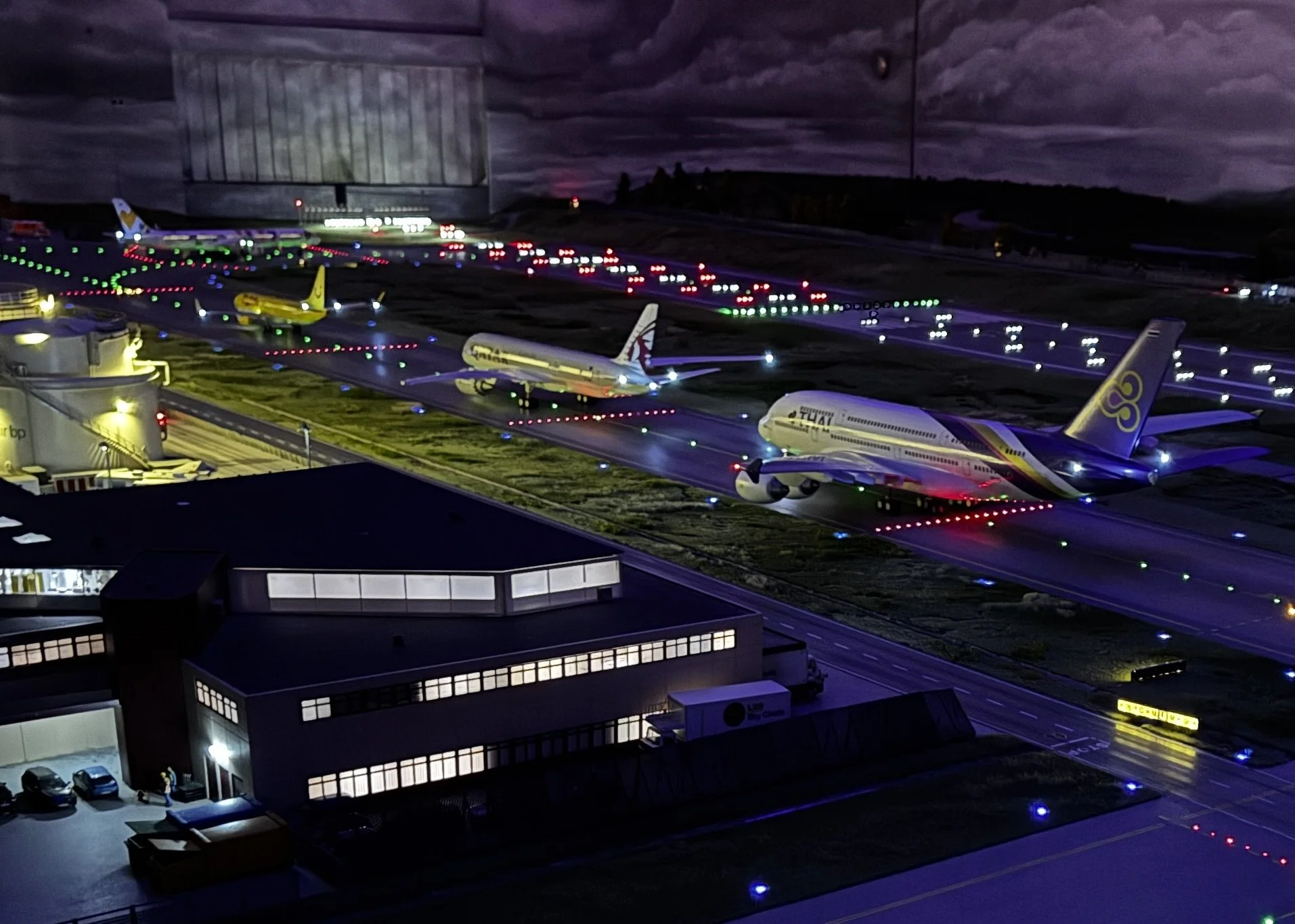
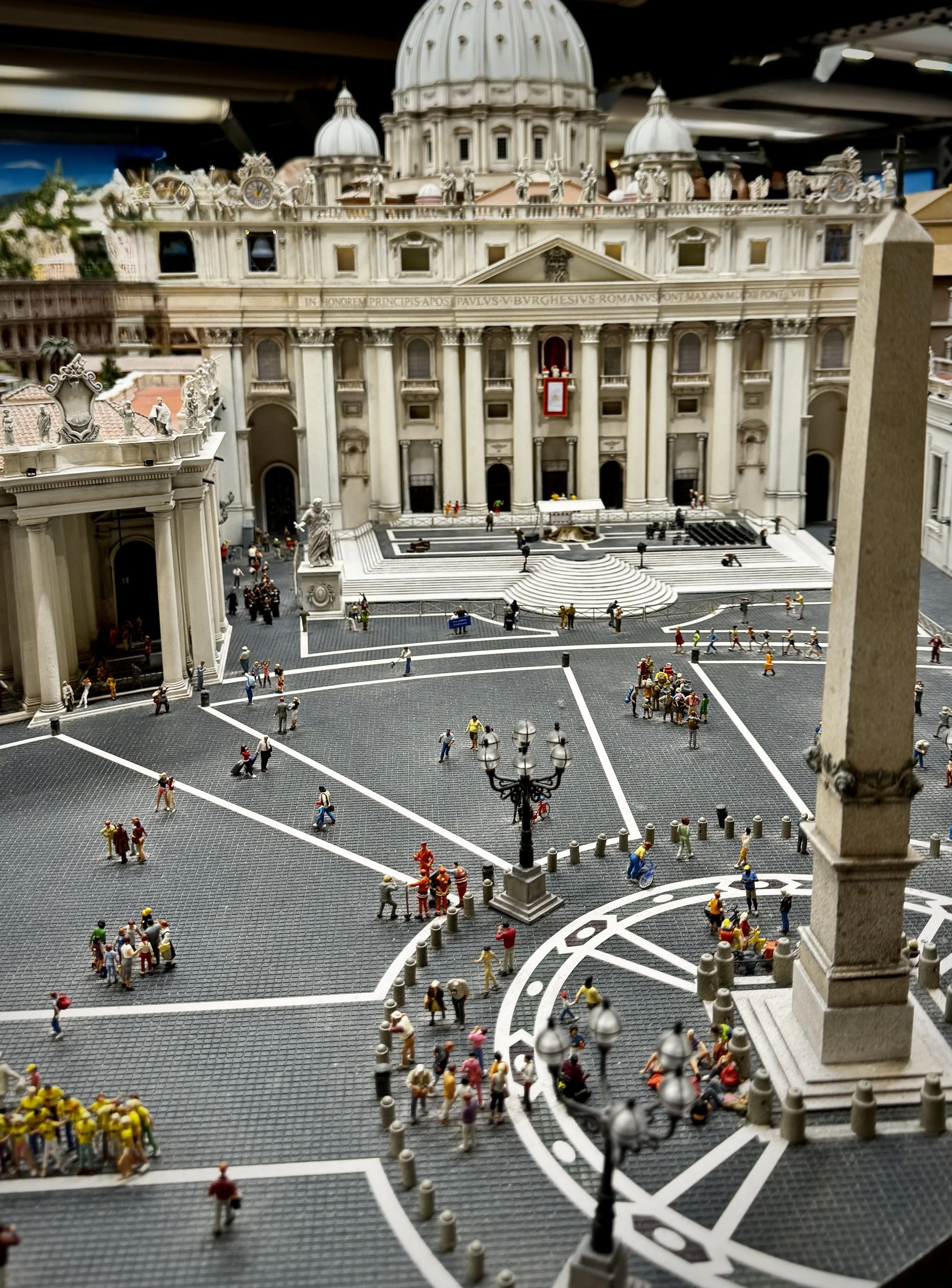
One of the things that fascinated me the most about Miniatur Wunderland was discovering it wasn’t just a giant model railroad — it’s a collection of tiny worlds hidden inside other tiny worlds.
At first glance, the scene below looks peaceful: turquoise water, winding paths, miniature tourists wandering among tiny landmarks. But then the surreal details come into focus — like the monorail disguised as the dragon from The Neverending Story. Tiny crowds and tiny monuments all add up to a larger story. Miniatur Wunderland isn’t just an attraction that you walk through, it’s a world shifting between exacting reproductions and dreamlike scenes and somehow that tenuous combination makes it all the more intriguing.
Looking back, our time in Hamburg almost felt like a gradual descent into imagination.
It started at PierDrei, where the hallways and walls felt more like an art installation than a hotel — surreal paintings, strange details and visual jokes around every corner. Then came the Prototyp Museum, where sleek race cars and engineering history gave us our first glimpse into Germany’s deep automotive culture.
And finally, Miniatur Wunderland somehow brought all of those themes together at once.
Part engineering marvel, part art project, part scavenger hunt, part tiny living world — it ended up being one of the most unexpectedly emotional and immersive stops of our trip. We came for the trains, but what stayed with us were the details: tiny stories unfolding in flower fields, hidden behind the walls of St. Peter’s, miniature airports operating with astonishing realism and entire worlds layered into spaces no bigger than a room.
By the time we finally pulled ourselves away, it honestly felt like we were leaving another universe behind.
But the adventure wasn’t over yet.
After leaving Miniatur Wunderland, we made our way to the local Sixt office and picked up our rental car. As Hamburg disappeared behind us and the autobahn opened ahead, we traded miniature worlds for the real one, setting our sights on Wolfsburg and the next chapter of our mother-and-son road trip.
You can read about our time in Berlin here!

Berlin: History, Horsepower and a Ride Through the Cold War
Driving a Trabant, exploring the Berlin Wall and discovering unforgettable stops — here’s how I planned my German road trip with a teen.
Germany with a Teen: 10-Day Itinerary, Tips & Things to Do
Two years ago, I asked my oldest teen, Jack, to pick a destination for a mother and son trip. We talked about it off and on for awhile and finally landed on Germany — perfect for his interests in cars, technology and trains with some history mixed in. The only time I’d been to Berlin was back in 1993, just a few years after the wall fell and I was eager to return. If you’ve read my blog at all, you’ll know that planning trips is my passion, my therapy and now my job (read more about why I started a travel agency here). Once we settled on a destination, I dove into planning and I’m excited to share my trip with you.
For this trip, I bought tickets from O’Hare on SAS, the Scandinavian airline and I’m pretty sure we were among the first guests to fly on that particular Airbus. It was sparkling!
After takeoff, I pulled on my compression socks, removed my contacts, slipped on my bluetooth eye mask and headed off to the Land of Nod for several hours. Apparently, I missed a “pretty solid airplane dinner.”
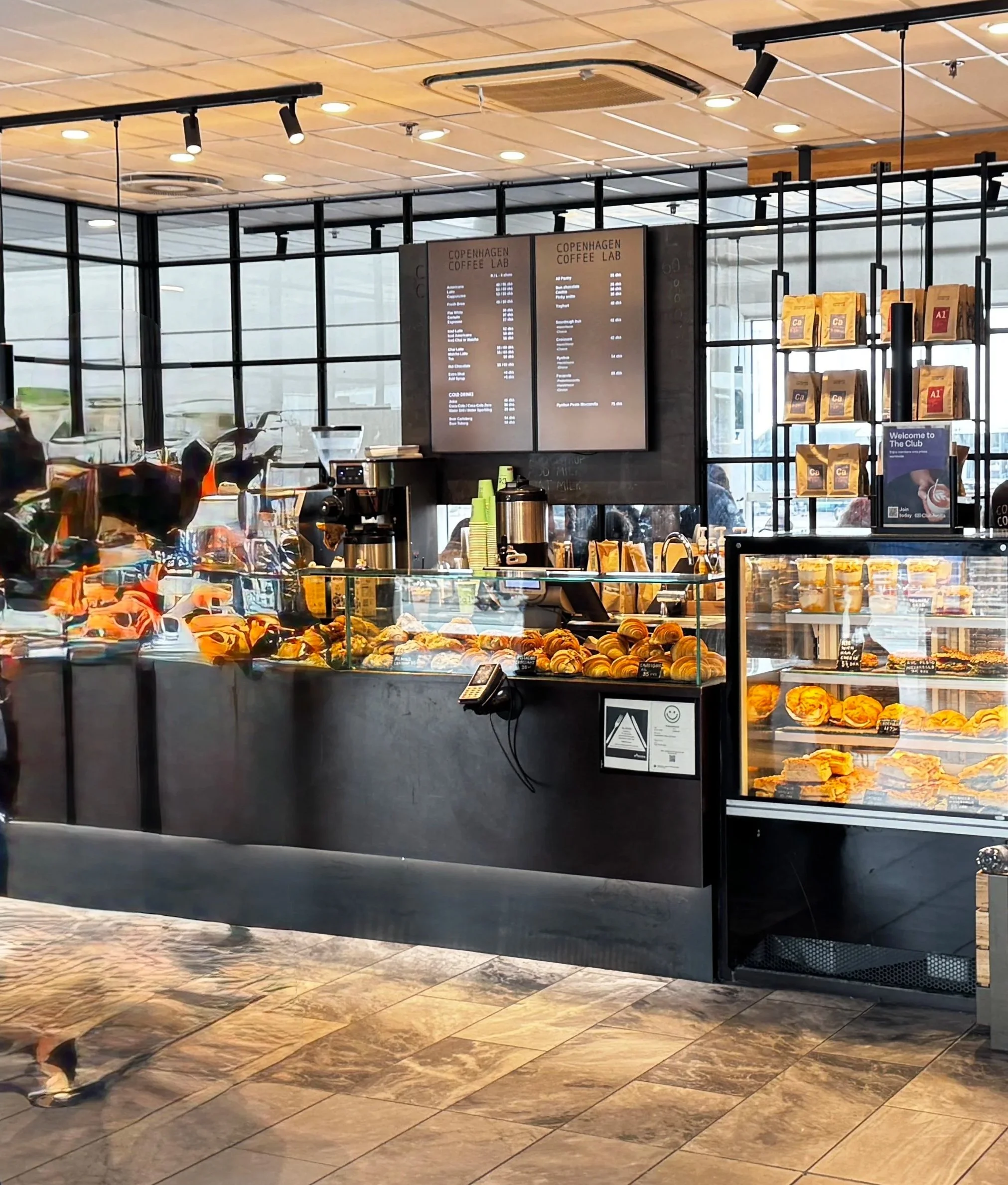
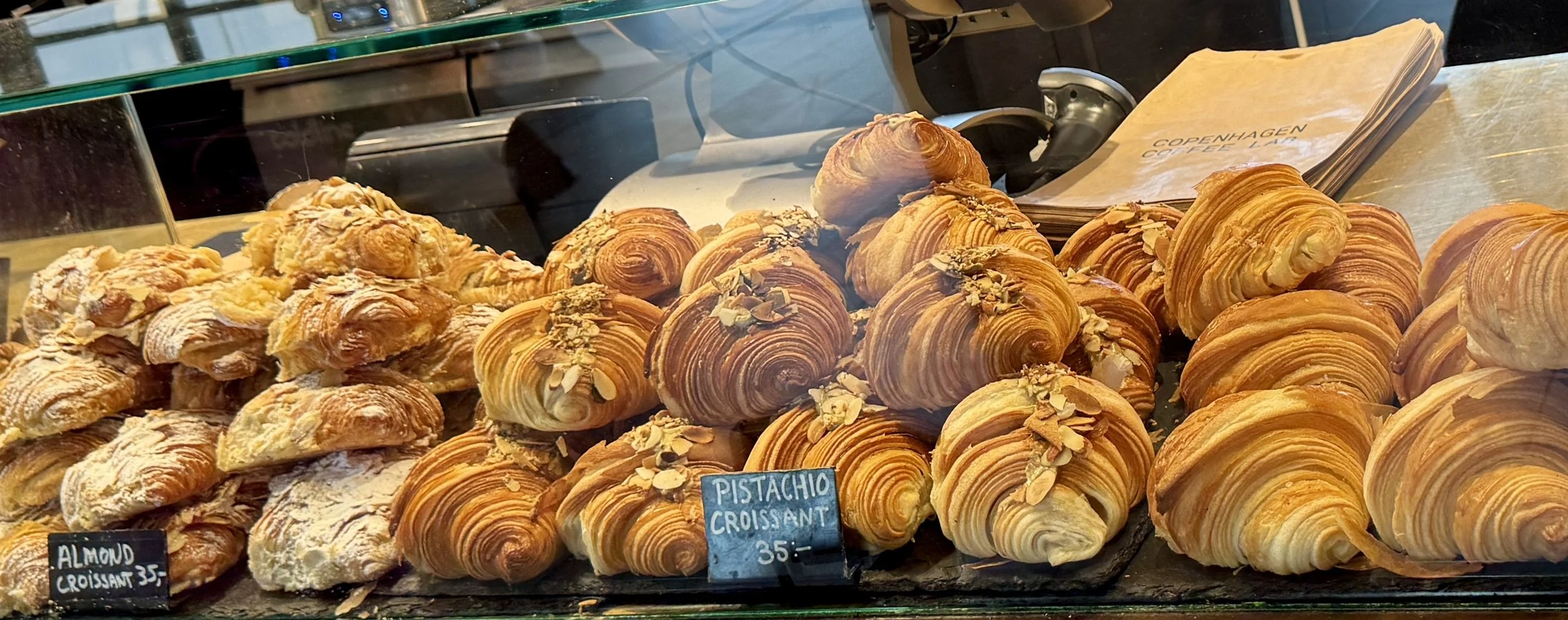
We landed in Copenhagen airport, which was filled with an eye-catching mix of high end stores and a surprisingly amount of 7-Elevens. (Honestly, I think I counted close to a dozen between stores and vending kiosks. If anyone knows how 7-Eleven ended up with such a stranglehold on Copenhagen Airport, I’d love to hear — please send me a message.) After passing through customs, we picked up some delicious pastries and coffee at Copenhagen Coffee Lab before boarding our uneventful and very short flight to Berlin.
I’ve always enjoyed the challenge of navigating a new location using public transportation and so before we left home, I purchased the Berlin Welcome Card ABC card with an activation date of our arrival. Upon landing in Berlin, this card gave us the ability to catch the U-Bahn from the airport to our hotel with only a short walk. There are many versions of the card, including options with free or reduced admission to museums, attractions and public transport and it’s definitely something to consider when visiting Berlin.
For lodging, I chose the Capri by Fraser as our Berlin base since it was between two U-Bahn stations and had strong reviews. We loved it! The staff was kind and friendly, our room was clean and organized like a tidy little bento box, but best of all — the lobby held a special surprise.
After getting settled in our room, I walked to the nearest grocery store, an EDEKA, to load up on a few essentials. It wasn’t an ALDI Süd or Hofer, but it fit the bill. We headed out for a quick, delicious and inexpensive dinner at Spätzle Club and then called it a night.
The following morning, we walked to the Typography of Terror museum, which is built on the former site of the SS and Gestapo headquarters. The exhibits were incredibly powerful and documented the rise of fascism in Germany and how the Nazis managed to manipulate public opinion and demonize and then obliterate people groups like Jews, Roma, homosexuals and Jehovah’s Witnesses — or anyone who stood against them. Entrance was free and photography was permitted, but I didn’t use my camera — it just didn’t feel like that kind of place. One image really stuck with me though, so I decided to try to find it online.
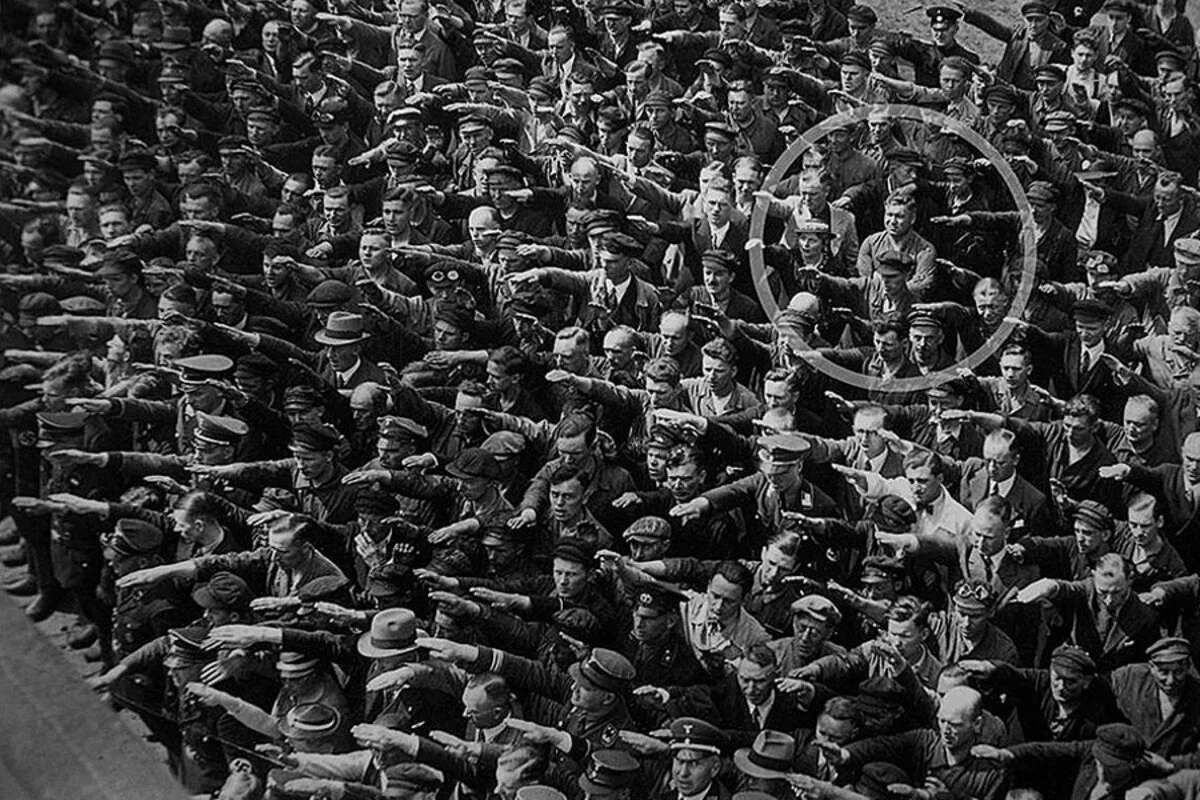
I found the photo in an article from the Christian Science Monitor. The solitary man standing towards the right with his arms crossed during a 1936 Nazi rally was likely a dockworker from Hamburg named August Landmesser.
These were the outdoor exhibits at the Typography of Terror museum, including some original pieces of the Berlin Wall.
After spending time at the Typography of Terror, we found ourselves needing a bit of a reset. Berlin has a way of balancing its heavy history with moments of warmth and for us that meant sampling the drinking chocolate at Rausch Schokoladenhaus.
Rausch is known for its exquisite chocolates, sourced entirely from sustainable cocoa and they control the entire process from “bean to bar".” The store, apparently the largest chocolate house in Europe, was decorated for spring and buzzing with shoppers.
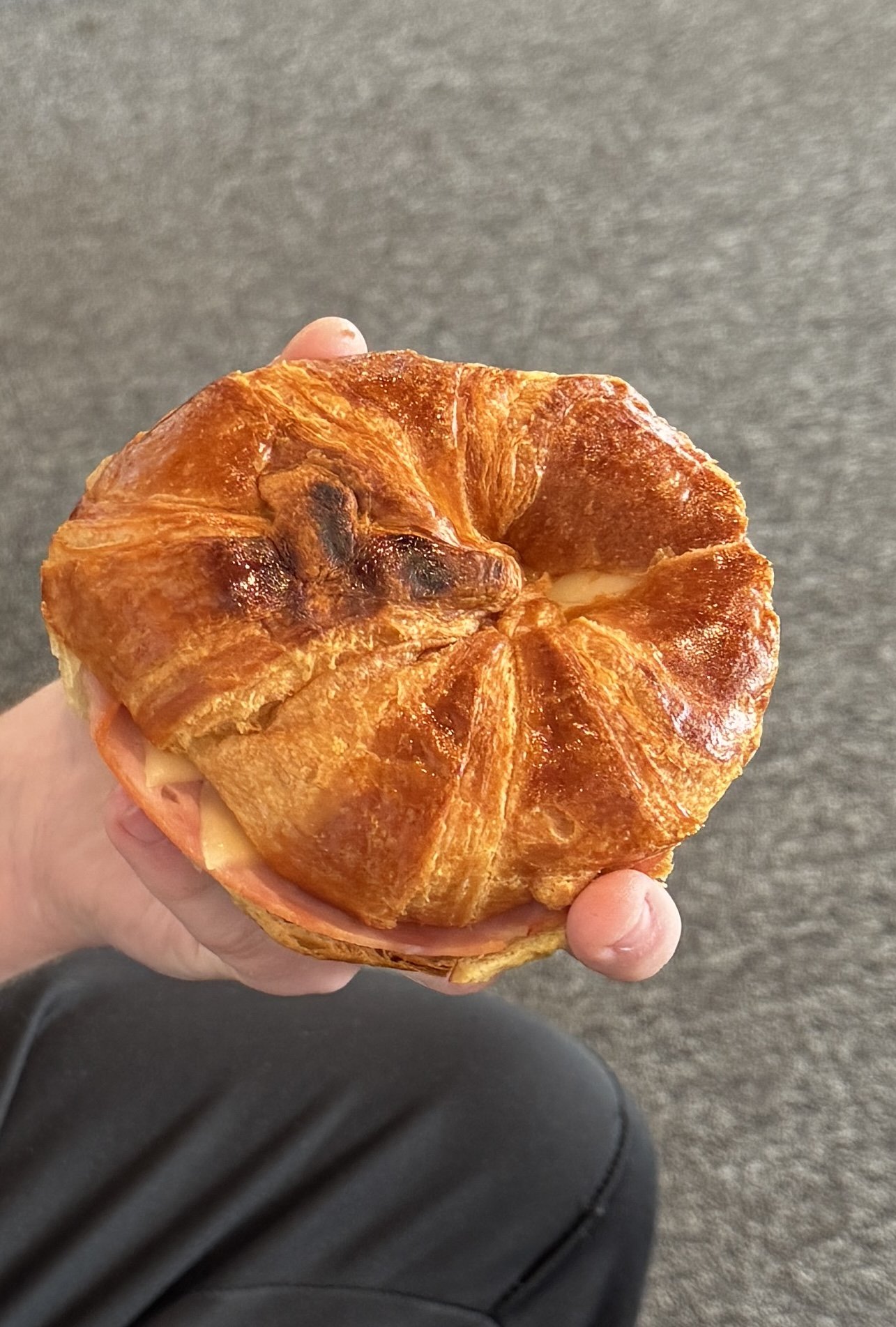
We both ordered their famous drinking chocolate, choosing our desired chocolate and milk combinations. The siren song of the patisserie counter induced me to order a delicious chocolate coffee and hazelnut cake. Jack chose a ham and cheese grilled sandwich and we were both well pleased with our choices!
After Rausch, we walked about ½ mile to the Trabi Safari meeting place. But a little of my own history before I get too far! During high school I studied German; however (and regretfully!) most of the valuable vocab and syntax rules have been relegated to my brain’s recycling center. One thing I do remember is learning about the iconic East German car, the Trabant (aka Trabi) that came to symbolize so much about East Germany. While researching Berlin, I found a tour called Berlin Wall Self Drive Trabi Tour that lets you drive one of their original Trabis through Berlin with commentary. It was the perfect mix of Jack’s interest in Cold War and cars.
Arriving at the Trabi Safari definitely felt like an East German situation with a parking lot full of weeds, gravel and a random assortment of rundown Trabis. Jack immediately found this diamond still in the rough.
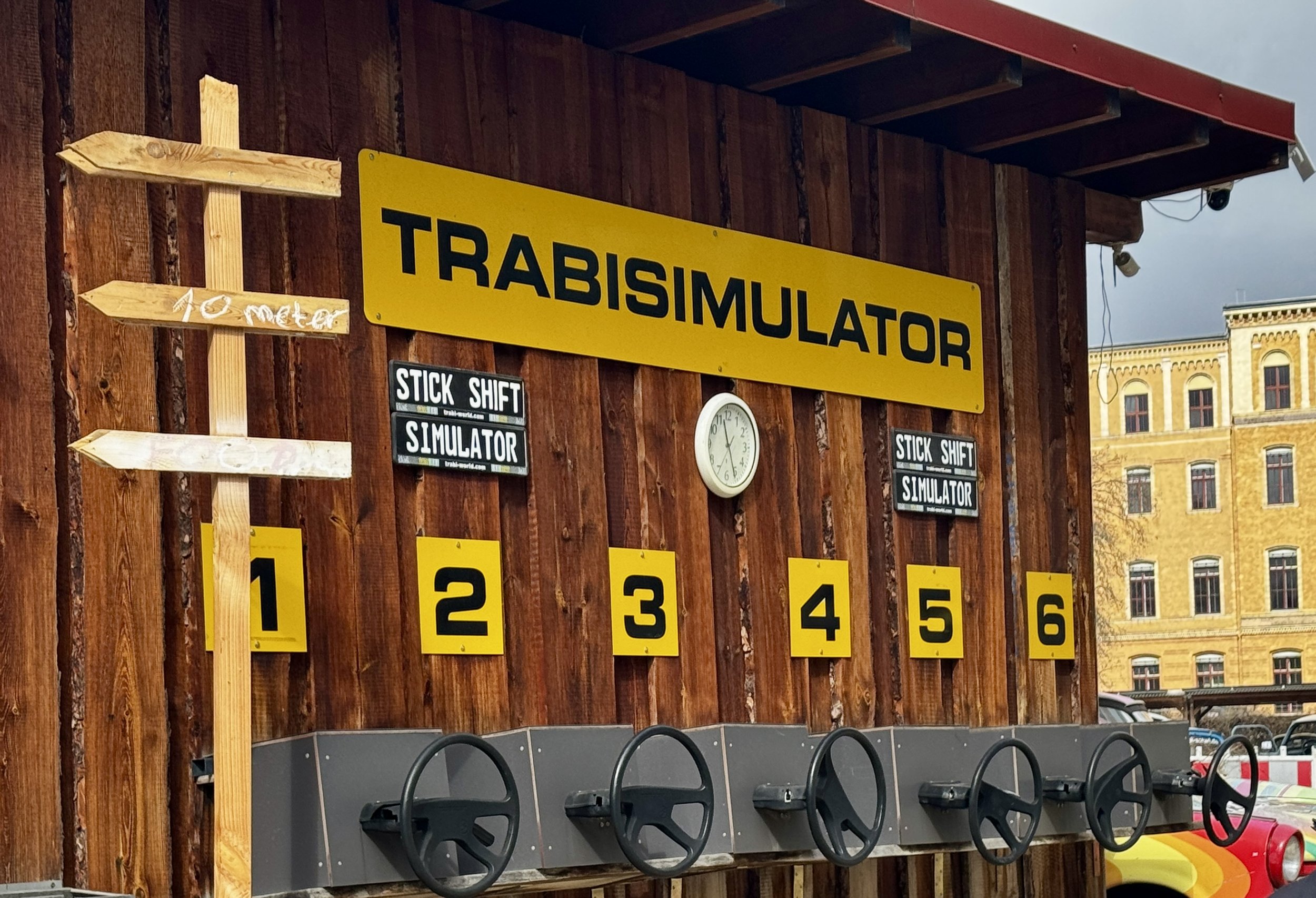
We checked in, said hello to the others in our English speaking group and then practiced the transmission using their “Trabi Simulator.” Truthfully, it was a little complicated even though I learned to drive on a manual transmission car, but fortunately there were no fancy bells or whistles included. After checking that we knew how to drive the Trabi, the guides escorted us to our cars, gave us instructions and lined us up at the exit of their parking lot.
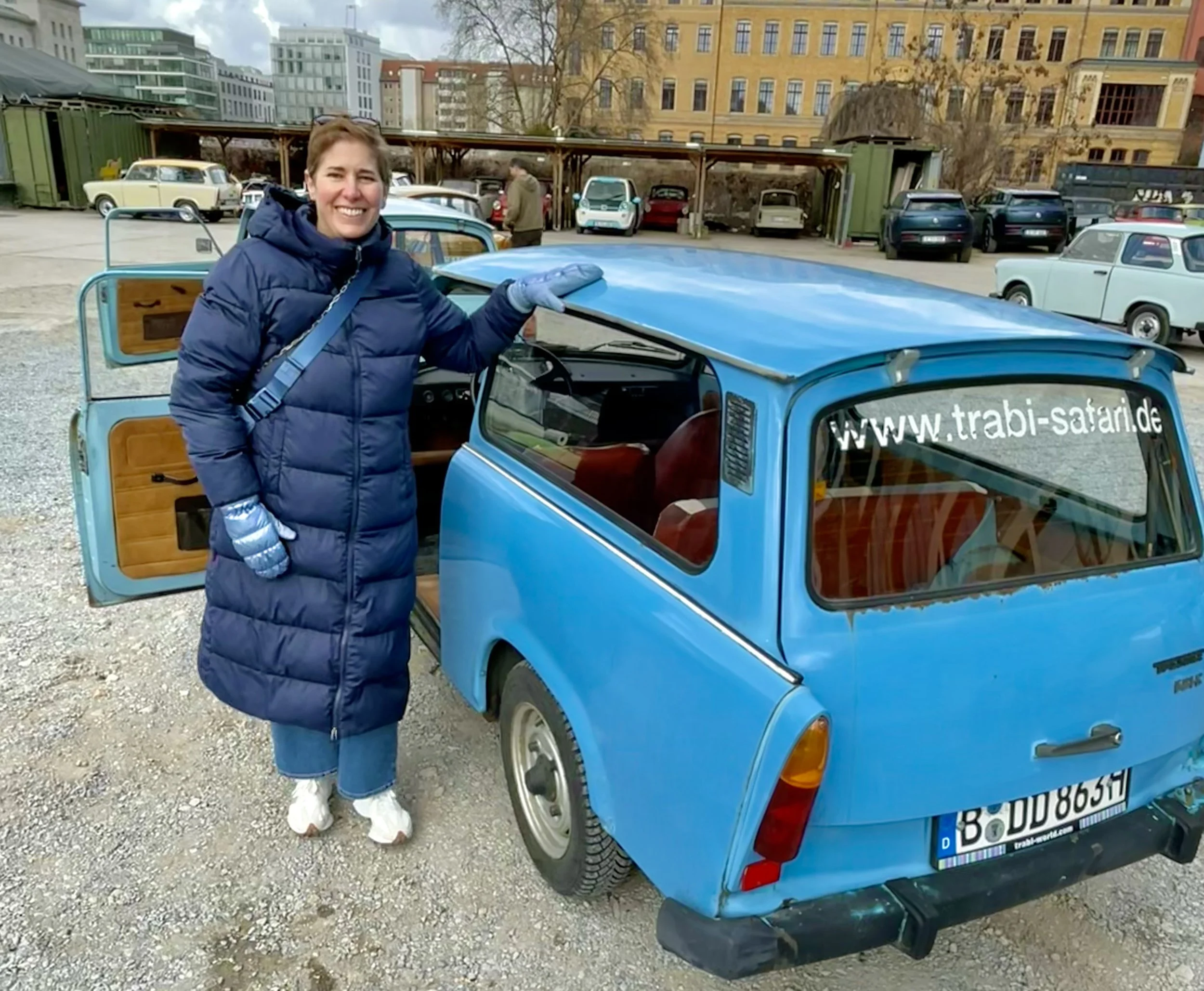
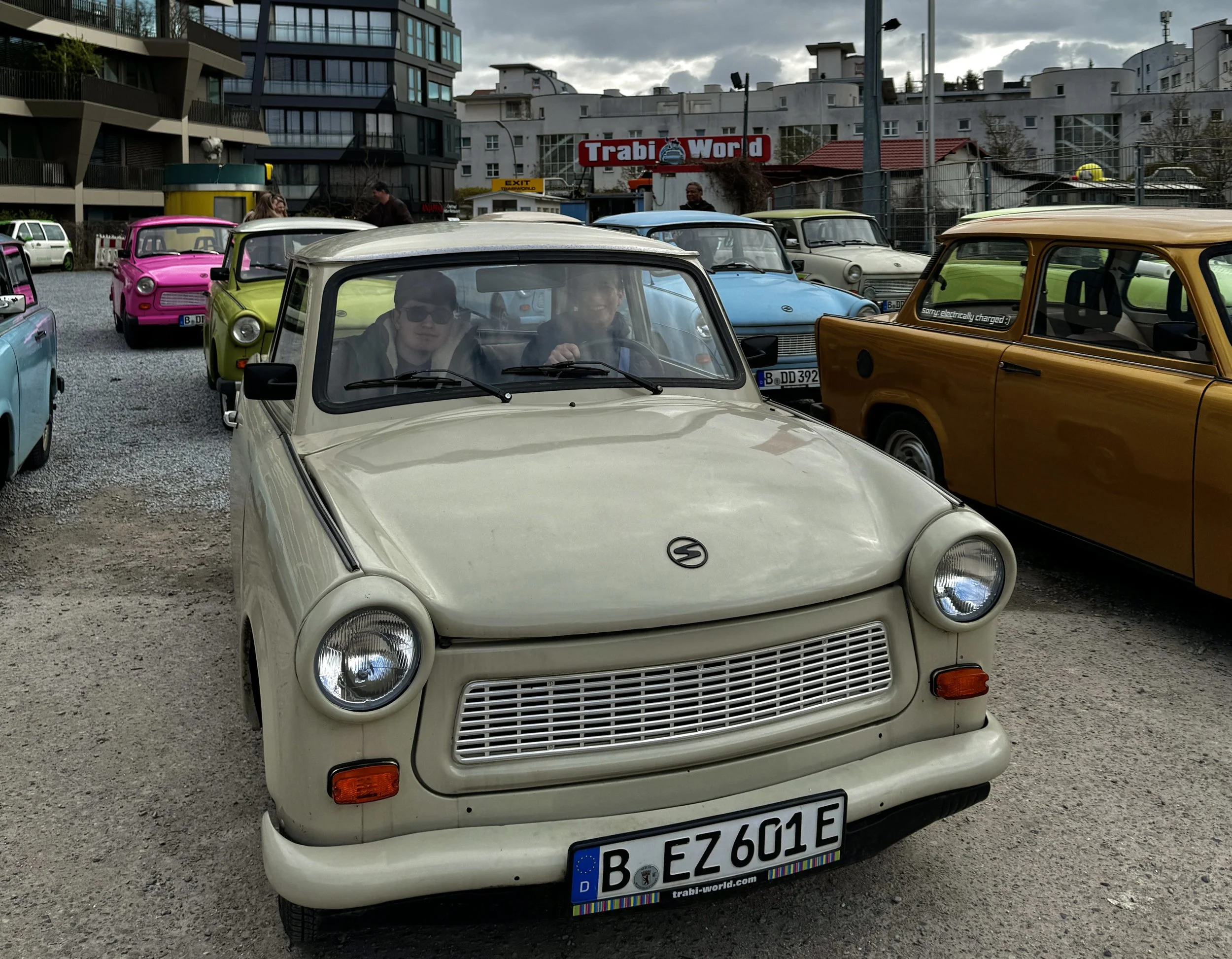
At this point, I realized I was in a busy, giant European city with my teen in an ancient car that was a hunk of junk when it originally came off the assembly line. But I thought about my dad and the adventures he took us on and decided to drive on — and I am so glad we did!
The guide did a terrific job of keeping our group of 6 cars together as navigated us the city. Every so often he’d stop the convoy, wait for a lagging car and would take photos of us in our cars. Along the way, he entertained us with stories about his life in East Berlin. Apparently, his parents applied for a Trabant when they were married in 1970 (all car sales were controlled by the government), and they finally received one in 1984!
Listening to his stories about what he did on the night the wall fell, while driving along the remains of the same wall, was pretty amazing. You can book the same tour here.
Jack and I must feature in hundreds of other vacationers’ photos, I lost count of the number of times people stopped to point or take pictures. It was a little like being celebrities — but in a good way.
Driving a Trabi takes some getting used to. I am driving straight, but the alignment says otherwise!
Looking under the hood shows just how simply these East German cars were built. It has a 2 stroke engine that required a mix of gas and oil — like a lawnmower.
Afterwards, since jet lag was catching up with us, we grabbed dinner at an Italian restaurant near our hotel and called it a night.
The following day, we met our guide for a Cold War walking tour outside of the former Palace of Tears, one of the official border crossings where many West Berliners crossed into East Berlin. It was named as such, since many families who were separated by the wall passed through this checkpoint, never knowing whether they’d see their loved ones again. Today, it’s operated as a museum to divided Berlin.
Our tour continued as we walked through Alexanderplatz, certainly not the prettiest square in Germany, but one of the most pivotal. Standing there with the towering Fernsehturm tower overhead and the wide, open square stretching beyond, it was easy to imagine how it had been the heart of East Berlin.
Next we walked along the broad Karl Marx Allee that was lined with giant apartment buildings on both sides. Our guide explained that these were built by the East German government as showpieces of the Soviet ideal community. The blocks closest to Alexanderplatz were fancy and ornamental, but as we continued our walk, the buildings began to look shabby and less decorated. This decline represented the East German’s economic crisis. Along our walk, we stopped by Café Sibylle, a coffee and cake shop that retained much of its former East German nostalgia.
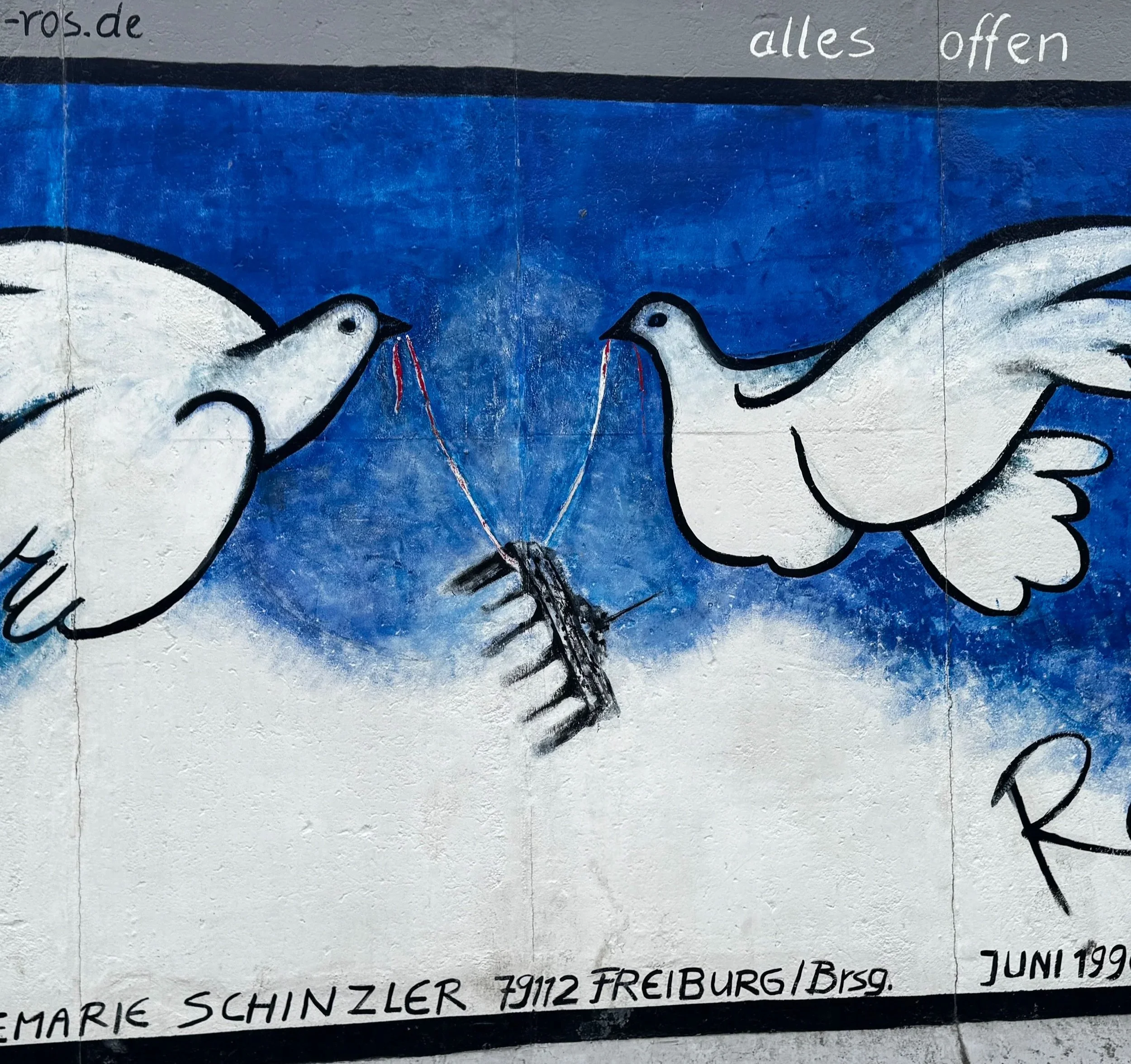
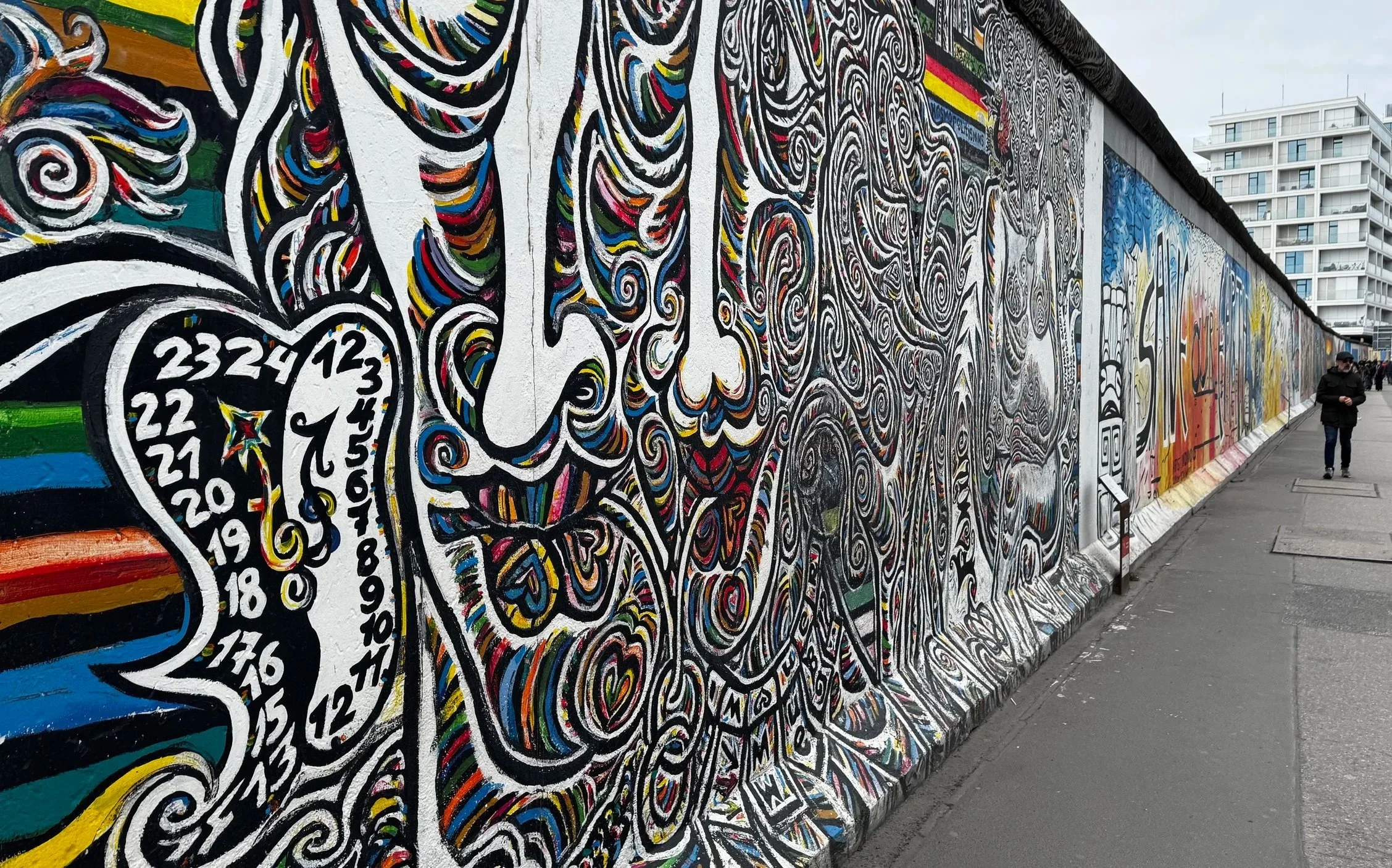
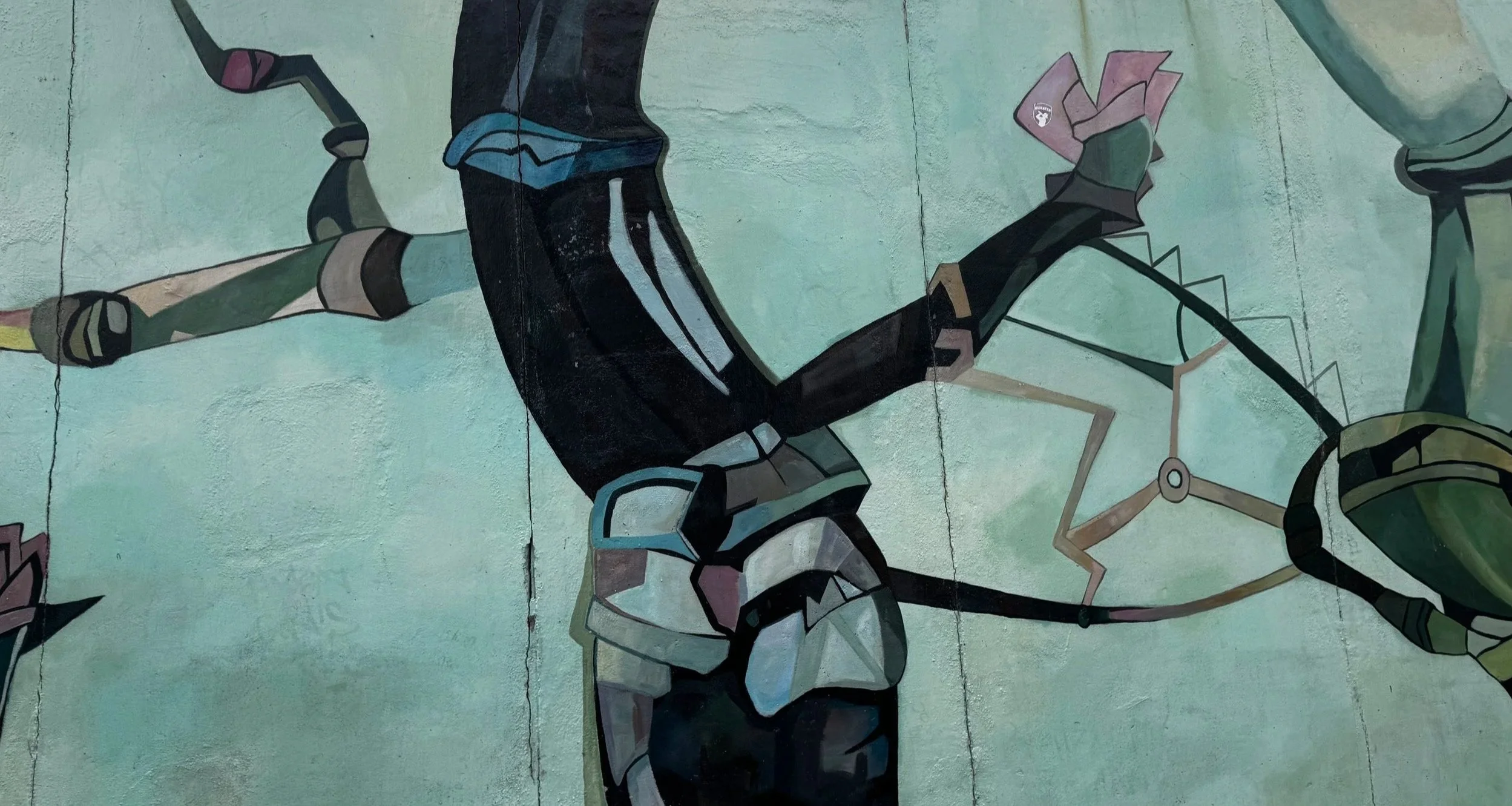
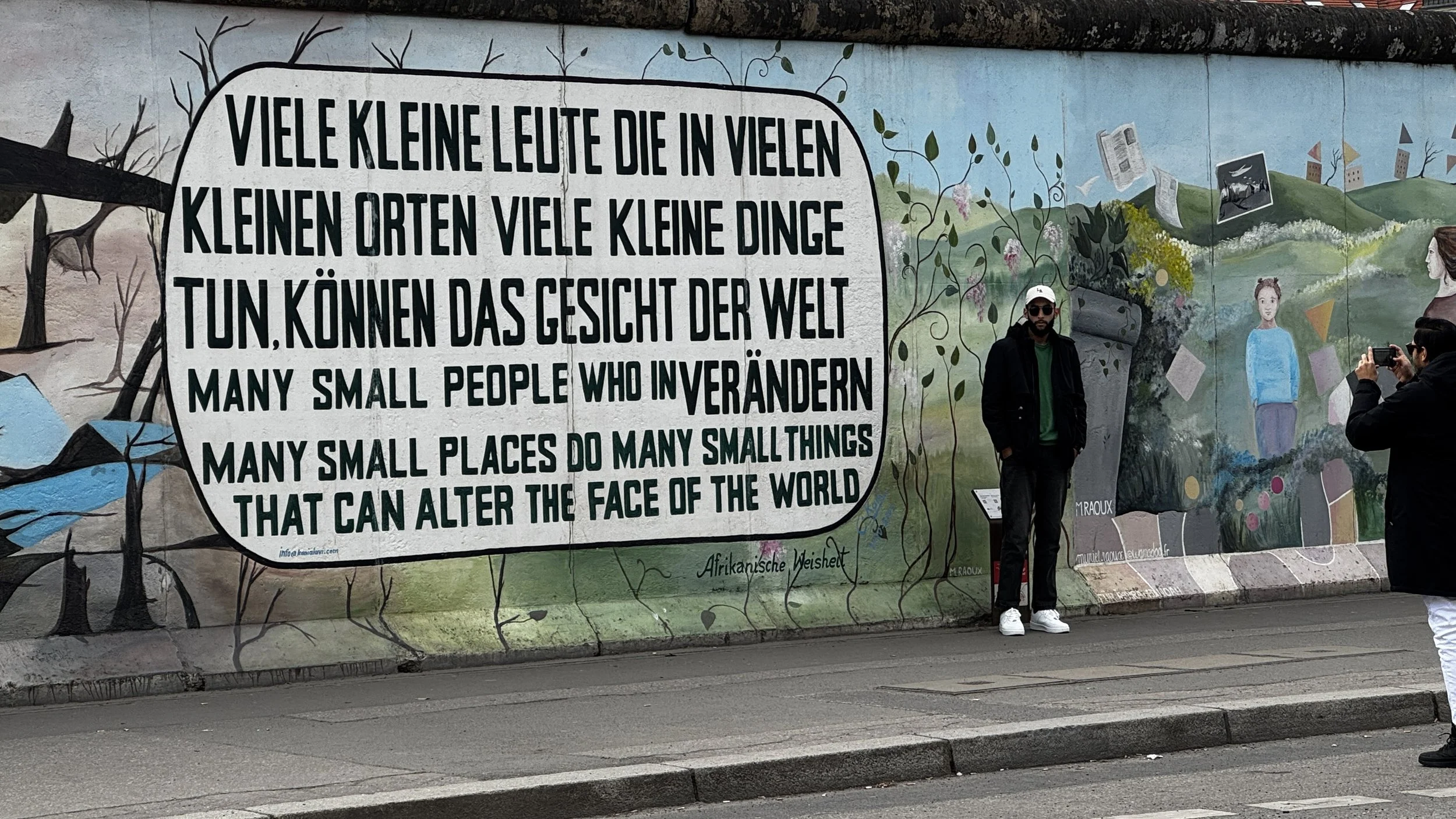
After our snack break, our tour guide brought us to the East Side Gallery, a long stretch of the original “east side” of the Berlin Wall that functions as a memorial and an open air gallery. When you see photos of Berlin, often you’re seeing photos of this gallery. One of the most famous images along the gallery shows East German leader, Erich Honecker, and Soviet leader, Leonid Brezhnev, in a “fraternal kiss” — a real gesture used by communist leaders to symbolize solidarity. Today, it stands as testament to East Germany’s complicated past.
Our walking tour concluded here and Jack and I meandered along the gallery, taking everything in. I’ve included a couple of highlights below. Be sure to click on each photo read a little bit more about it.
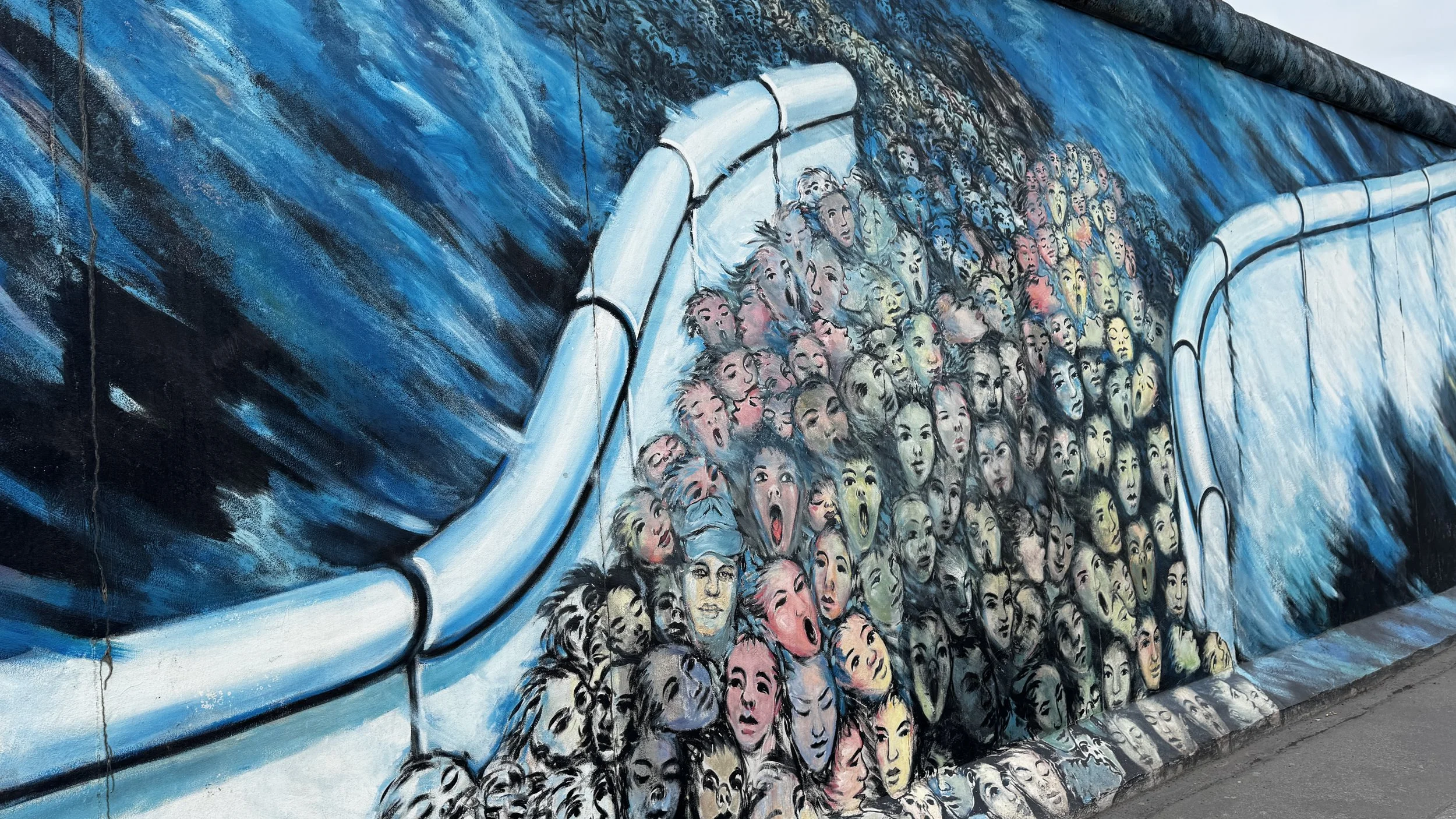
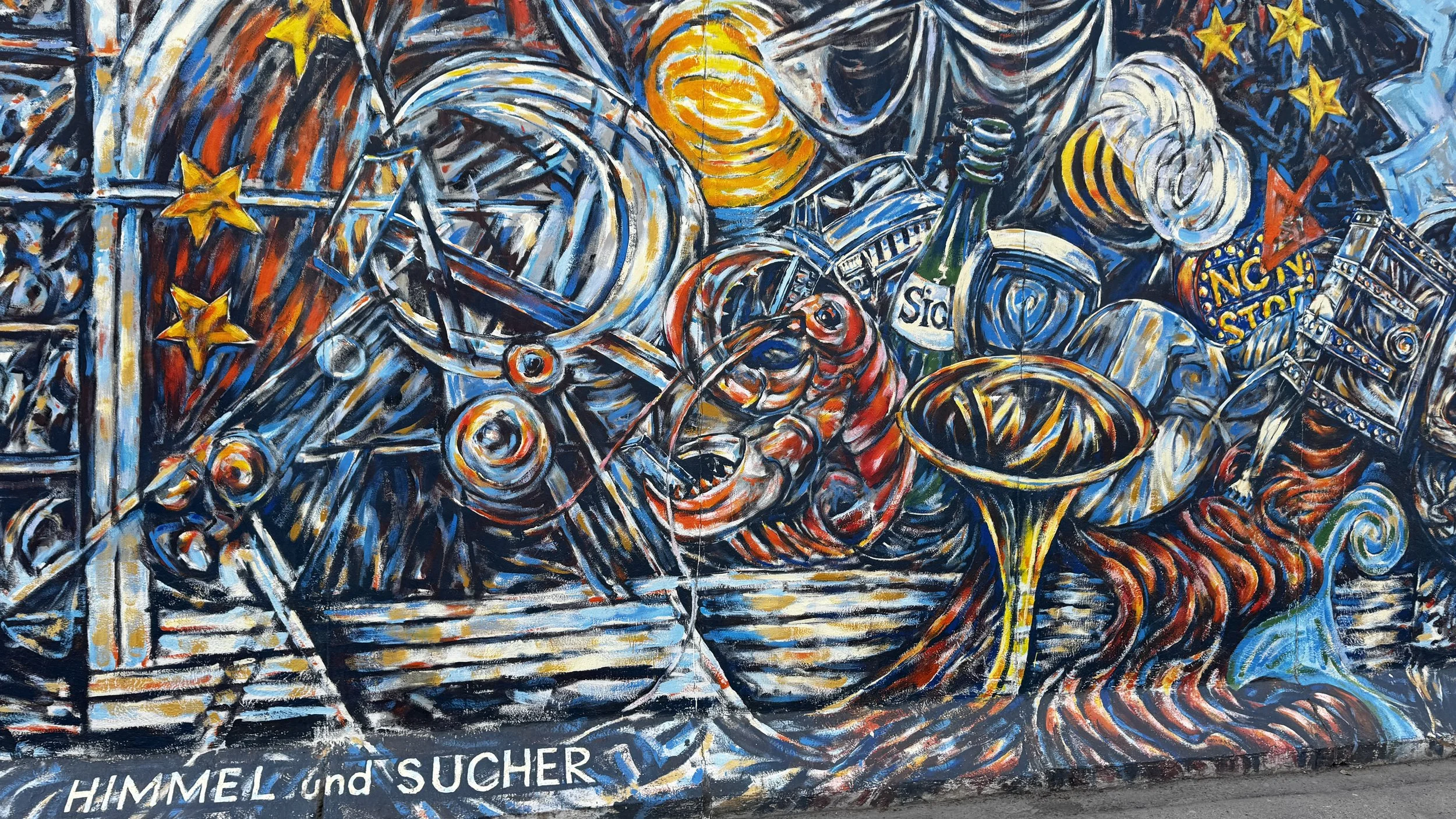
After a quick stop at our hotel, we jumped on the U-Bahn and headed to the Paracelcus-Bad station to meet Danylo, the guide for our next tour. I love taking photos, but I’m not great at composition or style, so when I saw his tour “Smartphones are Not For Calling,” I immediately booked it and it ended up being so much fun.
This experience turned out to be so much more than just a photography tour. Danylo is one of those rare people who instantly puts you at ease and feels like a friend right away. His joy and passion for Berlin were contagious and he helped us notice details that we would’ve otherwise walked past.
Over the next 90 minutes, he showed us how to get more out of our phones by improving composition, lighting and even capturing movement. He has a love for Berlin’s subway stations and guided us through several of its 145 stations, each with its unique design and character.
Honestly, this was probably my favorite experience of the trip and I’m so glad we did it early on. I immediately began using what I learned to take better photos for the remainder of our trip.
Book this tour with Danylo here.
Berlin doesn’t hide its history; it invites you to engage with it. Whether standing along the former Wall or learning the stories behind it, the past feels immediate and real. It was a powerful place to start our German roadtrip and one that left a lasting impression on both of us.
Read about our next stop — Hamburg: Miniatur Wunderland and Tiny Worlds