

Hamburg: Miniatur Wunderland and Tiny Worlds
Germany with a Teen: 10-Day Itinerary, Tips & Things to Do
When Jack, my oldest, was much younger, he loved everything about trains and our home was littered with train detritus. Every room became a parkour course of dodging elaborate tracks and tiny trains. At the library, I rented videos of scenic train vistas that promptly put my husband and I to sleep, but which Jack enjoyed. Somehow, my dad heard about Miniatur Wunderland in Hamburg, Germany and decided he wanted to take Jack for a visit. Although we visited Germany several times, we were never far enough north to visit Hamburg so it was at the top of the list when I began planning our mother-son trip. My dad did not live long enough to take Jack, but I took him, knowing that my dad would’ve been pleased and it was amazing.
Miniatur Wunderland is the largest model train layout in the world with 16,000 trains running on 10 miles of tracks! The layout spans 2 brick warehouse buildings, leftover from Hamburg’s shipping legacy, dating back to the Hanseatic League. I’d read that ticket lines can be long so I booked a package that combined a hotel stay and tickets to Miniatur Wunderland.
We traveled to Hamburg from Berlin via train and upon arrival, it was a quick Uber to our hotel, PierDrei, which was located in the Hafen City district. It was a gloriously sunny Sunday afternoon and people were walking everywhere and sitting at outdoor cafes enjoying the spring weather.
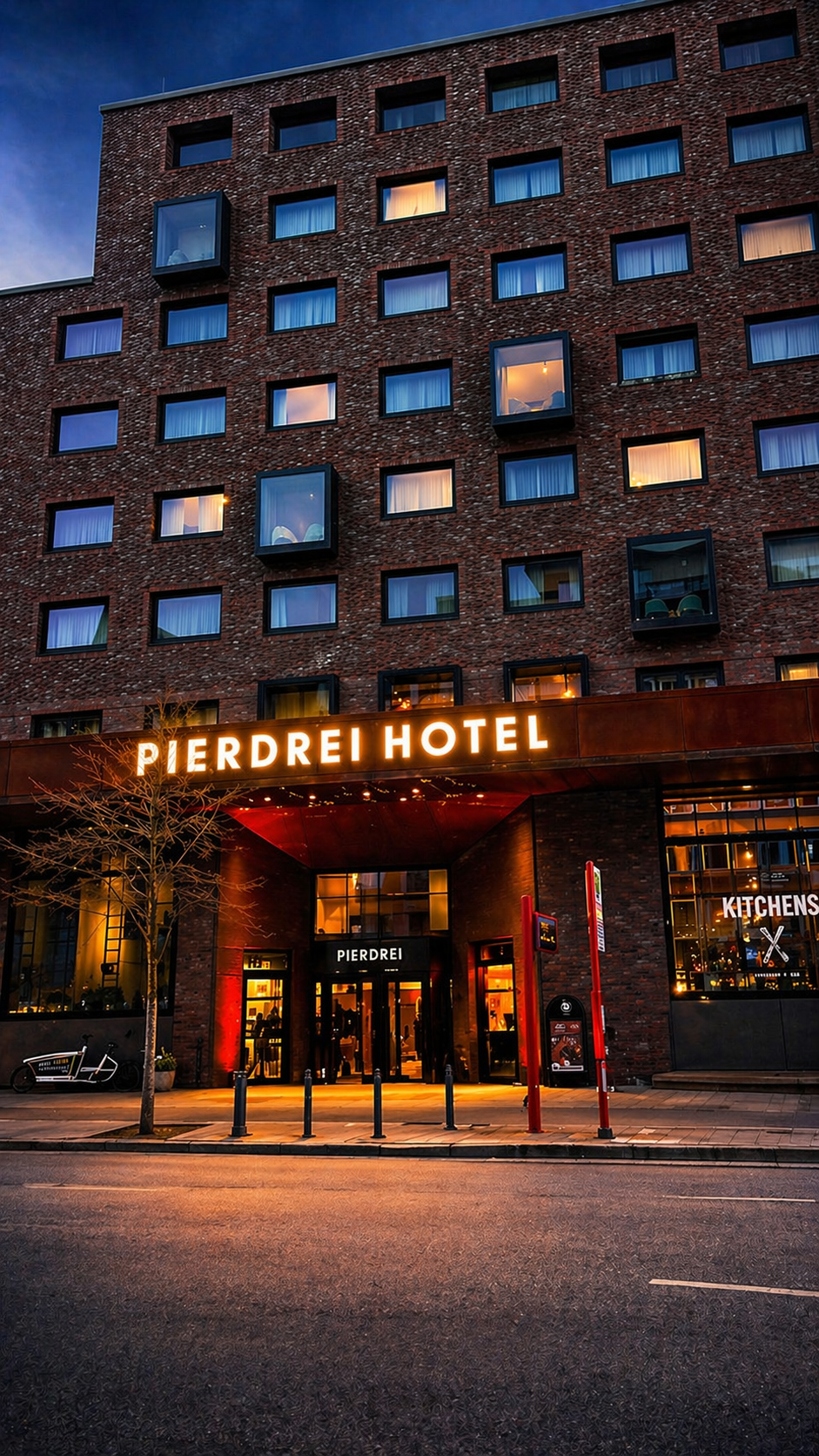
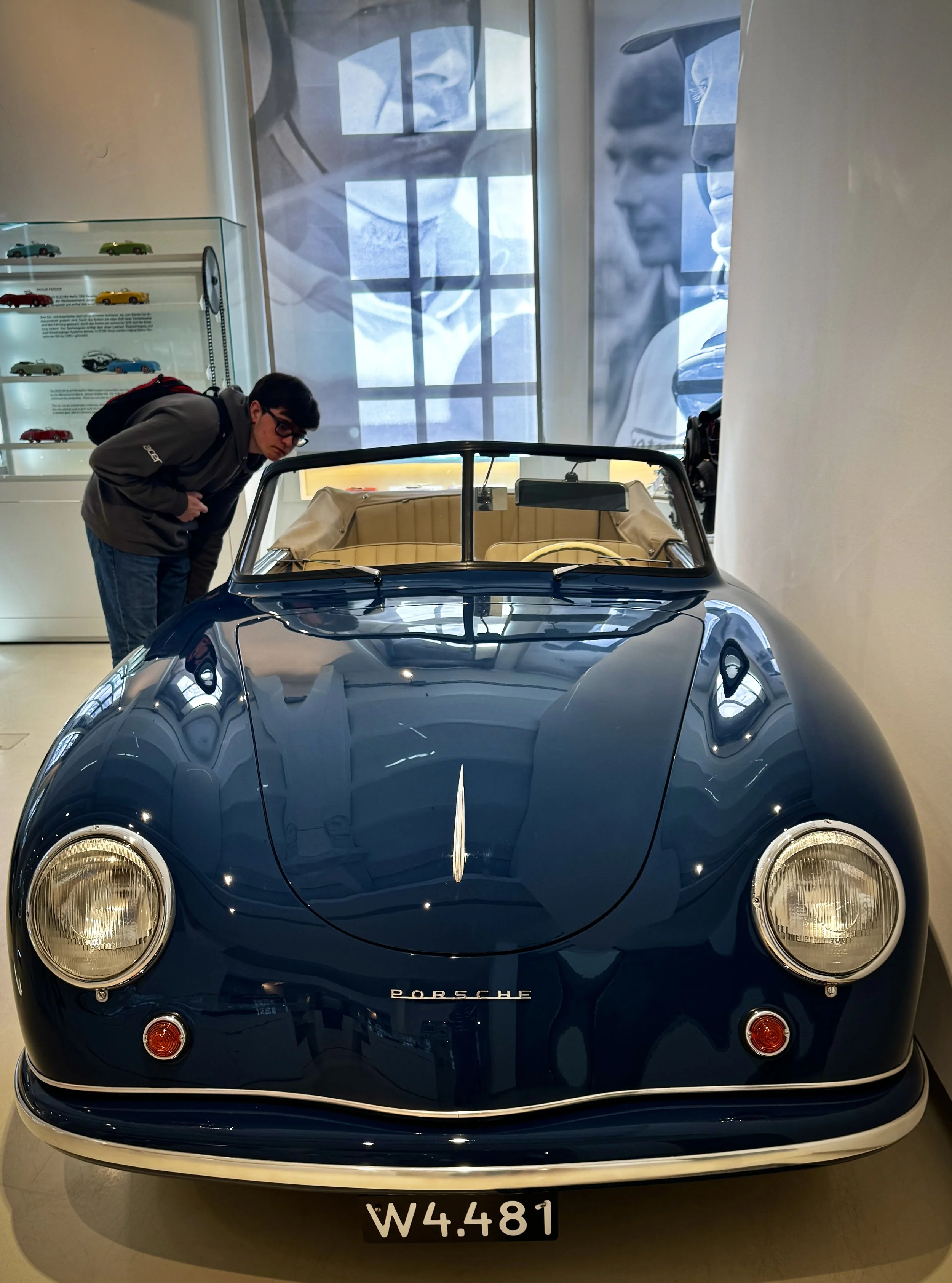
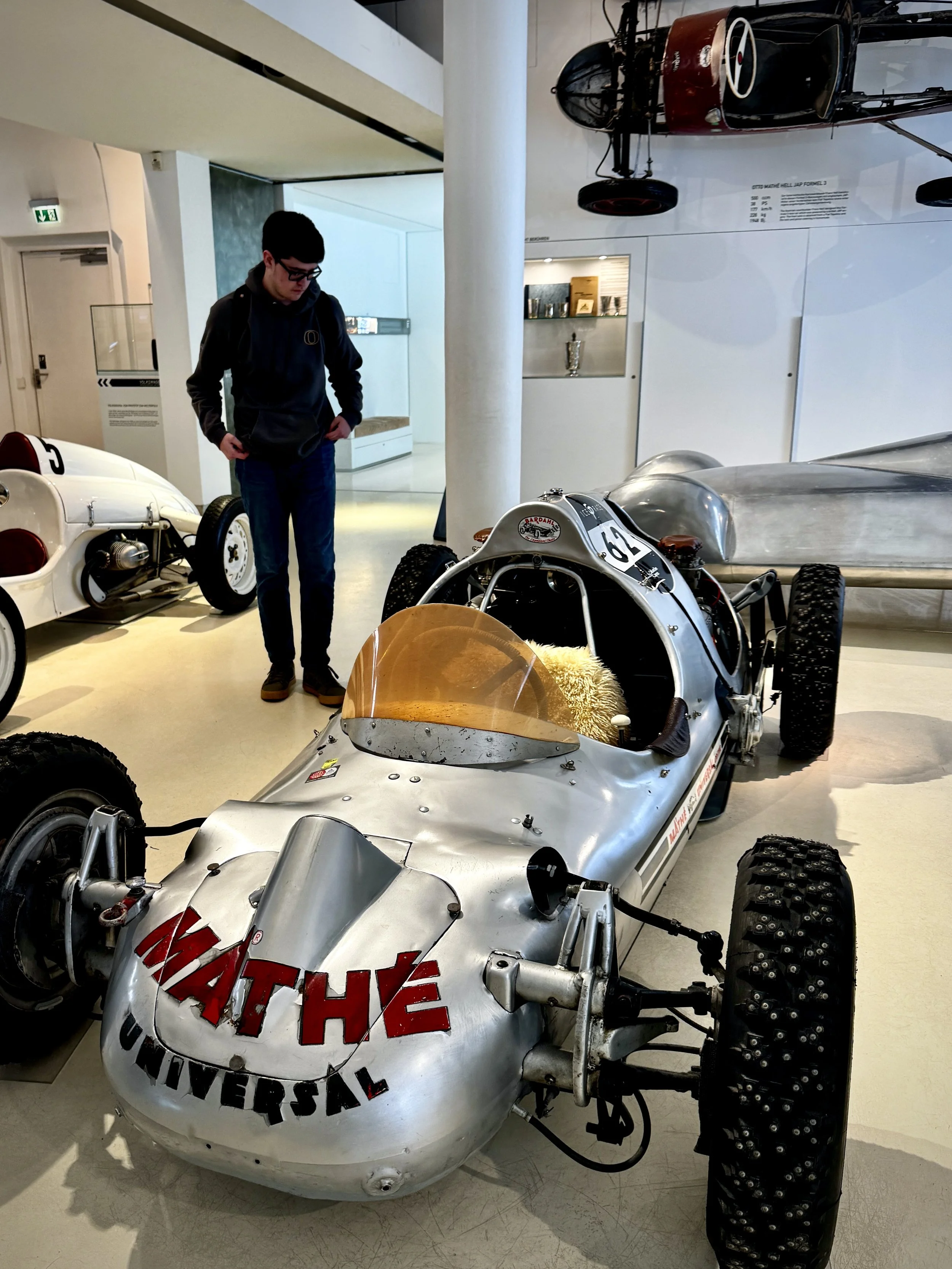
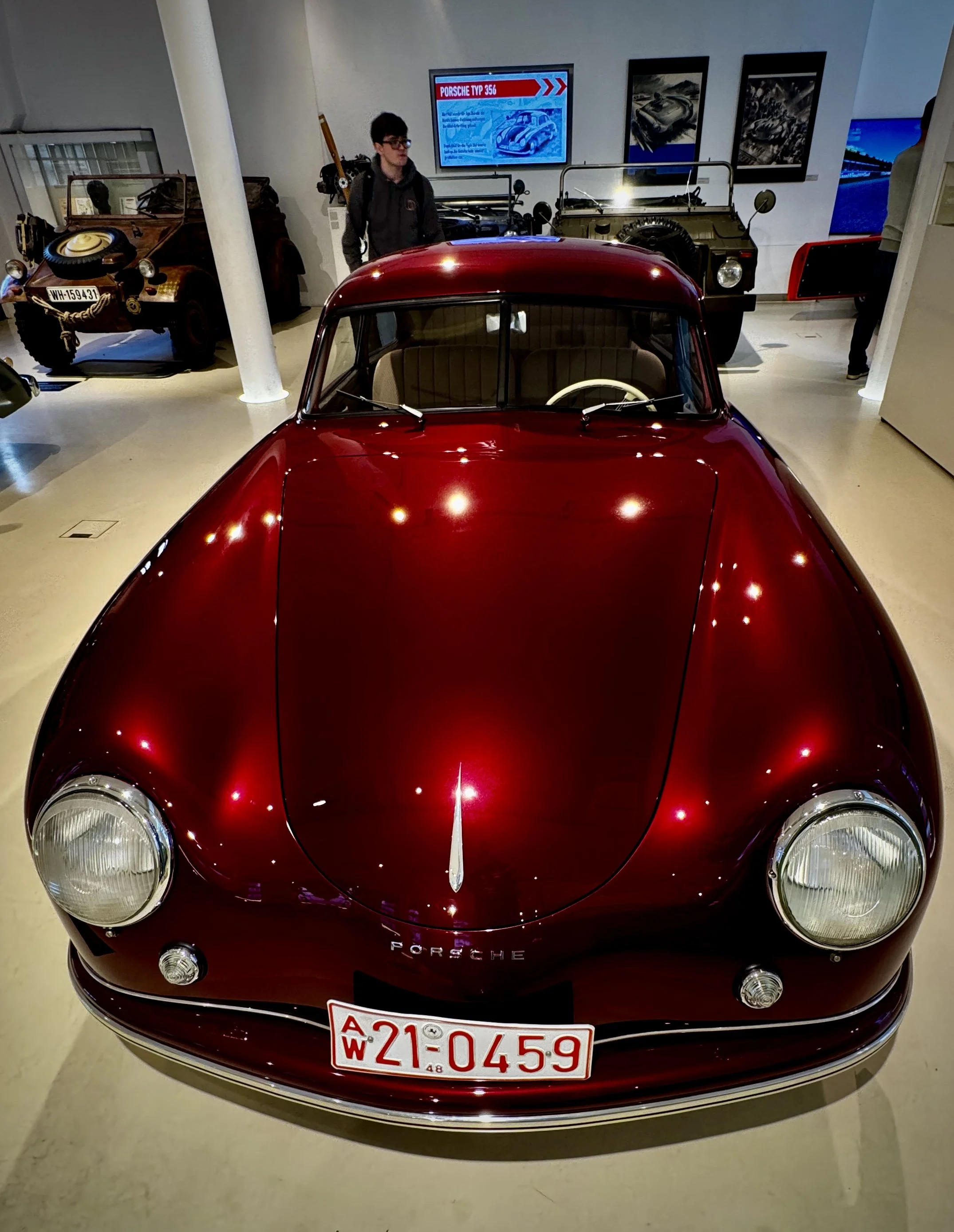
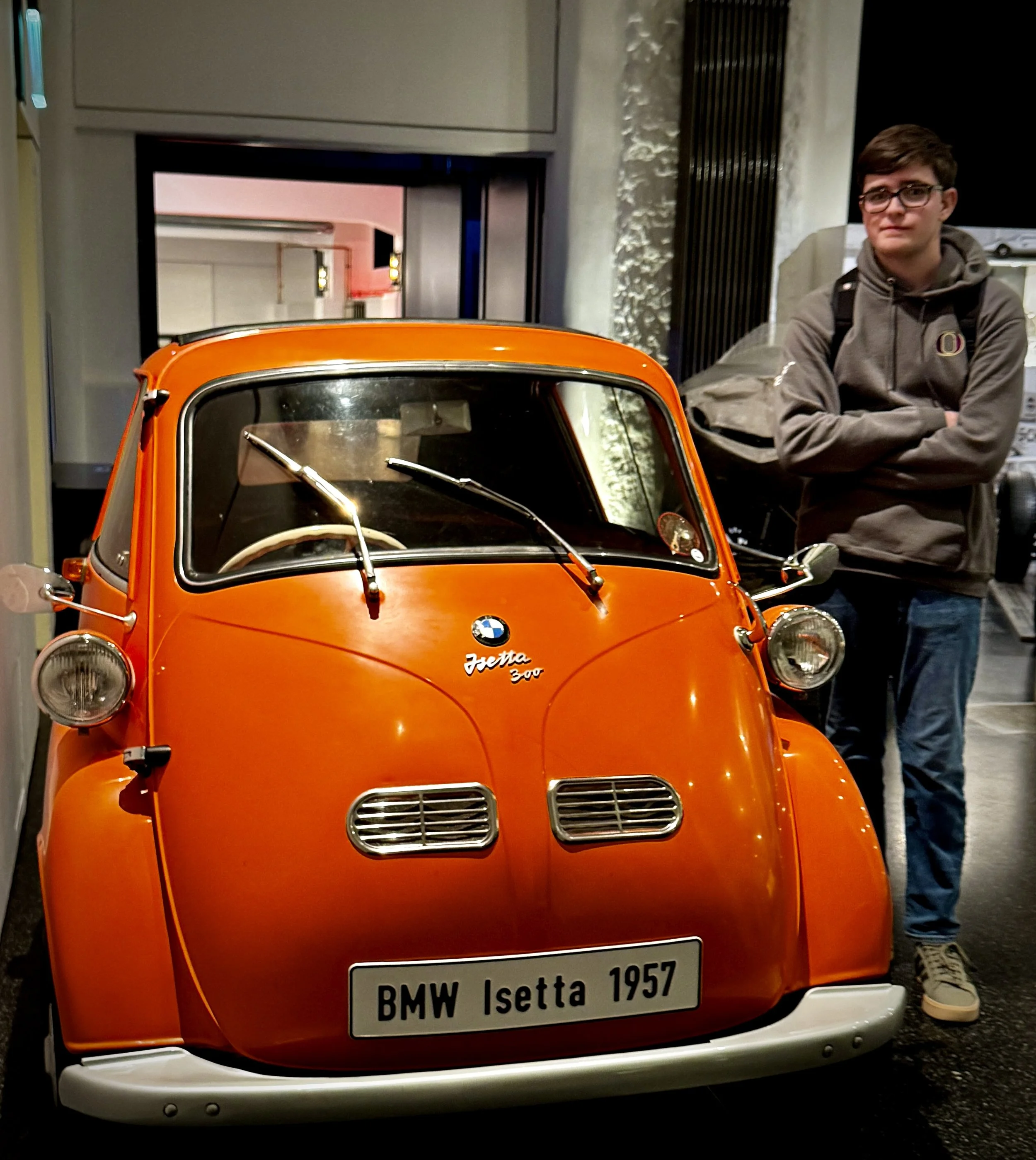
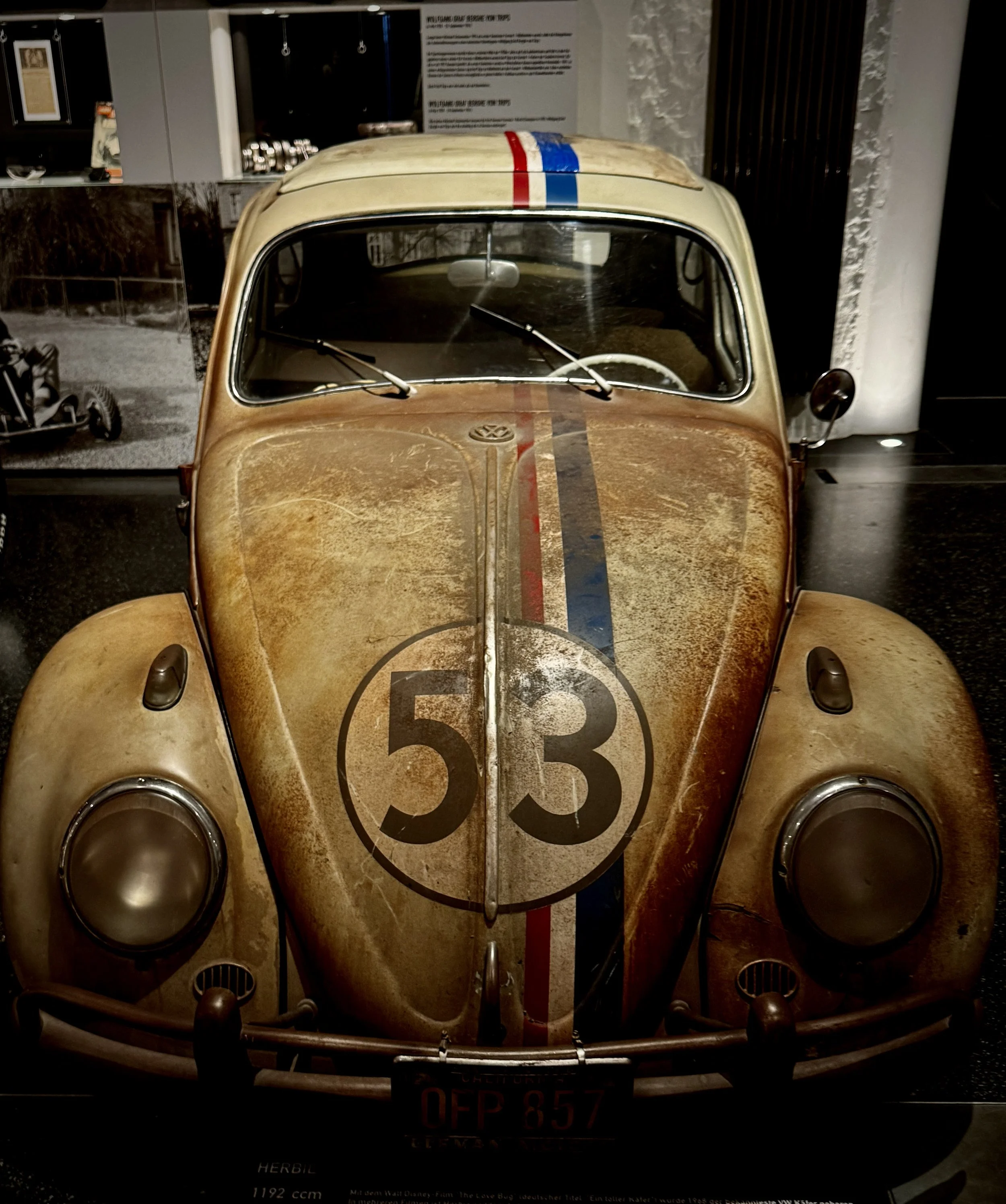
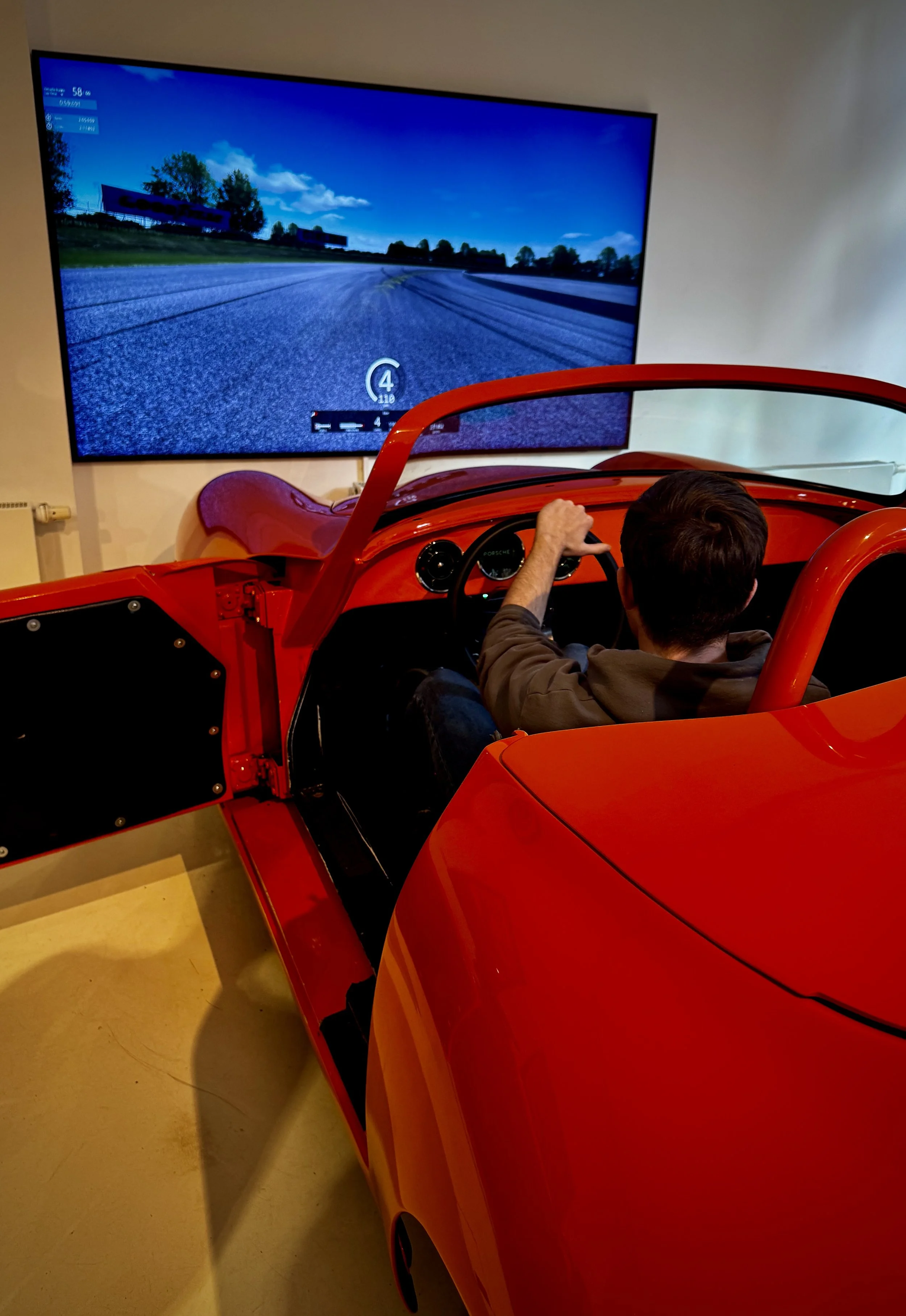
We stopped by our hotel, left our bags in a room that had a fun “dorm room meets cabin theme” and headed out to explore the nearby Car Prototyp Museum. This museum was not very large, but packed a lot of history into its 3 floors. Two car-collecting friends opened the museum back in 2008 and it focused, not just on the autos, but on the people who designed, drove and raced these cars and their stories. It included cars (mainly Porsches and Volkswagens), but also letters, trophies and historical items such as old workshop and pit crew equipment as well as advertising posters. It was a great way to spend a few afternoon hours in Hamburg.
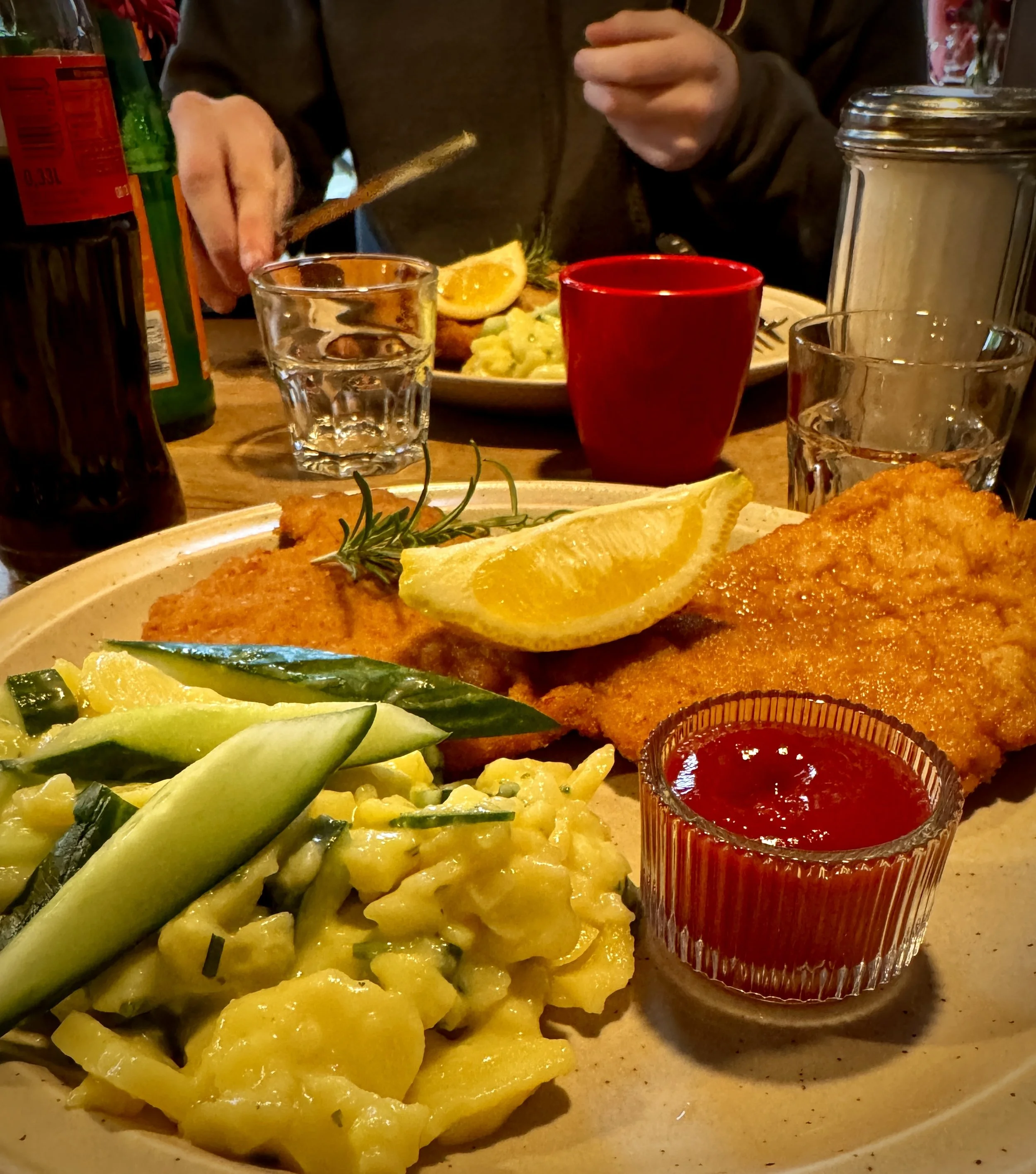
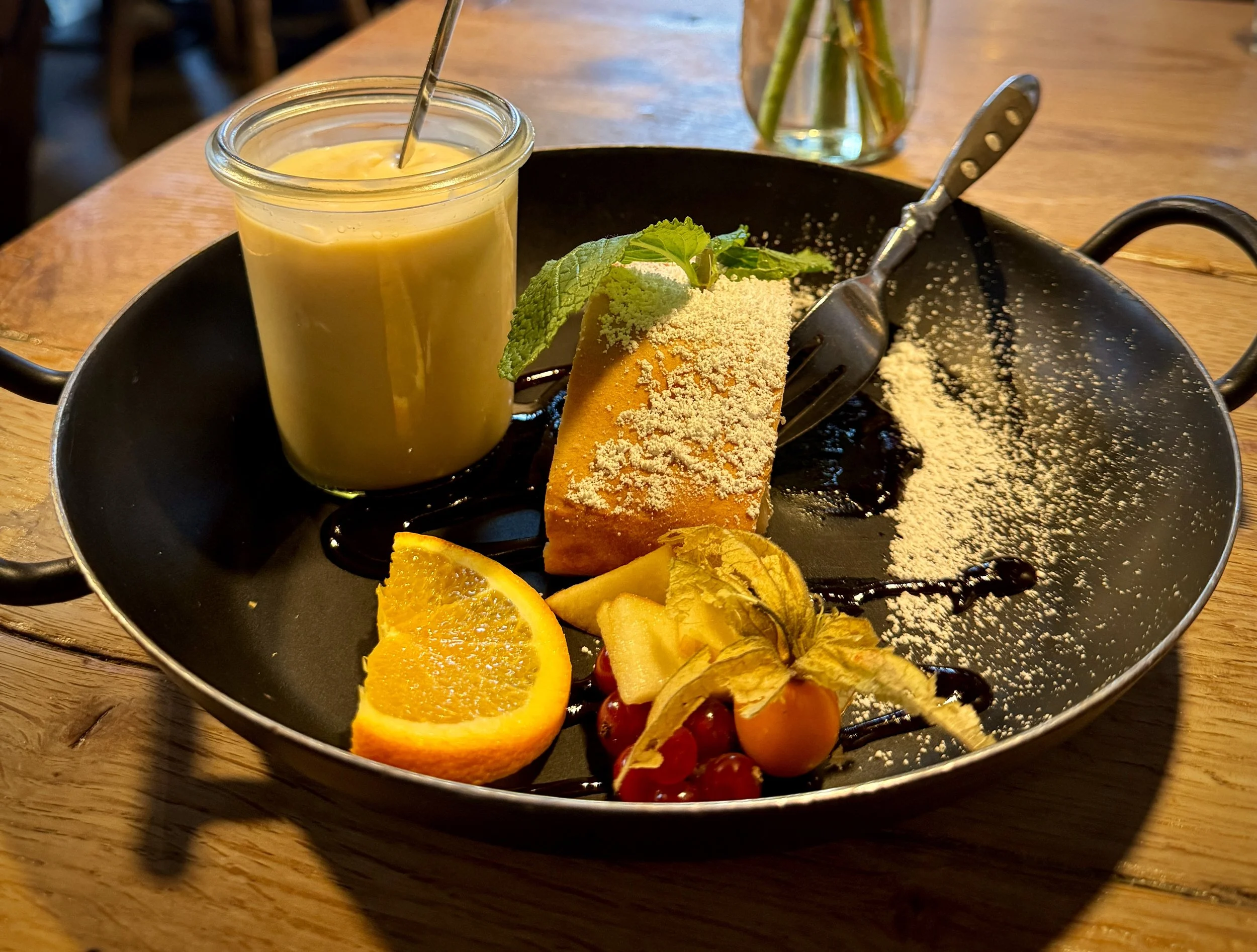
After a quick stop at our hotel, we headed to the Wildes Fraulein, a Tyrolean restaurant whose name translates to something like “wild young woman.” Of course we had to try it and it accepted reservations. The ambiance and decor was all alpine themed and there was even a gondola cabin with seating inside. Each table was decorated with beautiful fresh flowers — and I’m incapable of resisting photographing flowers. Jack and I both ordered the wiener schnitzel with potato salad. Dinner — and later, apfel strudel with vanilla cream — proved to be just as delicious as expected! Afterwards, we headed back to our hotel since we were heading to Miniatur Wunderland early the next morning.


Before I give you the full scoop on Minatur Wuderland, here are a few facts:
Miniatur Wunderland is the largest model train layout in the world with:
1,000+ trains
300,000 miniature figures, including people, animals and even extraterrestrials!
10+ miles of track
Building began in 2000 and the layout continues to expand with the help of 400 employees, who design, code, build, monitor and market. Fifteen (and growing) different sections make up Miniatur Wunderland, each elaborately designed and themed.
And after spending almost five hours there, I can unequivocally say it’s a place that any visitor, even non-train enthusiast, can enjoy.
The people in the skywalk give a sense of just how enormous Miniatur Wunderland really is.
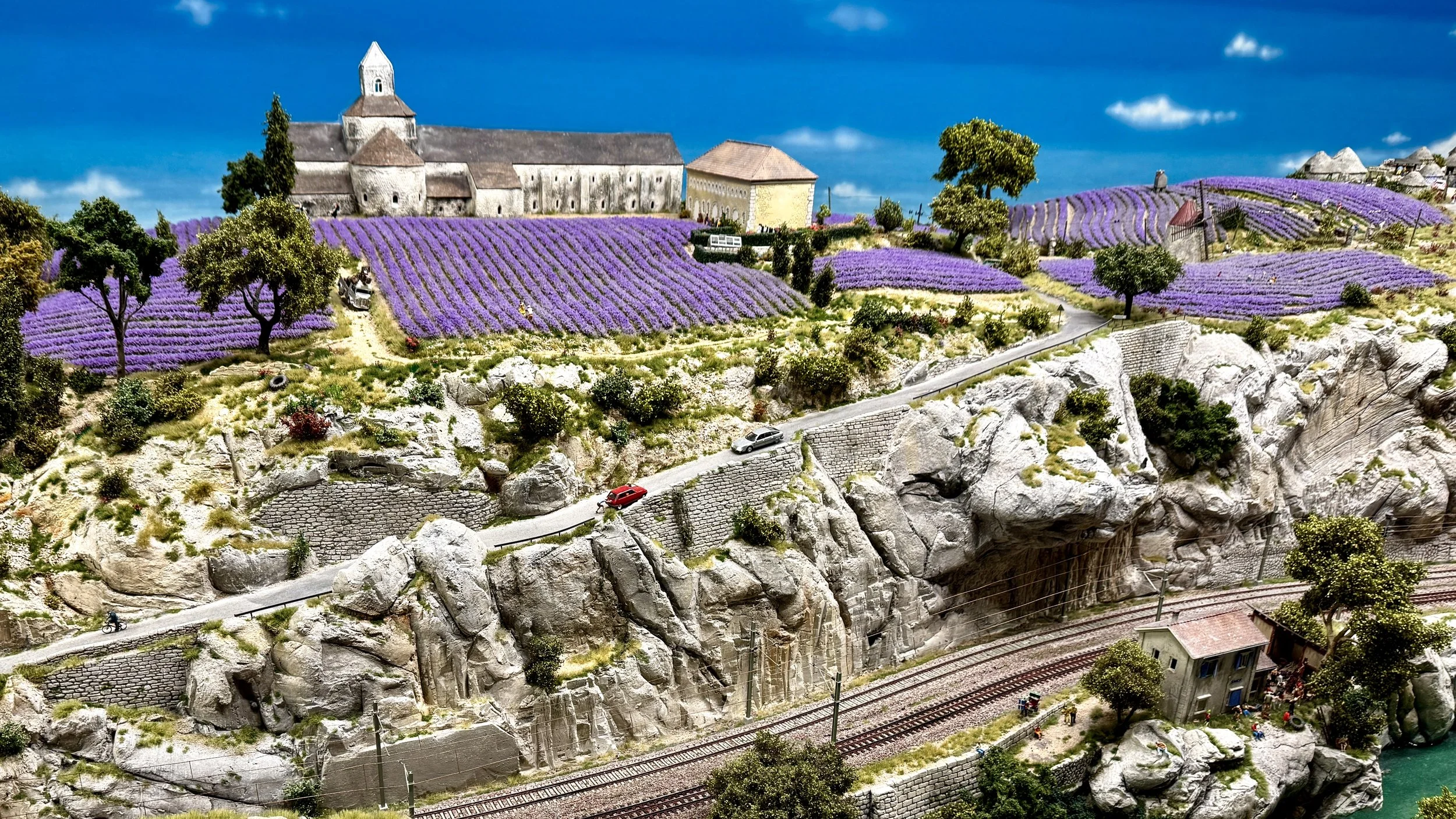
Upon entering Miniatur Wunderland I noticed a gentle lavender aroma, which led me to one of the newest sections: Provence. Take a look at the image below, which is sprinkled with tiny vignettes — like 2 people pushing the red car uphill or the workers harvesting the lavender. Be sure to scroll over the image below to zoom in on these micro scenes! This layout is modeled on an actual location, the Abbey Notre-Dame de Sénanque, which was founded in the 12th century and remains a functioning abbey to this day. This was an amazing introduction to the surprises that lay ahead at Miniatur Wunderland!
From there, we headed to the most popular and complex layouts — the Knuffingen airport.
The Knuffingen Airport quickly became one of our favorite parts of Miniatur Wunderland. Watching the miniature planes operate with astonishing realism was mesmerizing.
The video above doesn’t do justice to the true magnitude or complexity of the airport! Everyday, there are around 45 different planes of various sizes and manufacturers that taxi, take off and land and they do it multiple times a day. That comes out to 250 planes cycling through the airport and it’s choreographed to perfection. All Miniatur Wunderland layouts cycle through a daytime and nighttime every 15 minutes and it’s fascinating to see the difference.
If you managed to squish all of the layouts together, it’d cover 17,000 square feet — not including the hallways, control rooms, bathrooms and seating areas. Enormous, right? And yet, each layout is incredibly detailed, which in my opinion, is what sets it apart from other attractions. Let me show you a few things I spotted.
As I began walking through the layout, I noticed the overall layout design, scenery and geographical features. But when I stopped and really looked — I noticed that every square inch tells a different, miniature story.
At first glance, it’s just a farm scene…
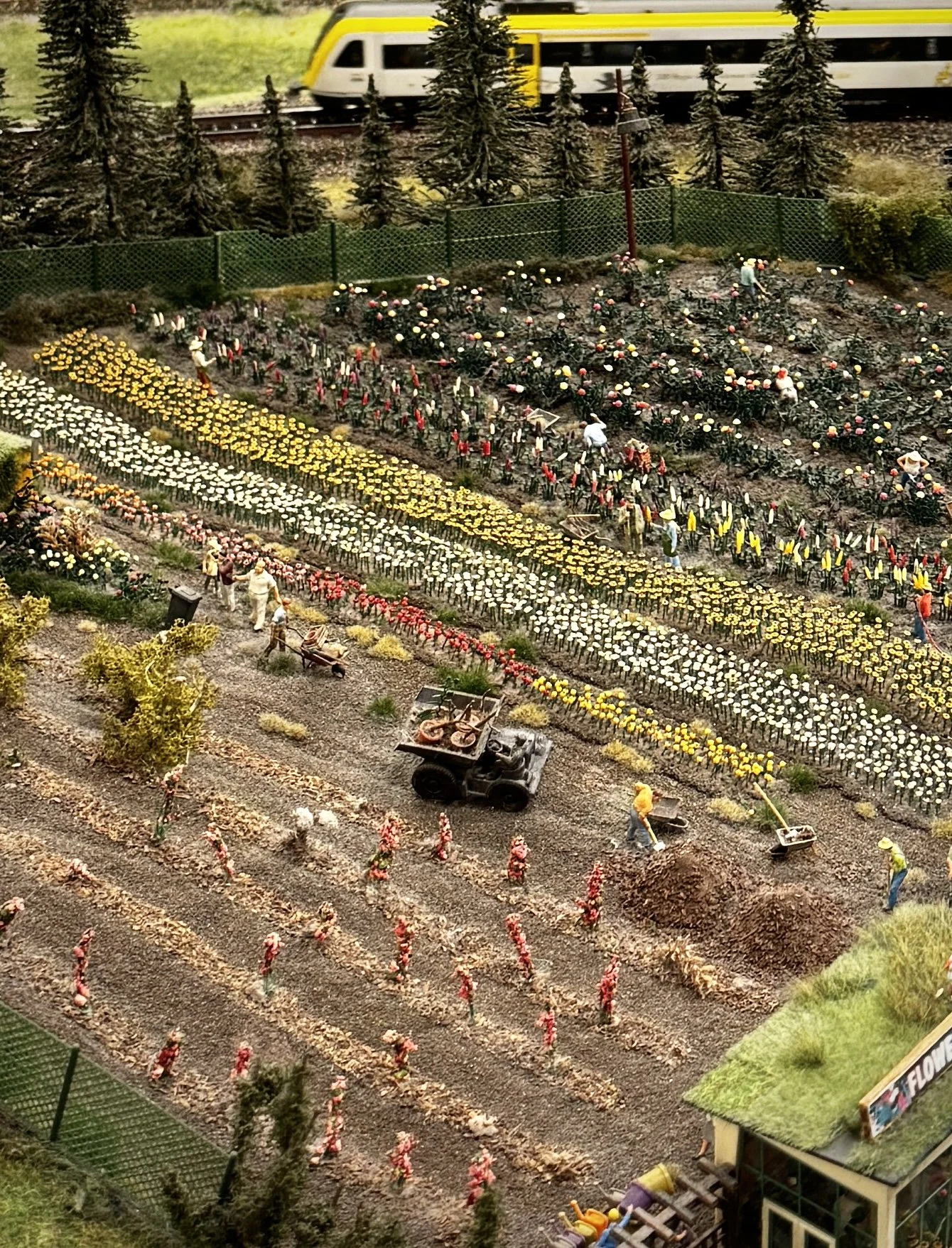
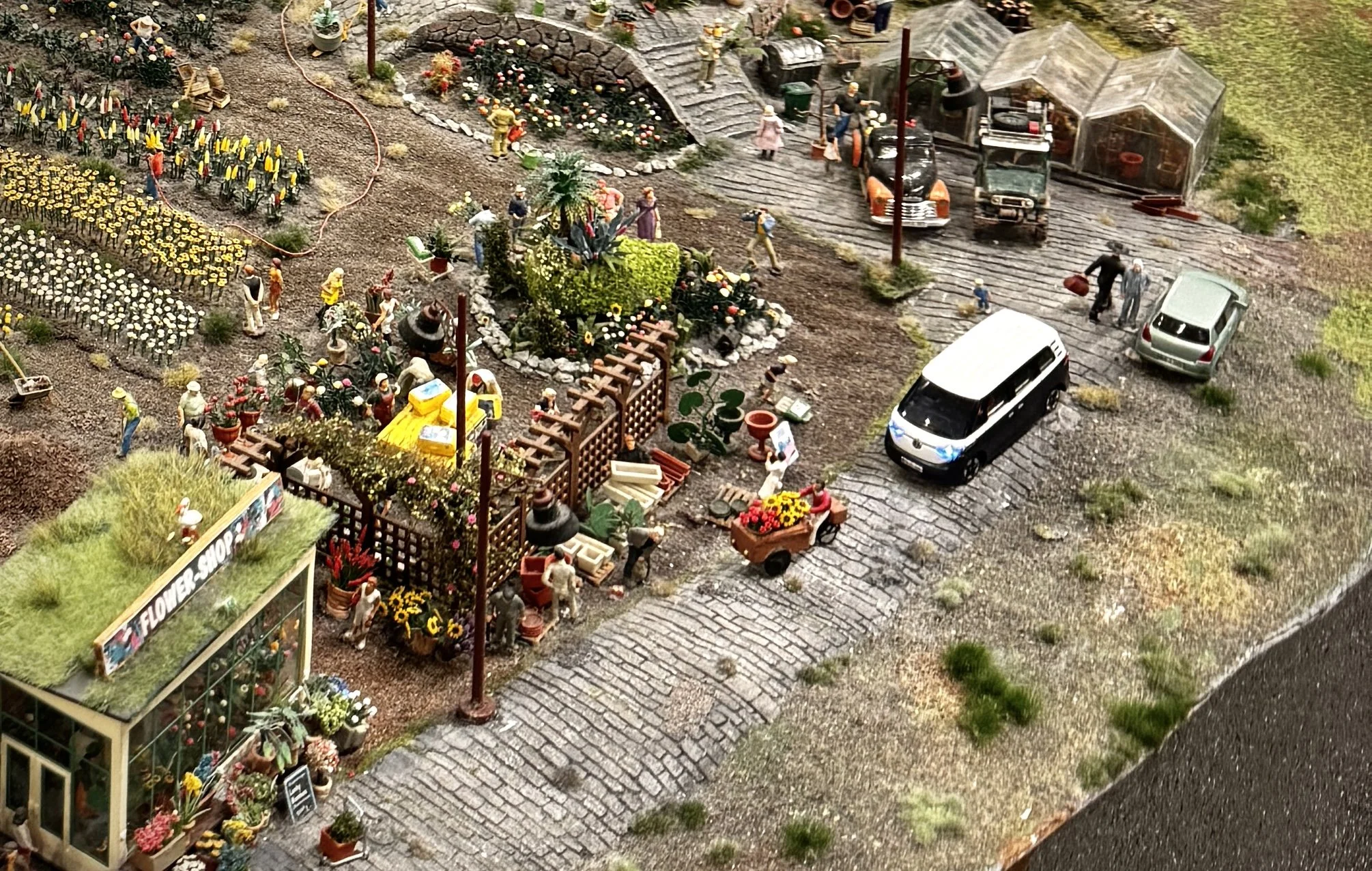
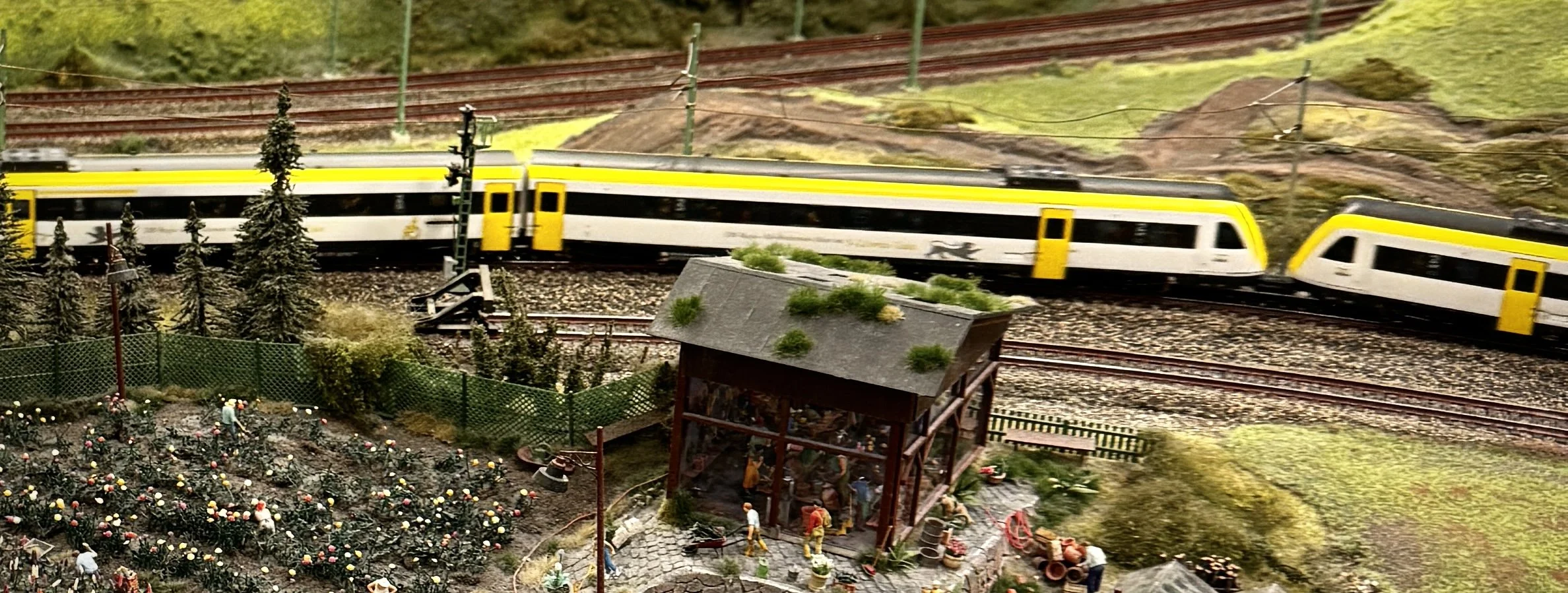
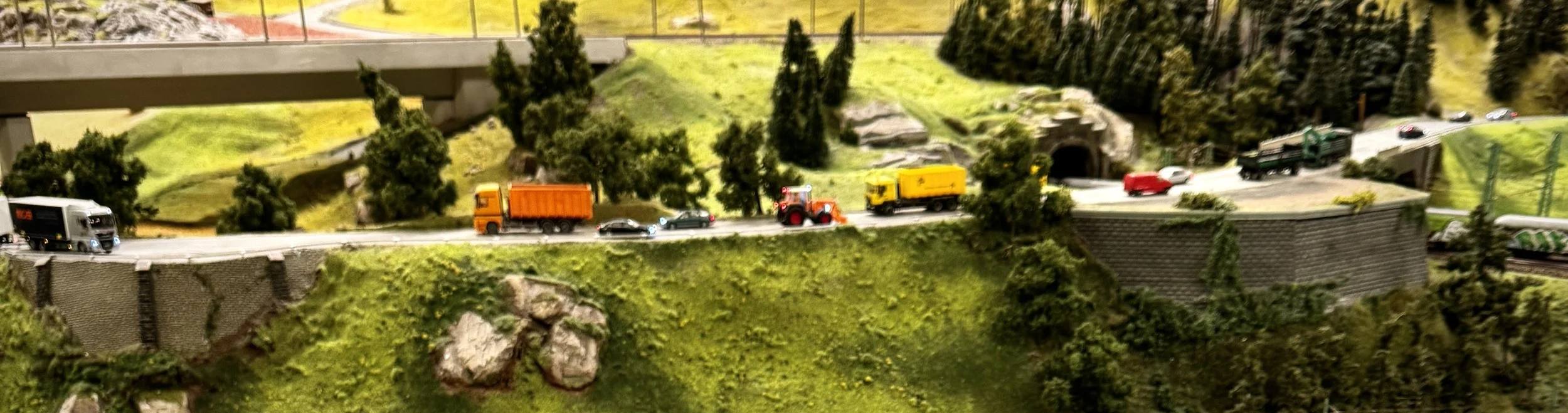
Honestly, I could spend the rest of the year pointing out all of the intricate and delightful little details and theming that made Miniatur Wunderland so terrific, but I’ll content myself with a few photos of the highlights.
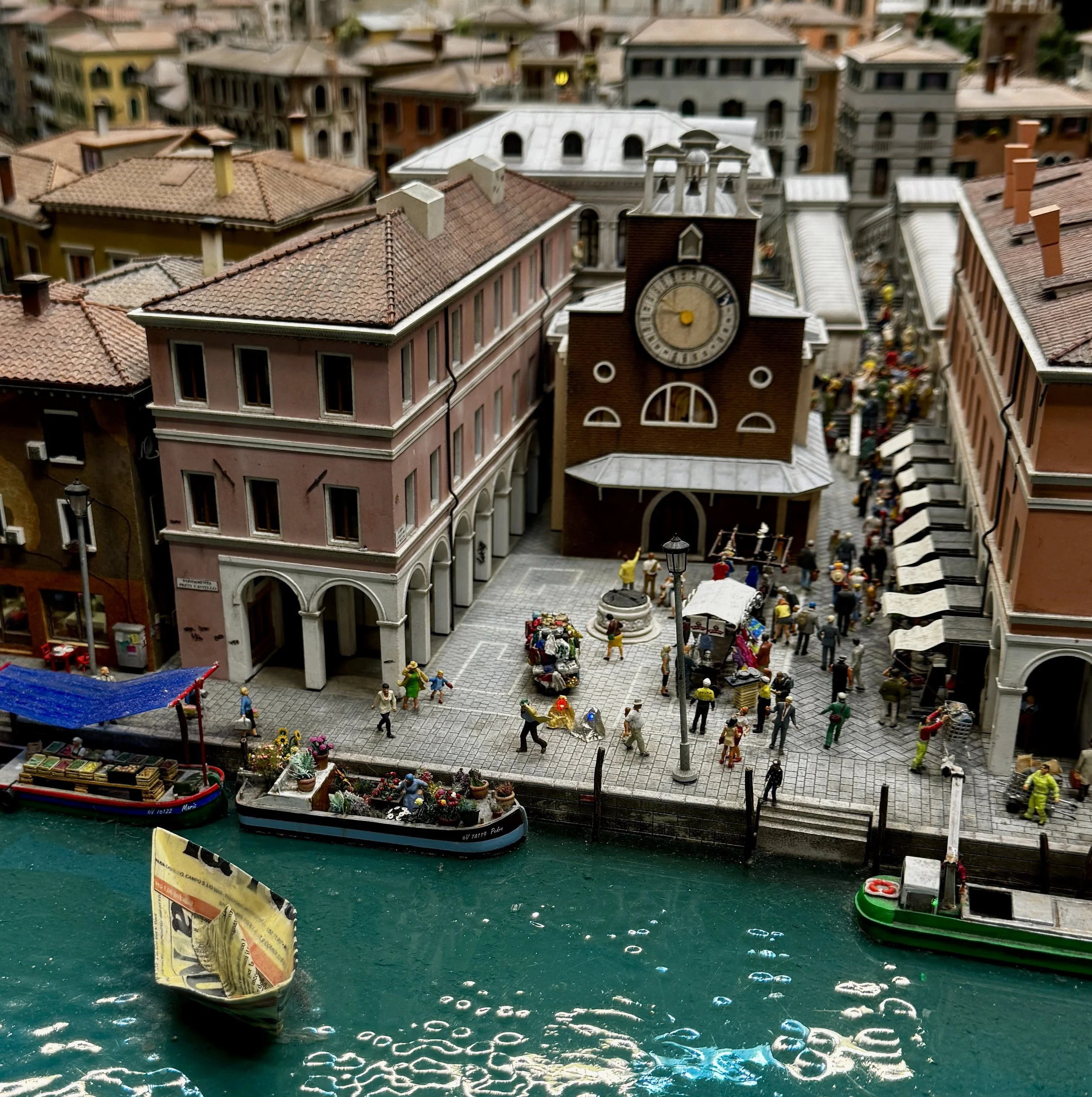
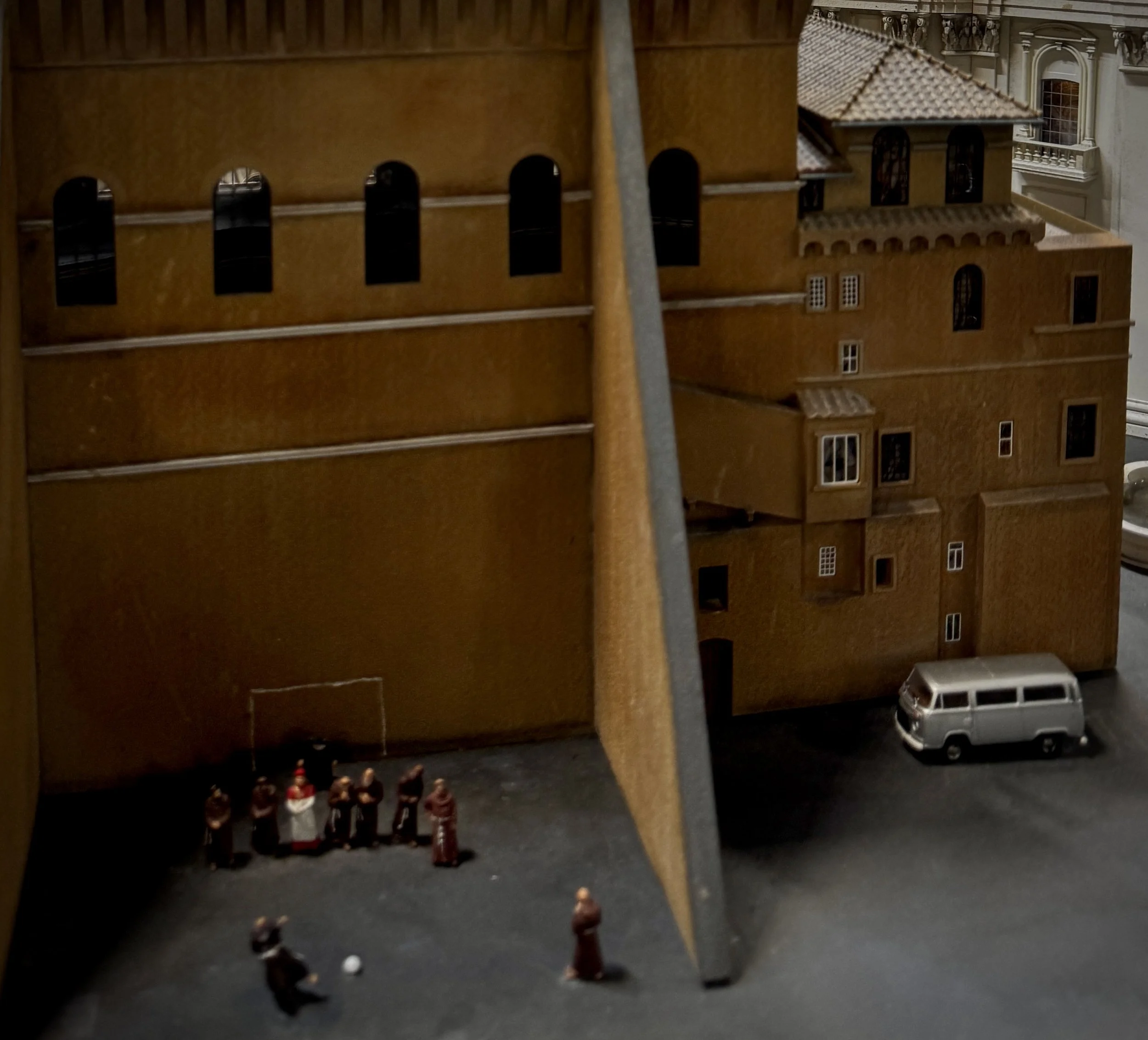
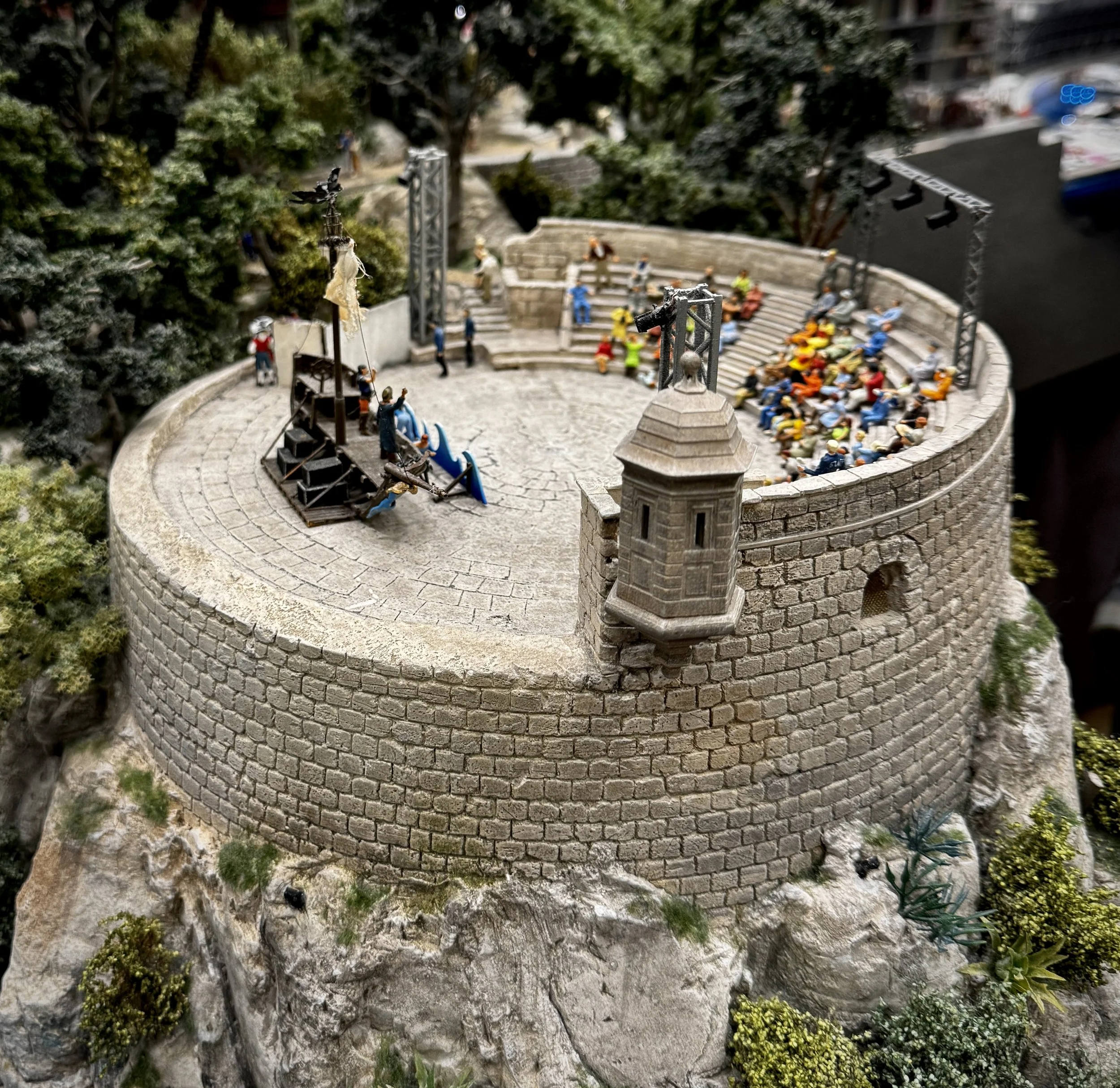
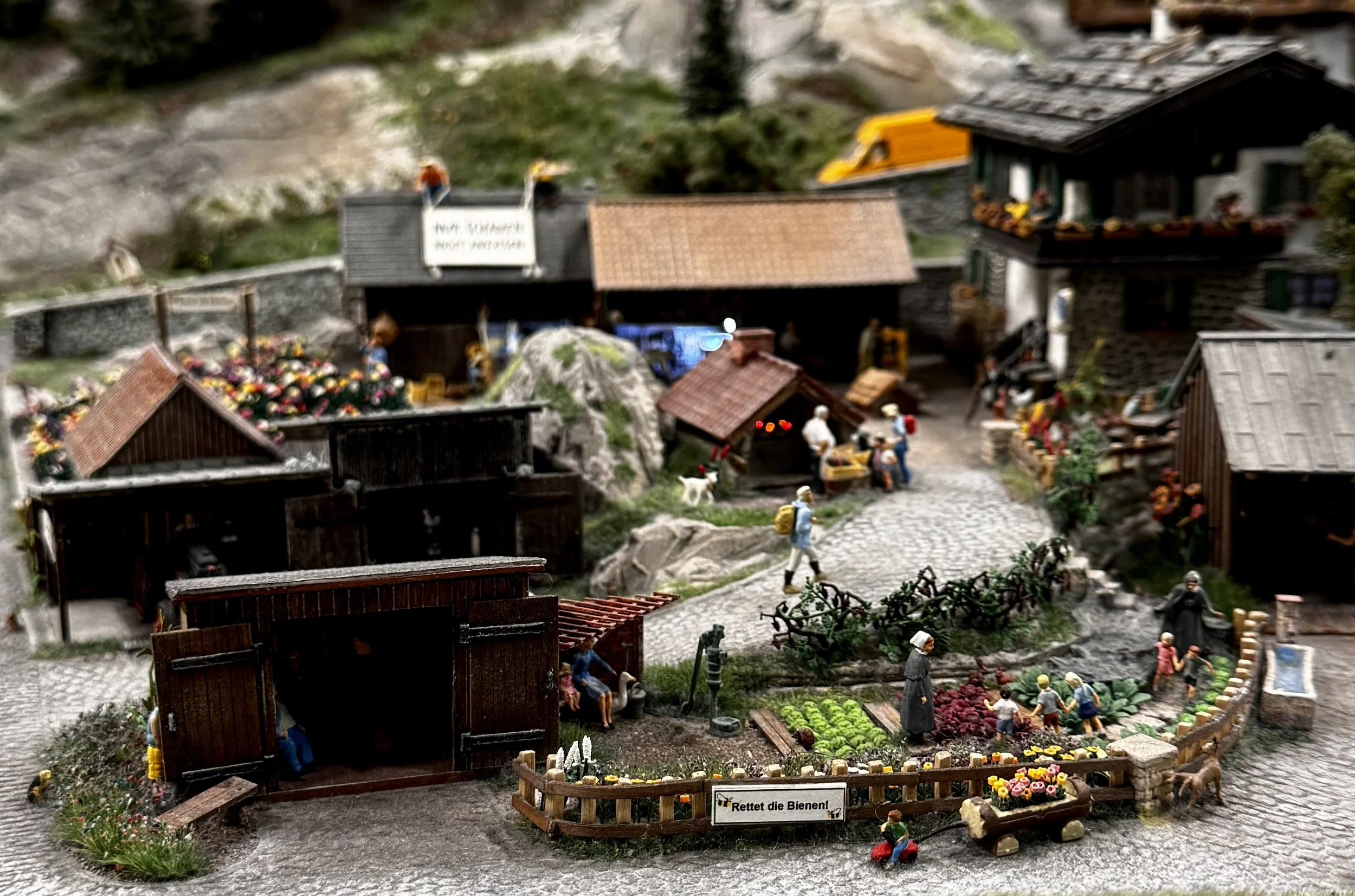
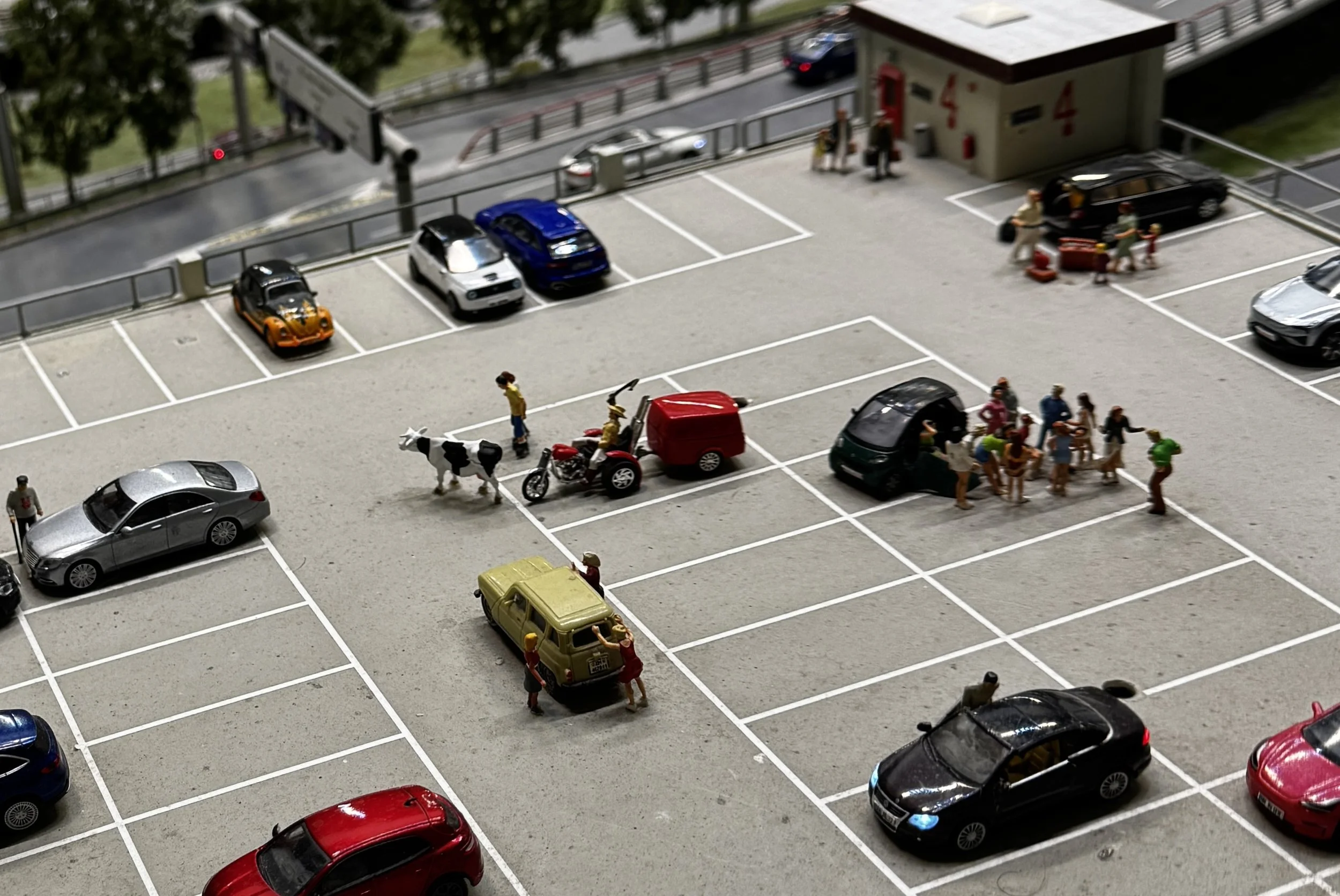
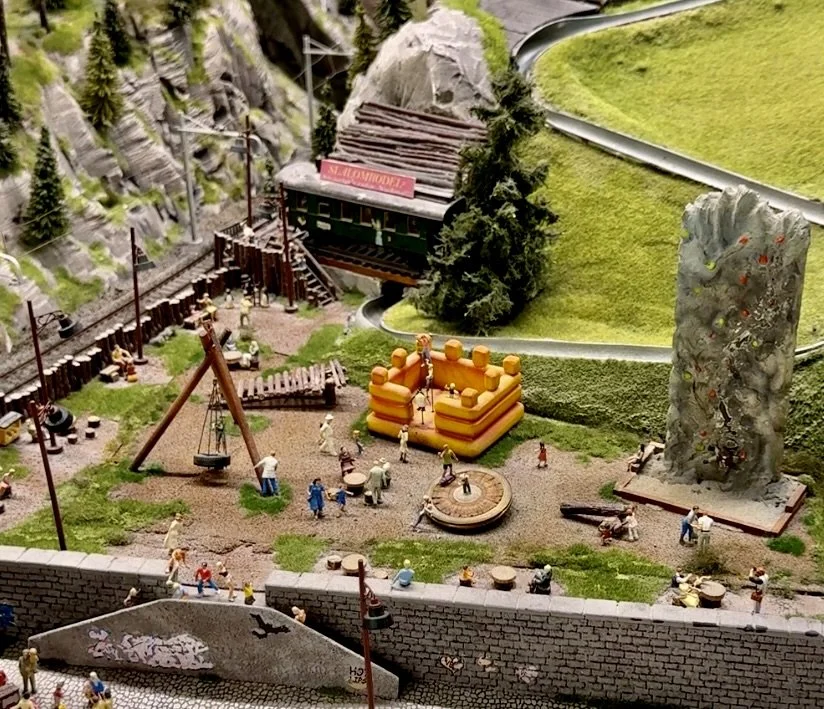
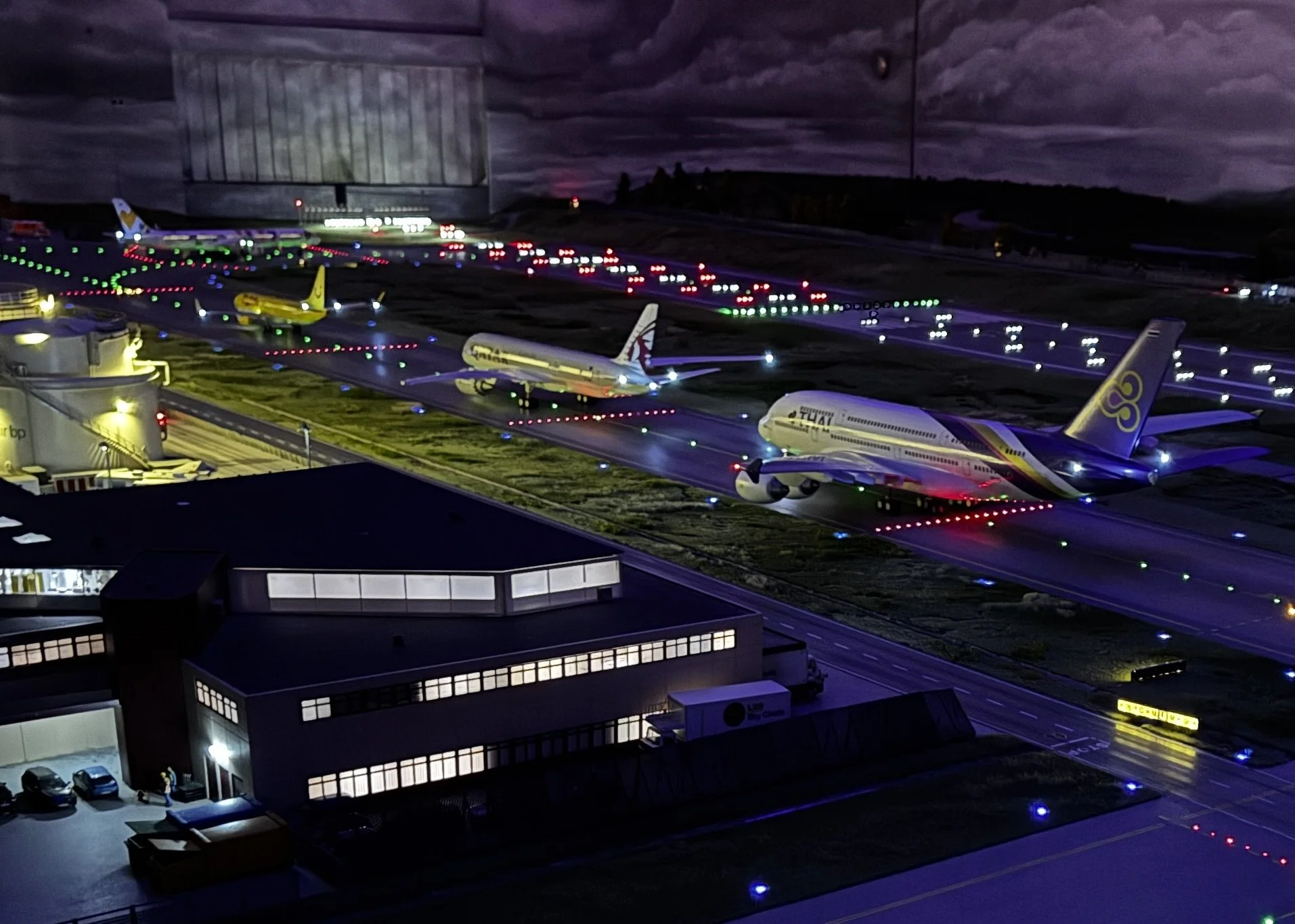
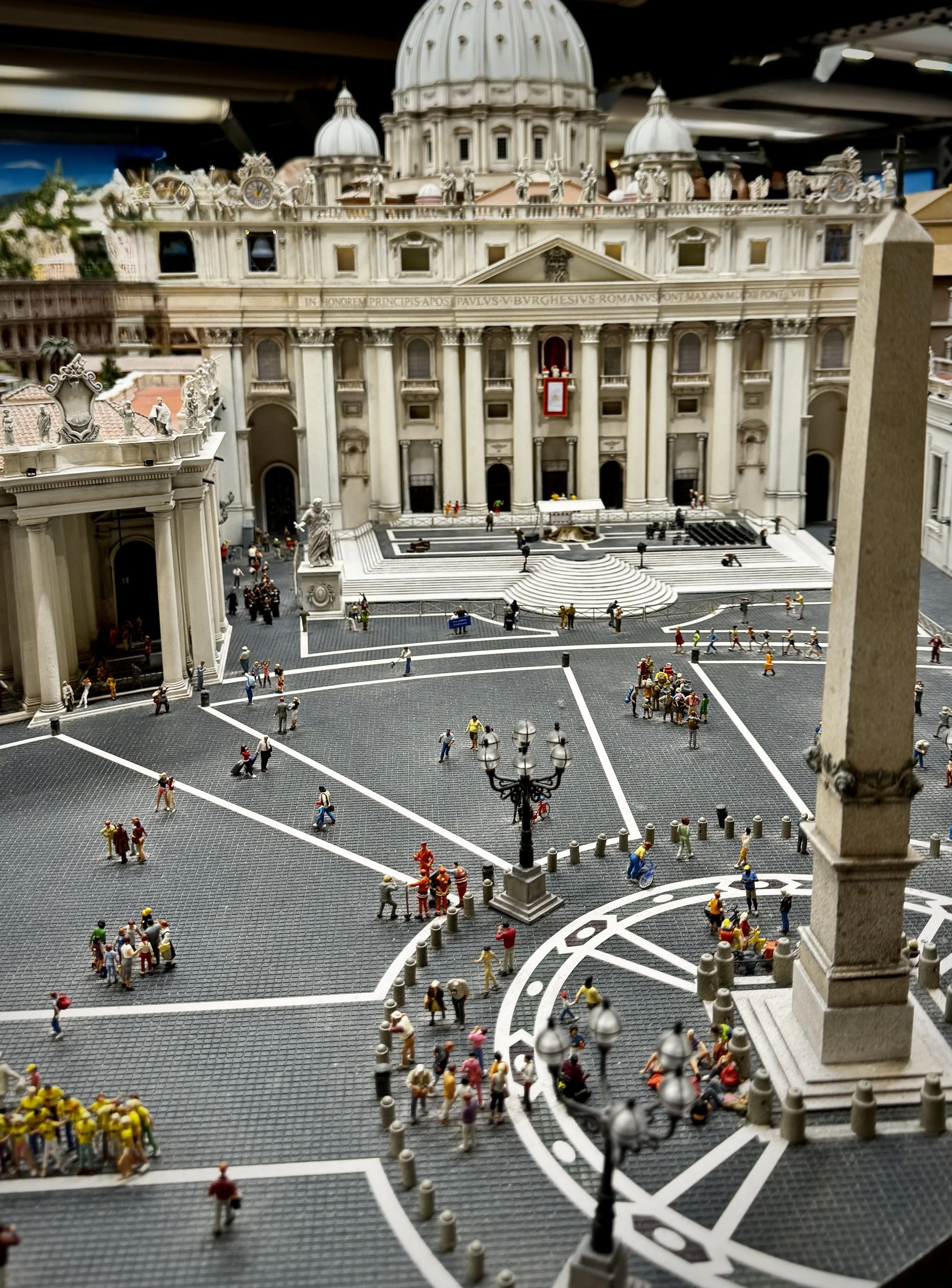
One of the things that fascinated me the most about Miniatur Wunderland was discovering it wasn’t just a giant model railroad — it’s a collection of tiny worlds hidden inside other tiny worlds.
At first glance, the scene below looks peaceful: turquoise water, winding paths, miniature tourists wandering among tiny landmarks. But then the surreal details come into focus — like the monorail disguised as the dragon from The Neverending Story. Tiny crowds and tiny monuments all add up to a larger story. Miniatur Wunderland isn’t just an attraction that you walk through, it’s a world shifting between exacting reproductions and dreamlike scenes and somehow that tenuous combination makes it all the more intriguing.
Looking back, our time in Hamburg almost felt like a gradual descent into imagination.
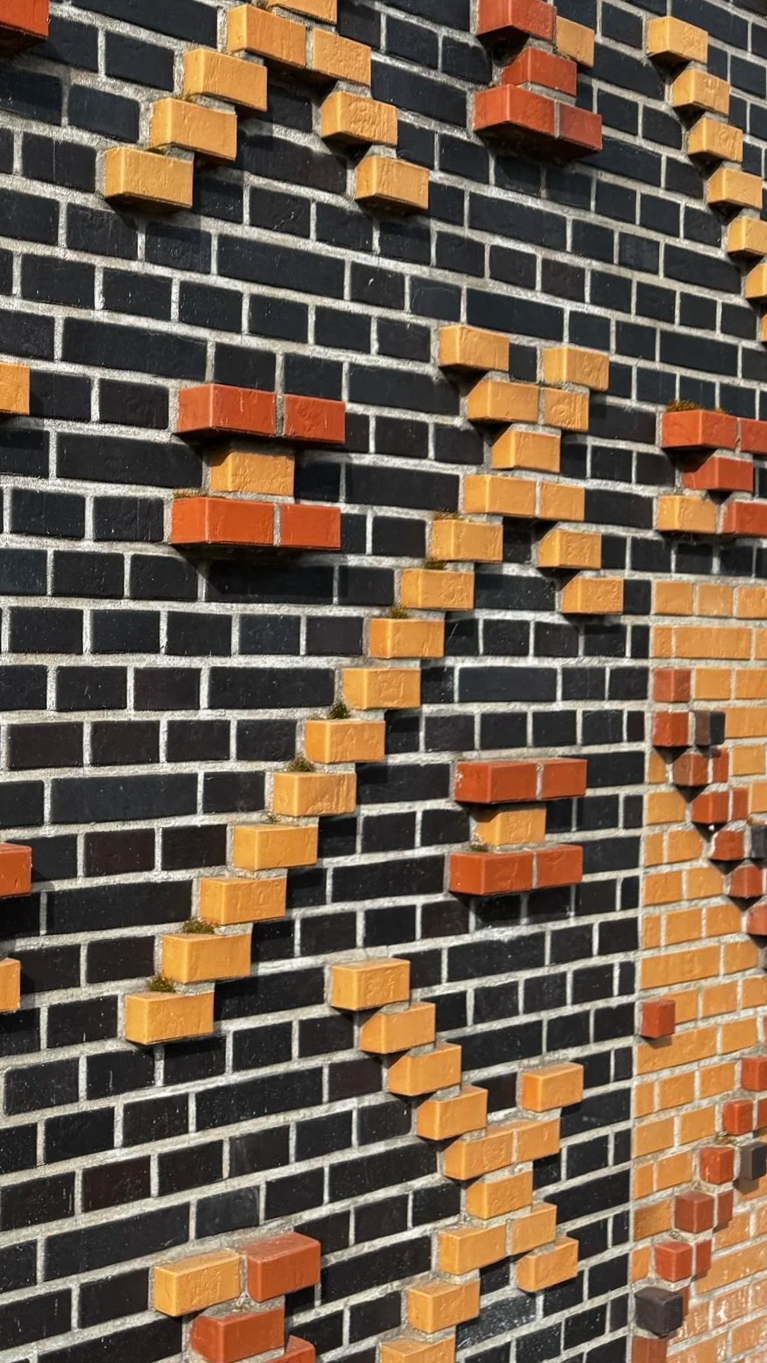
It started at PierDrei, where the hallways and walls felt more like an art installation than a hotel — surreal paintings, strange details and visual jokes around every corner. Then came the Prototyp Museum, where sleek race cars and engineering history gave us our first glimpse into Germany’s deep automotive culture.
And finally, Miniatur Wunderland somehow brought all of those themes together at once.
Part engineering marvel, part art project, part scavenger hunt, part tiny living world — it ended up being one of the most unexpectedly emotional and immersive stops of our trip. We came for the trains, but what stayed with us were the details: tiny stories unfolding in flower fields, hidden behind the walls of St. Peter’s, miniature airports operating with astonishing realism and entire worlds layered into spaces no bigger than a room.
By the time we finally pulled ourselves away, it honestly felt like we were leaving another universe behind.
But the adventure wasn’t over yet.
After leaving Miniatur Wunderland, we made our way to the local Sixt office and picked up our rental car. As Hamburg disappeared behind us and the autobahn opened ahead, we traded miniature worlds for the real one, setting our sights on Wolfsburg and the next chapter of our mother-and-son road trip.
You can read about our time in Berlin here!