

Ports, Plans and Plot Twists: Cruising the Balkans
Ancient Villages, Rocky Beaches and a Roman City
Another cruiser told me that cruising is like opening a box of Whitman’s Sampler chocolates: you choose a piece that looks delicious, try it and then move on to another.
I love that analogy. Each port offers a taste of somewhere new and occasionally you discover a place you can’t wait to try again.
Cruising works especially well for my family because we can unpack and organize our medical equipment, supplies and medications once while still visiting multiple destinations. It’s also a great option for multi-generational families, giving everyone an opportunity to find experiences they’ll enjoy along the way.
That’s why the cruise itinerary was so important when we planned our Mediterranean cruise. After lots of research, we chose Norwegian Cruise Line’s eastern Mediterranean route from Ravenna to Istanbul. Among its stops were two Balkan countries — Croatia and Montenegro. We’ve visited Croatia several times, but never as far south as Dubrovnik and Montenegro has been on my shortlist for years.
On the morning of our first port, we woke to views of the hills surrounding Dubrovnik’s Gruž port.
The is port several miles from Dubrovnik’s picturesque Old Town, so we took Norwegian’s shuttle bus to Pile Gate, one of its main entrances.
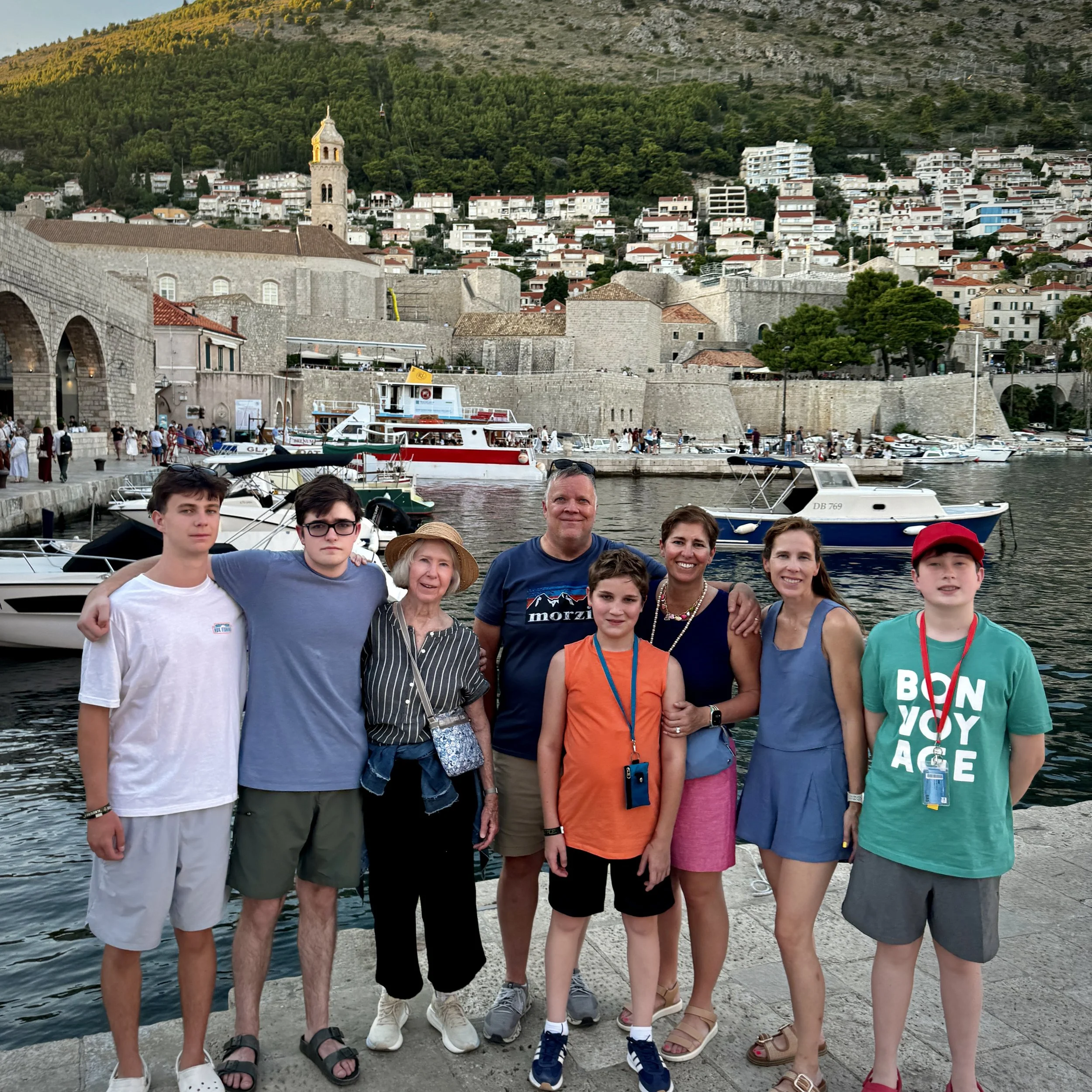
Our group of 8 had different ideas of how best to spend the day, so we decided ahead of time to split up. My sister, our boys and I chose to visit Banje beach, which sits just outside Ploče Gate, an entrance on the eastern side of the city walls.
We’ve learned through experience that our family prefers rocky beaches to sandy ones. Sand can be difficult for our sensory-sensitive traveler and the rest of us don't mind wearing water shoes. Since we knew Banje would be pebbly, we knew it’d be a good fit.
The moment we saw the water, I knew we’d made the right decision.
It shifted through shades of sapphire, aqua and teal and was probably the most beautiful water I’ve ever seen. Dubrovnik’s red roofs and stone walls provided an amazing backdrop to the beach.
The water was beautiful, but man was it cold… for July! My sister and her son snorkeled, while the rest of us splashed in the water. It was exactly how we wanted to spend the morning.
After a few hours, we wandered through the old town and caught the Norwegian shuttle back to the boat. A good shower, clean clothes and we were ready to check out the ship’s Observation Lounge. Viva’s lounge is located in the very front of the ship and was sprinkled throughout with flexible seating. Even though it was a popular part of the ship, surprisingly we were always able to find seating.
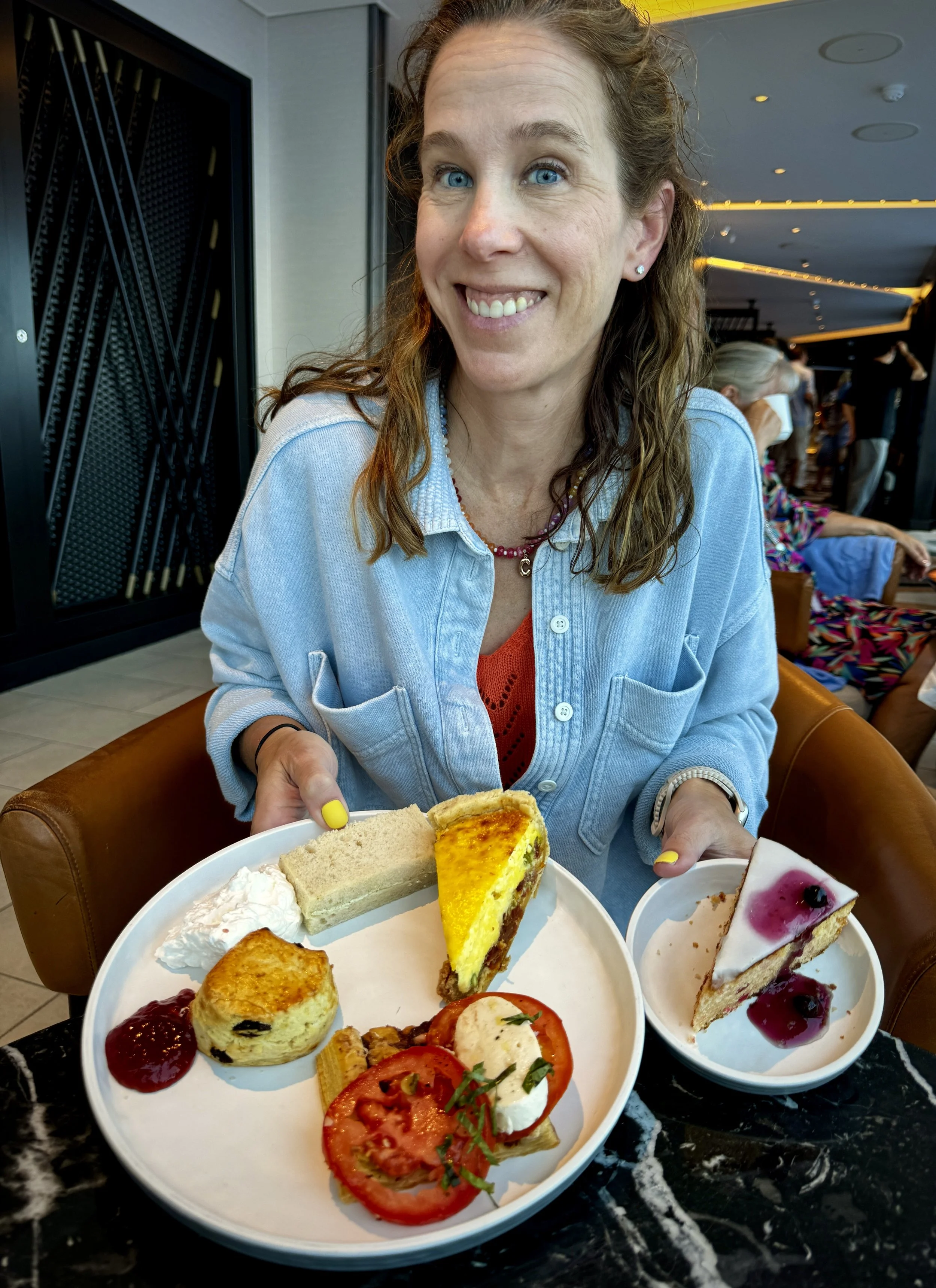
In the afternoons, when the main buffet was closed, an afternoon tea was served in the lounge. I’m always a fan of snacking on vacation and this one fit the bill. We loaded our plates with scones and jam, cake slices and mini sandwiches.
After our afternoon feast, we changed into comfortable shoes, caught the shuttle bus back to Dubrovnik and spent an hour wandering through the city.
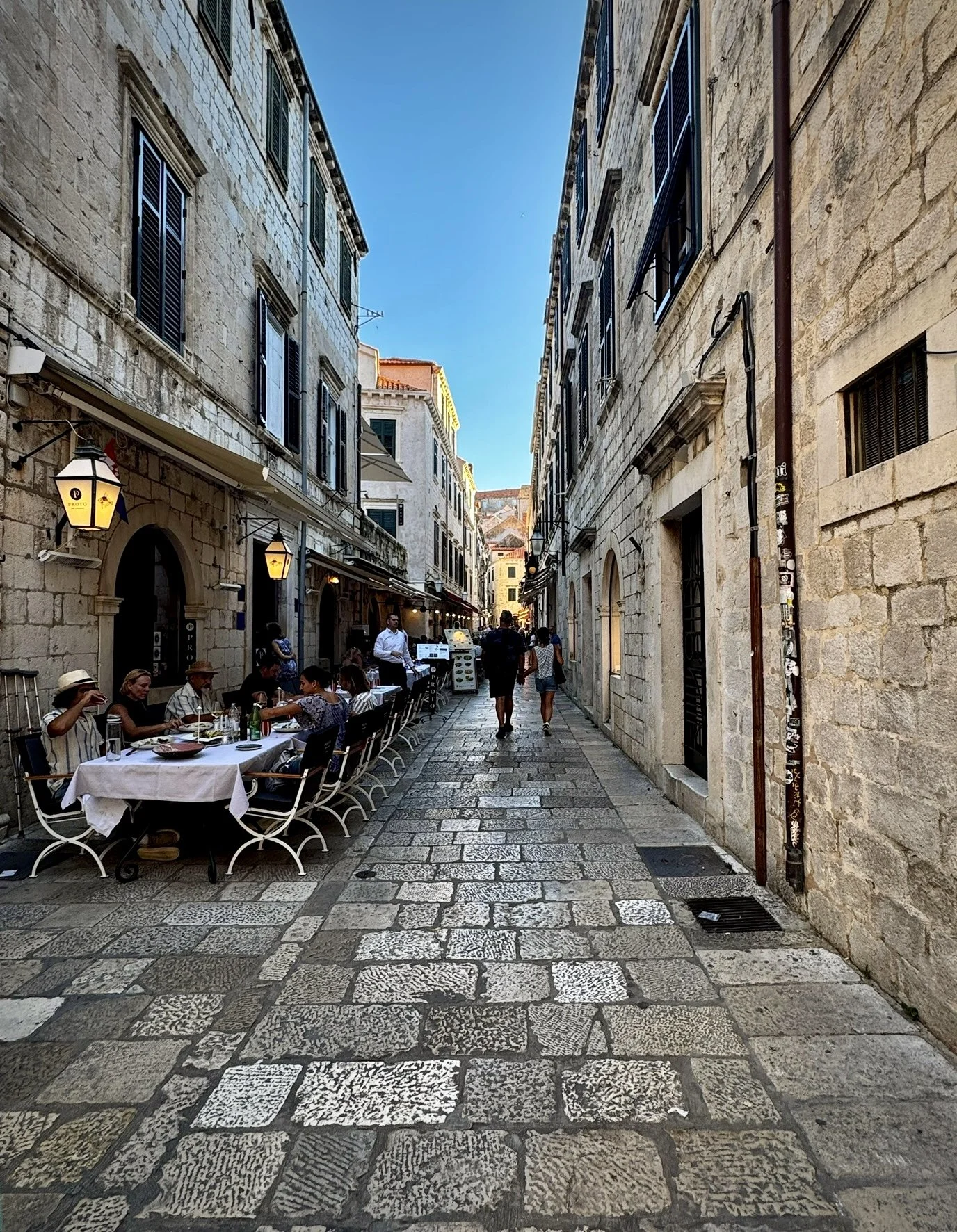
This was my first visit to Dubrovnik and I was surprised that old town was so compact. I had assumed it was a sprawling city, but it was small with a large pedestrian street in the center and narrow streets leading away from it. It was entirely charming.
I’d purposely booked a GuruWalk tour around sunset to take advantage of the cooler temps and by the time we met our guide at the Pile Gate, the weather was perfect. GuruWalks are tip-based walking tours led by local guides. You reserve a tour online, enjoy the tour and then pay what you think is appropriate. It’s a little ambiguous and sometimes that makes me anxious, but a good rule of thumb is 10 Euros per person, if you were satisfied. When I travel, I like to use a GuruWalks as an inexpensive complement to shore excursions or more traditional tours offered by a company. In our case, we lucked out because our guide, Verdan, was excellent.
The city was lively, but it never felt hectic or particularly crowded. There were plenty of tourists like us, but what surprised me was how many locals were out enjoying the evening too. Kids played in the squares, people dined at outdoor tables that spilled into the alleys and groups of teens roamed the streets. We stuck around to watch some of them attempt the Maskeron challenge and our teens tried too. (The challenge is balancing on a small gargoyle that juts a few feet above the street and turning around while doing so.) It was altogether lovely and made Dubrovnik feel like a lived in city, not just a tourist destination.
As we walked, Verdan told us about Dubrovnik’s history. The city dates back to the 7th century; Dubrovnik later became the republic of Ragusa, an independent maritime republic that lasted for centuries. The building’s red roofs, marble buildings and polished stone streets were ridiculously charming and photogenic and my photos don’t do it justice.
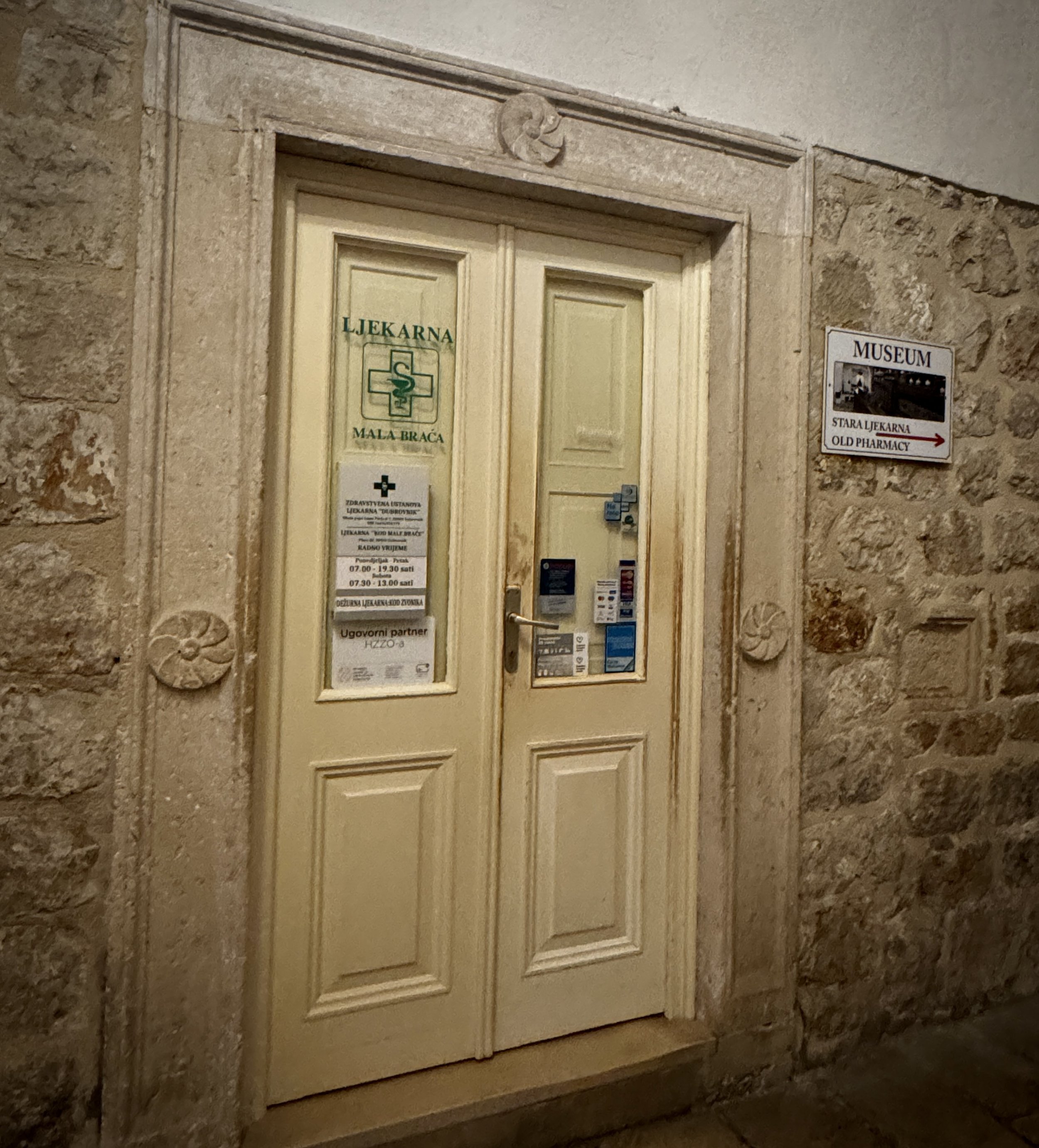
We passed the Franciscan monastery and the one of the world’s oldest continually functioning pharmacies that dates back to 1317! I was sad that it was closed for the day. I’m a sucker for a good overseas pharmacy!
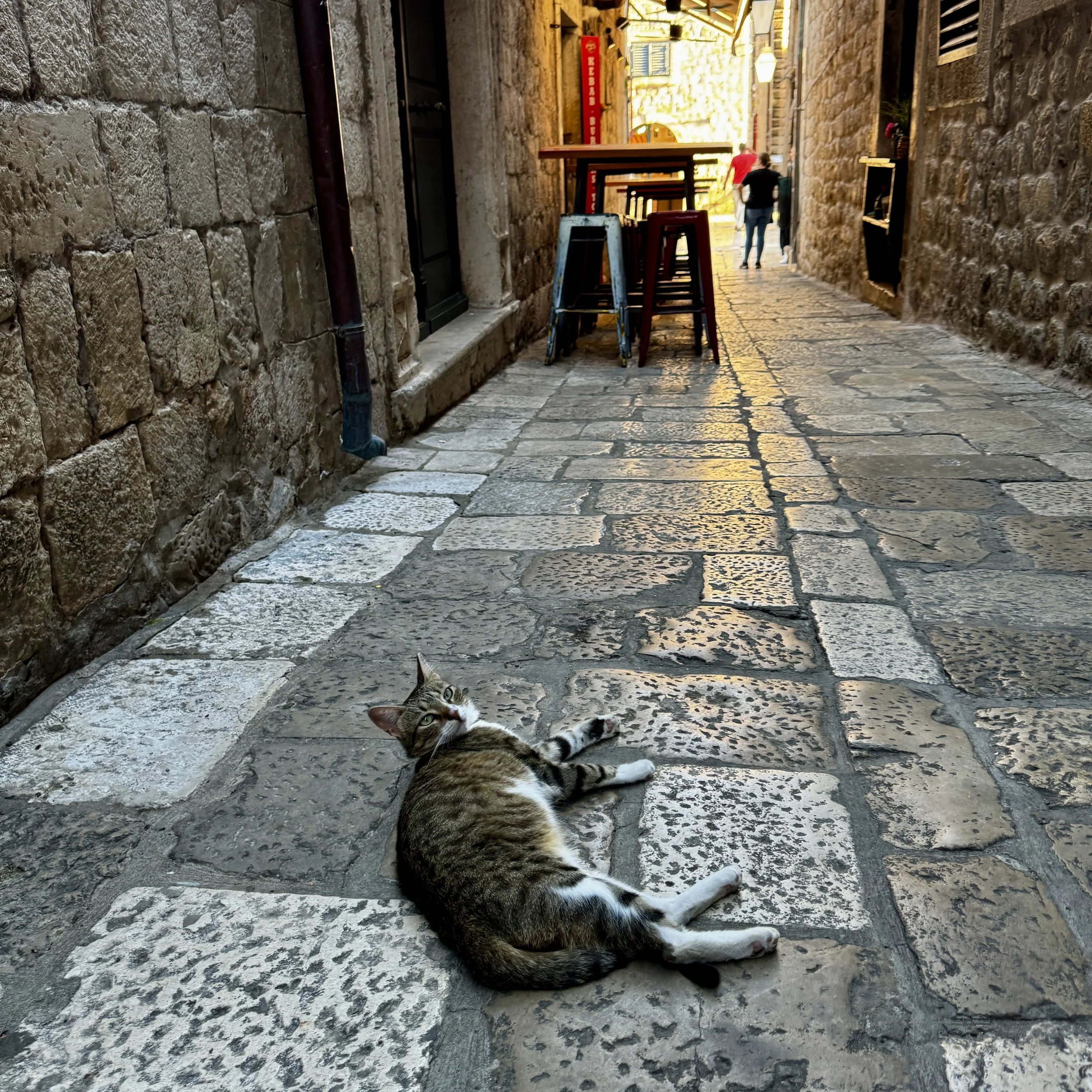
Mostly though, Dubrovnik was the kind of place where you could be perfectly happy wandering the streets, stopping for a meal or better yet, a gelato and people watching. It was hard not to follow every little side street that led off the Stradun, the main pedestrian zone. We finished our tour in the harbor just outside the Ploce Gate.
Overnight, our ship sailed south to tiny Montenegro. Originally the cruise itinerary was supposed to navigate through the Bay of Kotor, passing picturesque towns and countryside along the way. But — that stop was changed a few months before departure to Bar, the main commercial seaport in this tiny nation.
Keep in mind, that when you book a cruise, you are agreeing that the company has the right to change ports, drop ports or rearrange the schedule. Sometimes civil unrest makes a port dangerous, too many ships end up being scheduled for a port and there’s no room or sometimes it’s just a mystery!
I was bummed, but I started researching ways to enjoy our time in Montenegro. Montenegro is on the Adriatic and has quite a few neighbors; Albania, Croatia, Bosnia and Heregozina, Serbia and Kosovo all touch its border, and it became independent in 2006. It’s about the size of Connecticut and has a population of around 600,000.
There were quite a few cruise excursions offered through NCL, but we opted to DIY our day in Bar. One of the things I love most about traveling is finding unusual places off the proverbial beaten track. Places where the signs aren’t in English, you aren’t surrounded by other tourists and you have to figure things out as you go. Google Maps, online research and other people’s blogs have been my go-to for many years. I love piggybacking on other people’s fun.
During my research, I came across an old town called Stari Bar, an easy taxi ride from the port. When I realized Stari Bar didn’t have a website, I was hooked.
Here’s what I discovered. Stari means old in Montenegrin so Stari Bar is “Old Bar.” It’s a very old city, with walls dating back to the 11th century and is littered with Venetian and Ottoman ruins. The location, about 4 km from the port, gave the residents of Stari Bar some protection from invaders from the sea. Over time, the area’s settlement trends changed and people began relocating to areas closer to the sea. Damage from the Montenegrin and Ottoman war in the 1800s helped to hasten the demise of the city. Today, Stari Bar has the semblance of a living museum with very limited restrictions as far as access or rules. I could tell I’d enjoy it.
My sister, mother and I headed would head to Bar, while the boys relaxed on the ship. (Because Bar is a working commercial port, you can’t simply walk off the ship and into town. NCL provided a free shuttle service that wound its way through a very depressing warehouse district. I’ll be honest…. it was a very unassuming start.
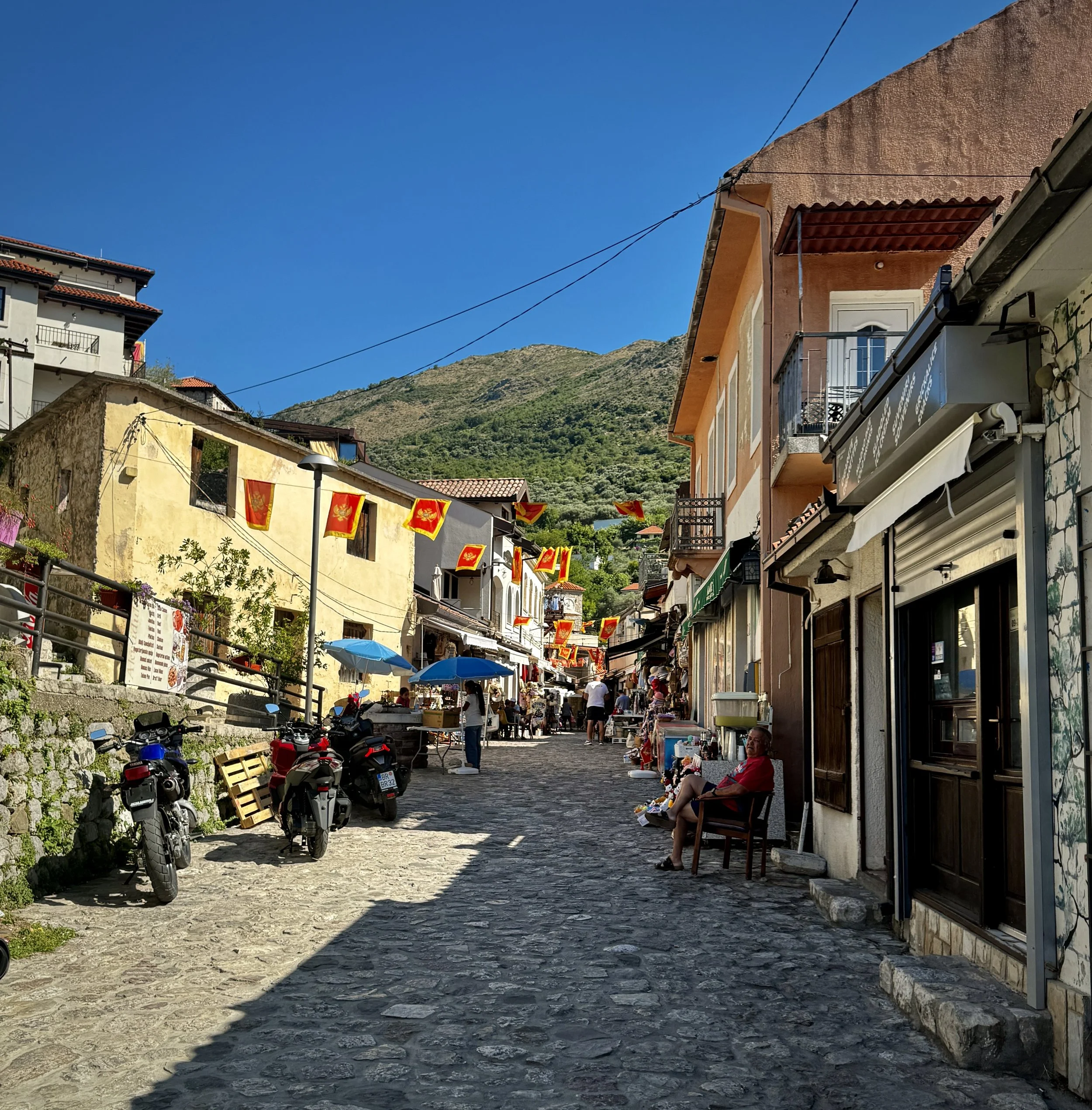
We easily found a taxi, which dropped us at the base of a stone, pedestrian walkway that led uphill.
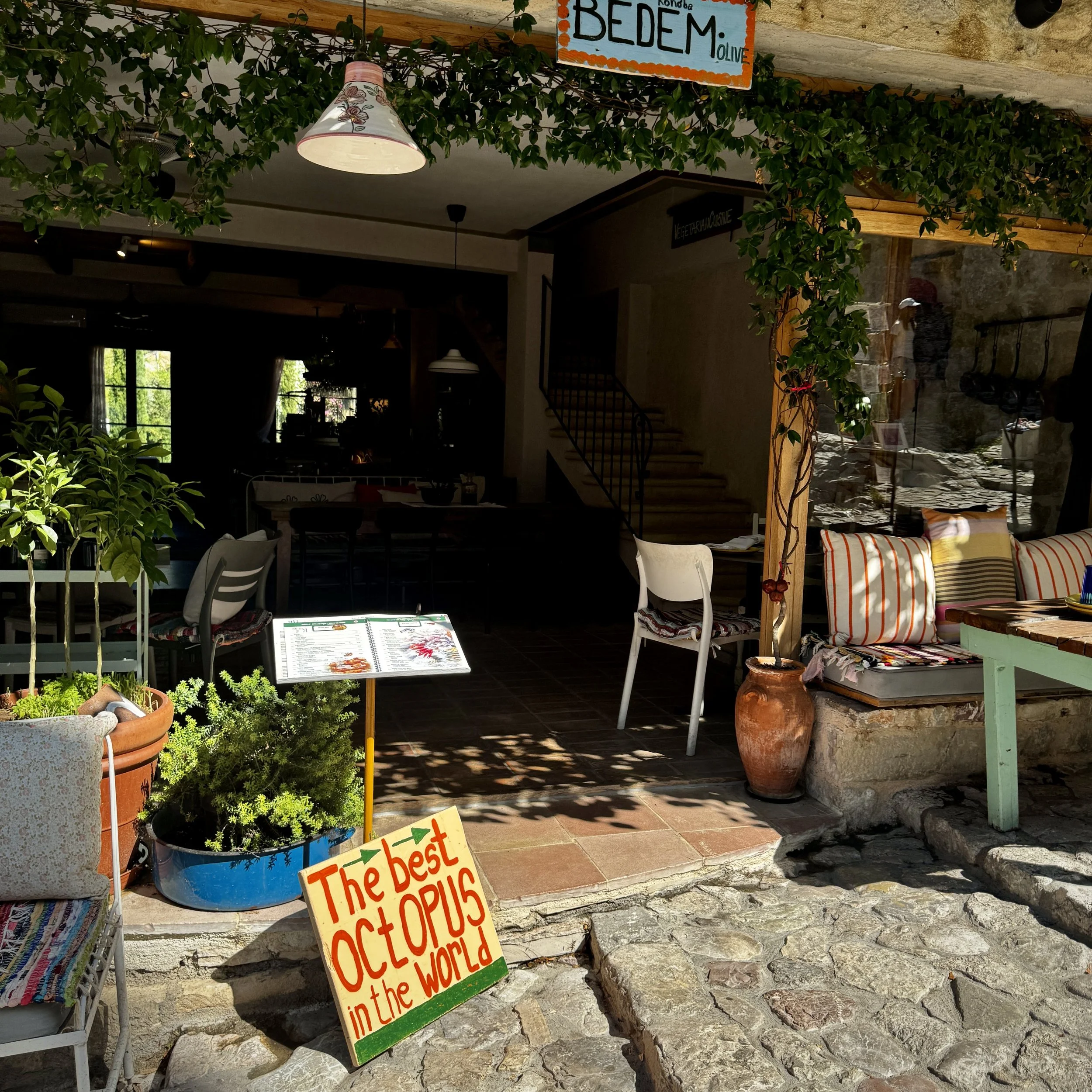
Small shops selling touristy trinkets and local goods along with little cafes lined the way. Since it was July, the flowers were in all their glory and the effect was incredibly charming. Hand lettered signs like “The Best Octopus in the World” added to the charm and reinforced the idea that we’d left many of our fellow passengers behind.
It was refreshingly rustic….
We shopped a bit along the way. I found one of my favorite souvenirs, a lavender sachet, and a hat to replace the one I’d helpfully left at home. Even though Montenegro is not part of the European Union, they use euros and everything we bought we paid in cash.
If we’d had more time, I would’ve loved to sit at one of the cafes lining the street and have a cup of tea.
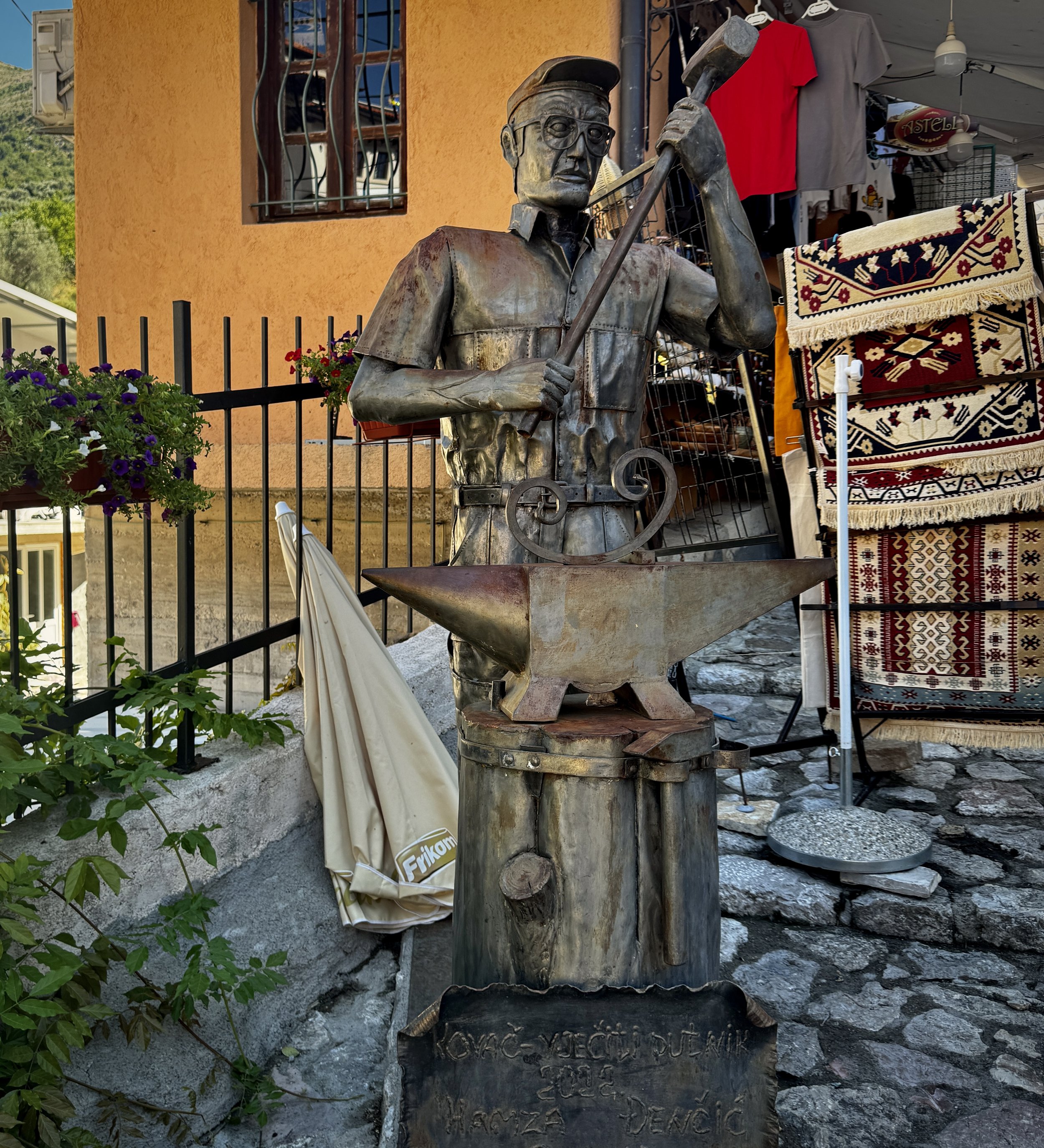
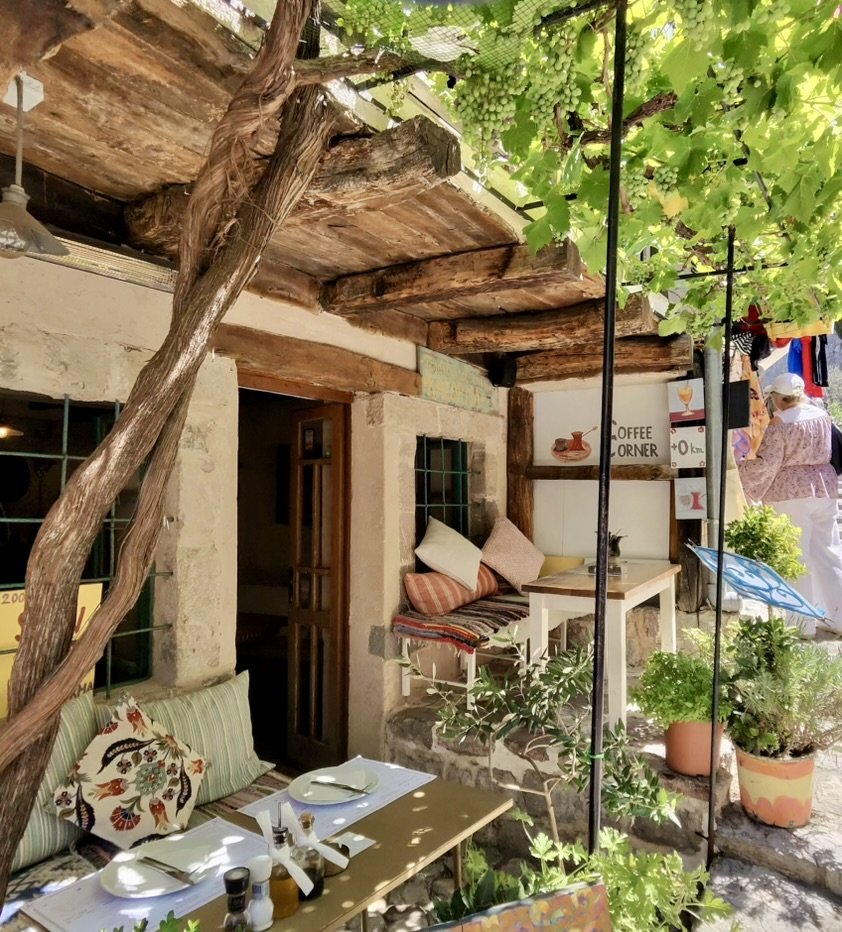
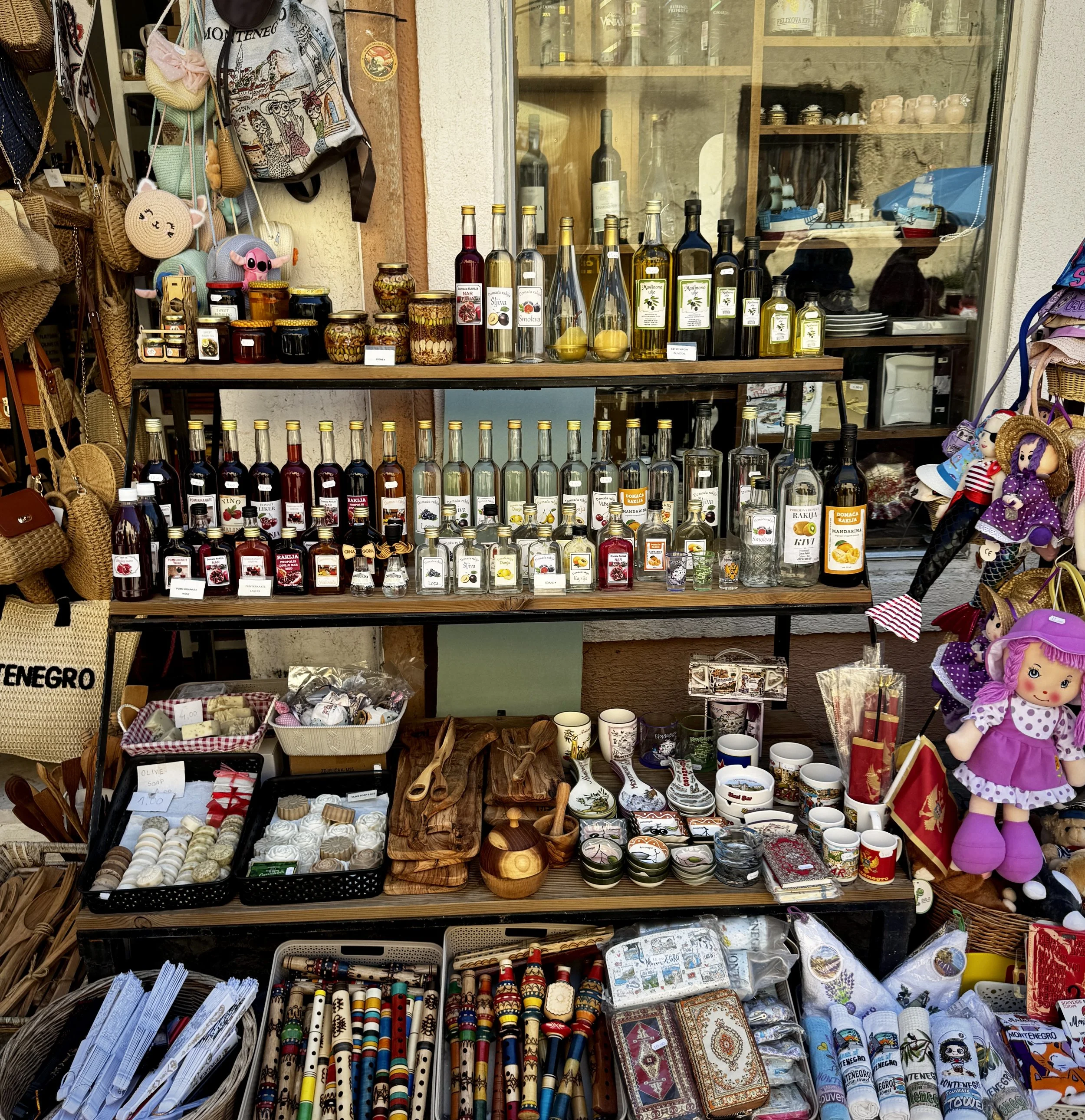
It took us about 20 minutes to amble uphill to the entrance to Stari Bar, where we paid €5 for admission and collected a map. At first, we tried to follow the map to locate particular buildings or sites, but soon gave up and gave in to the charm of poking around through the ruins. The old town is spread over 11 acres and filled with the remains of churches, homes, fortifications and other buildings from its 10 centuries of inhabitation.
And wandering was really the best part. There weren’t ropes everywhere telling us where we could or could not go or signs warning us not to climb on things. We wandered through doorways, clambered over rocks and followed paths that meandered out into other areas. Coming from the U.S. where we’re used to historic sites with lots of ropes and rules, the freedom to explore was a little surprising. The general attitude seemed to be: climb, wander, explore — just don’t be an idiot and be respectful.
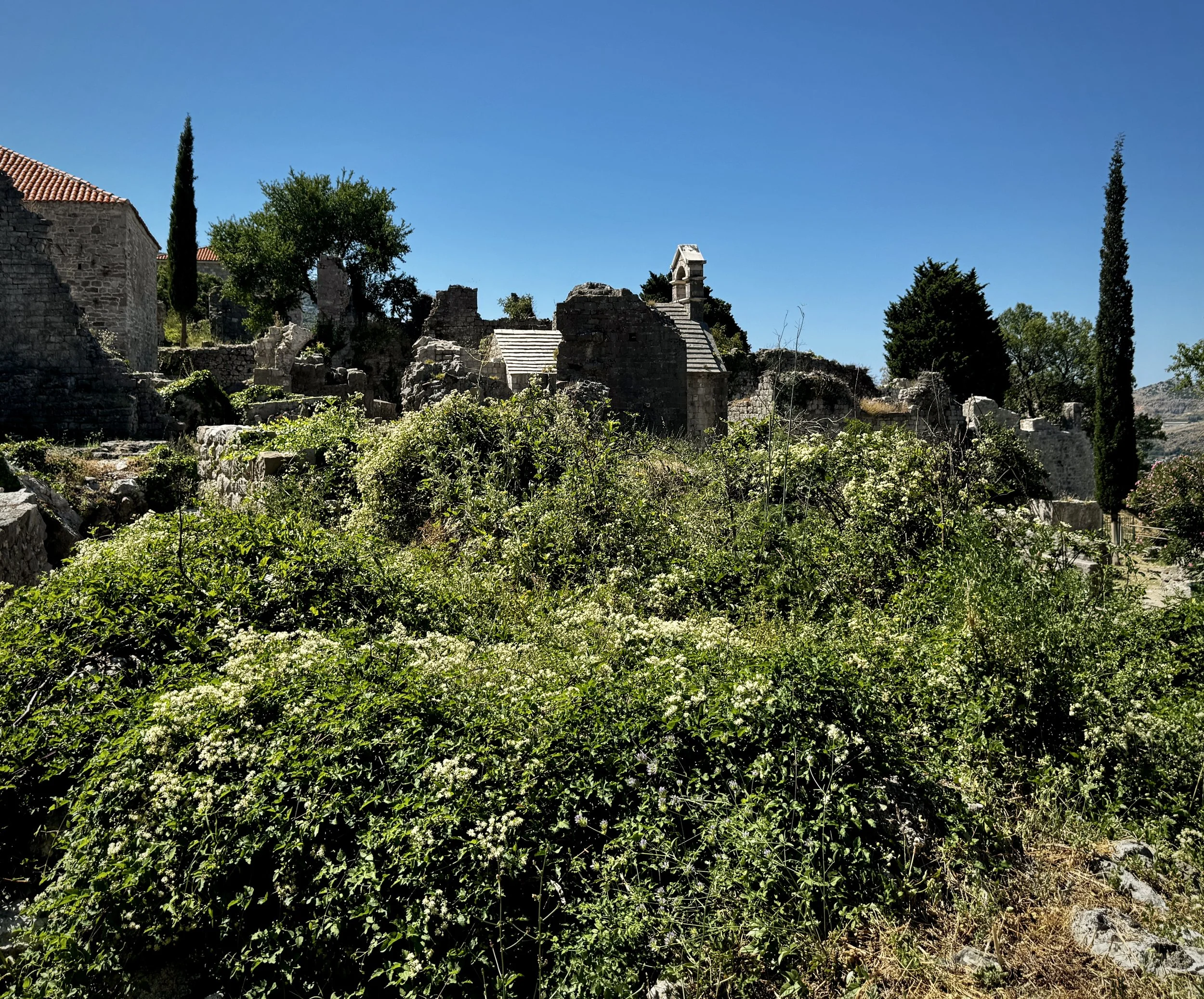
Every so often, we’d come across something that reminded us that it had been a busy, well-loved town — faded frescoes on a monastery wall, doorways leading into other areas and staircases that led to the sky. There were even modern black lamp posts scattered throughout that made me think of Narnia. Also, nature seemed to be reclaiming the town, giving it a dreamy atmosphere.
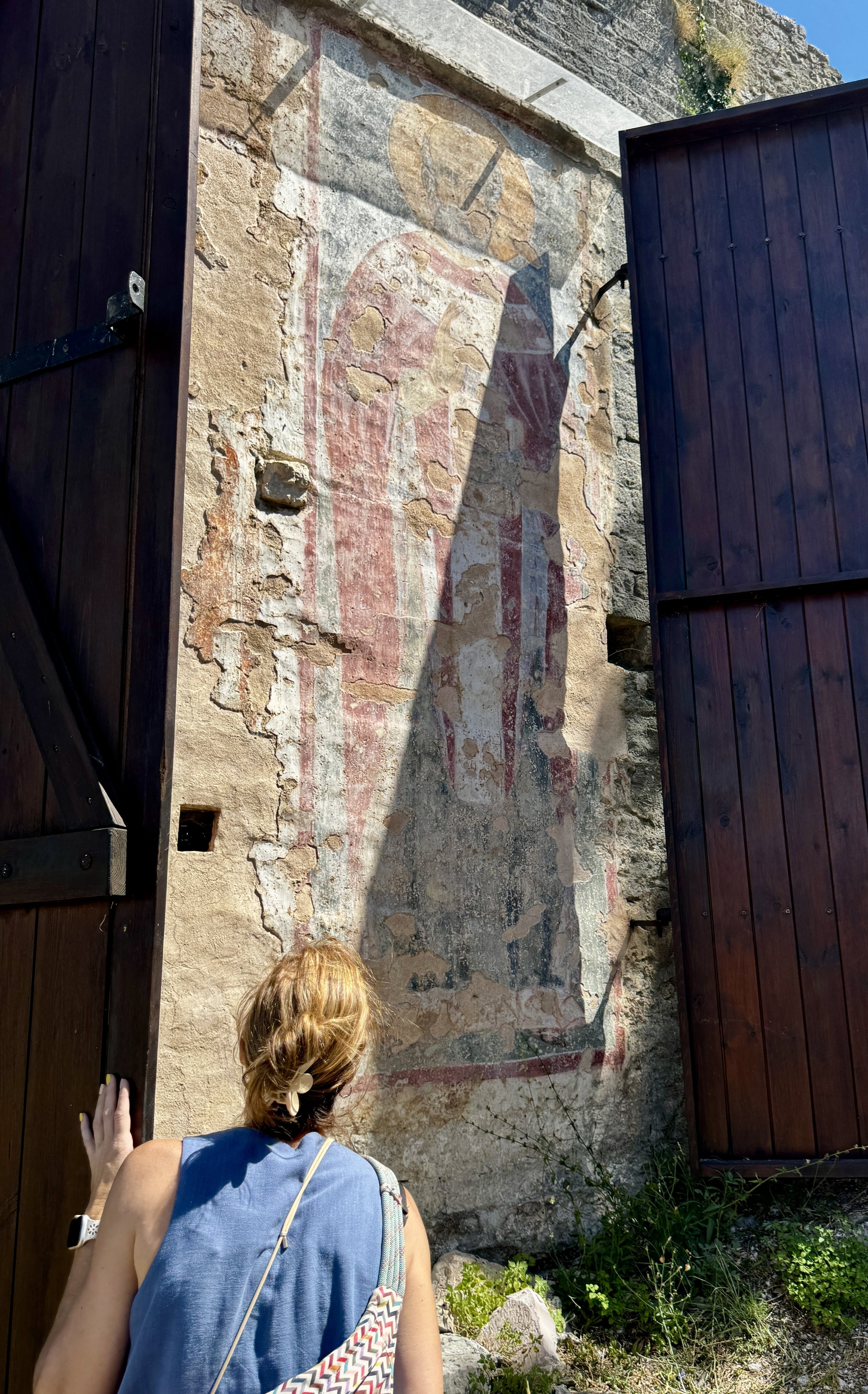
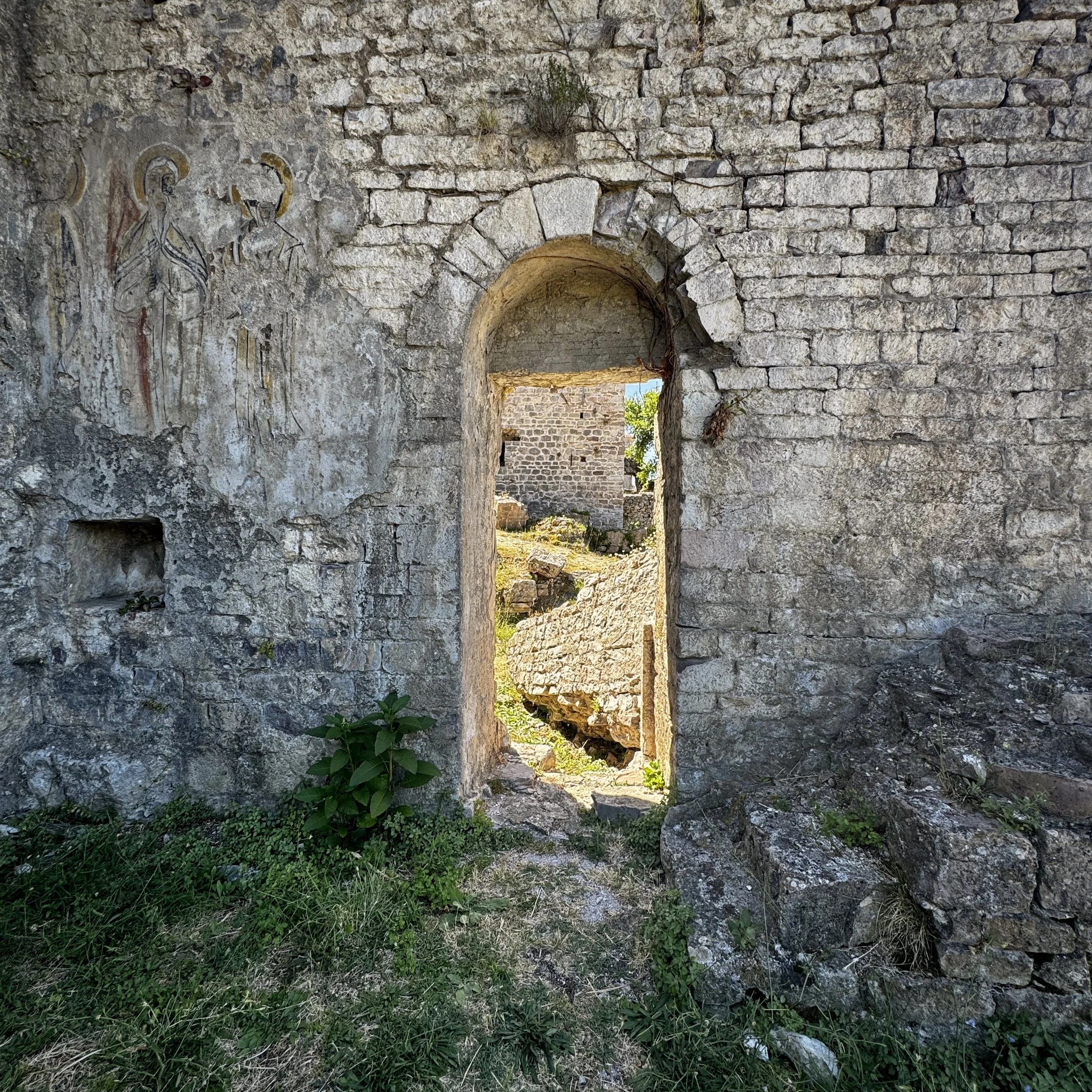
And then we’d stumble upon something like the medieval frescoes we saw on the walls of an ancient church.
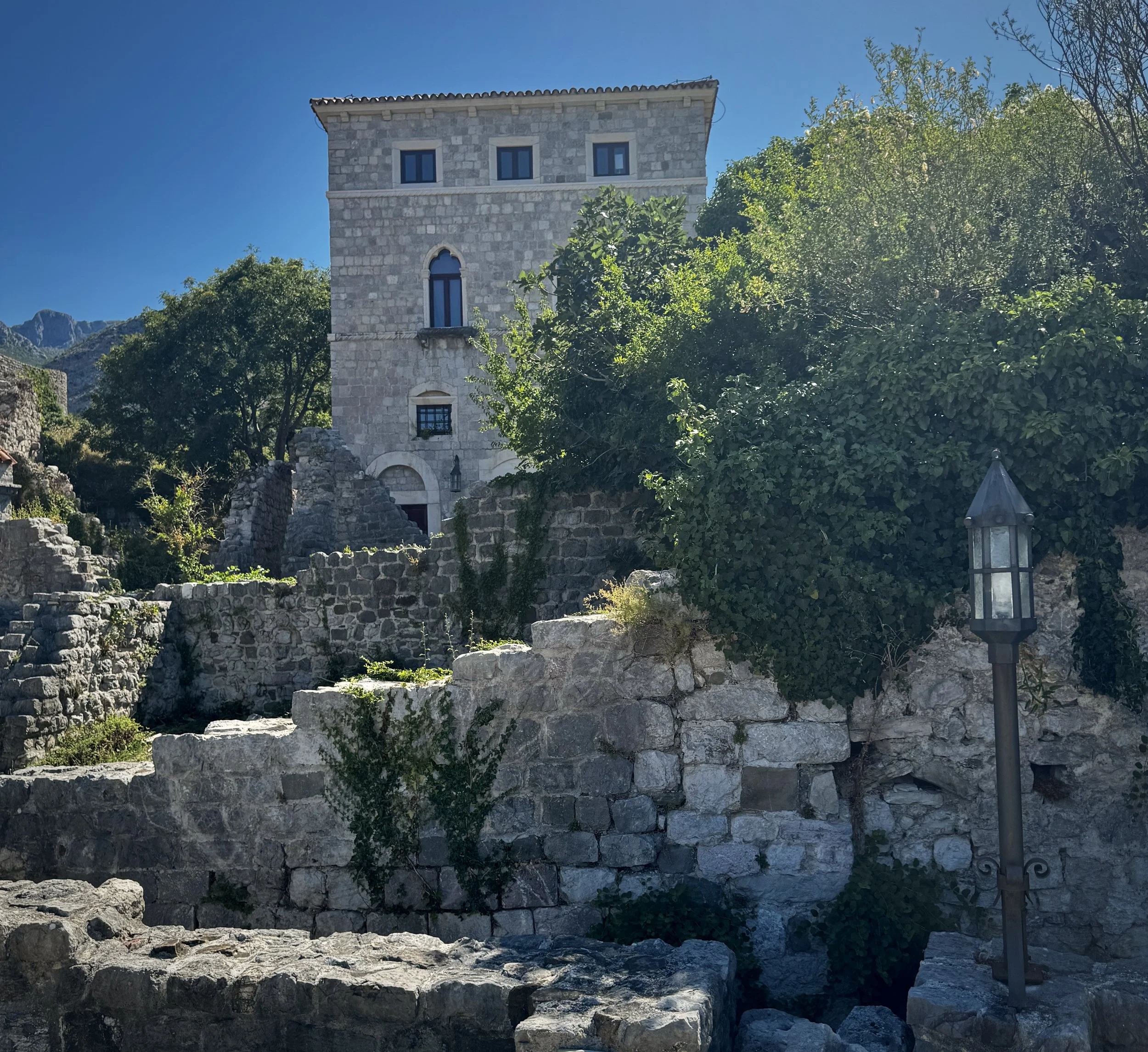
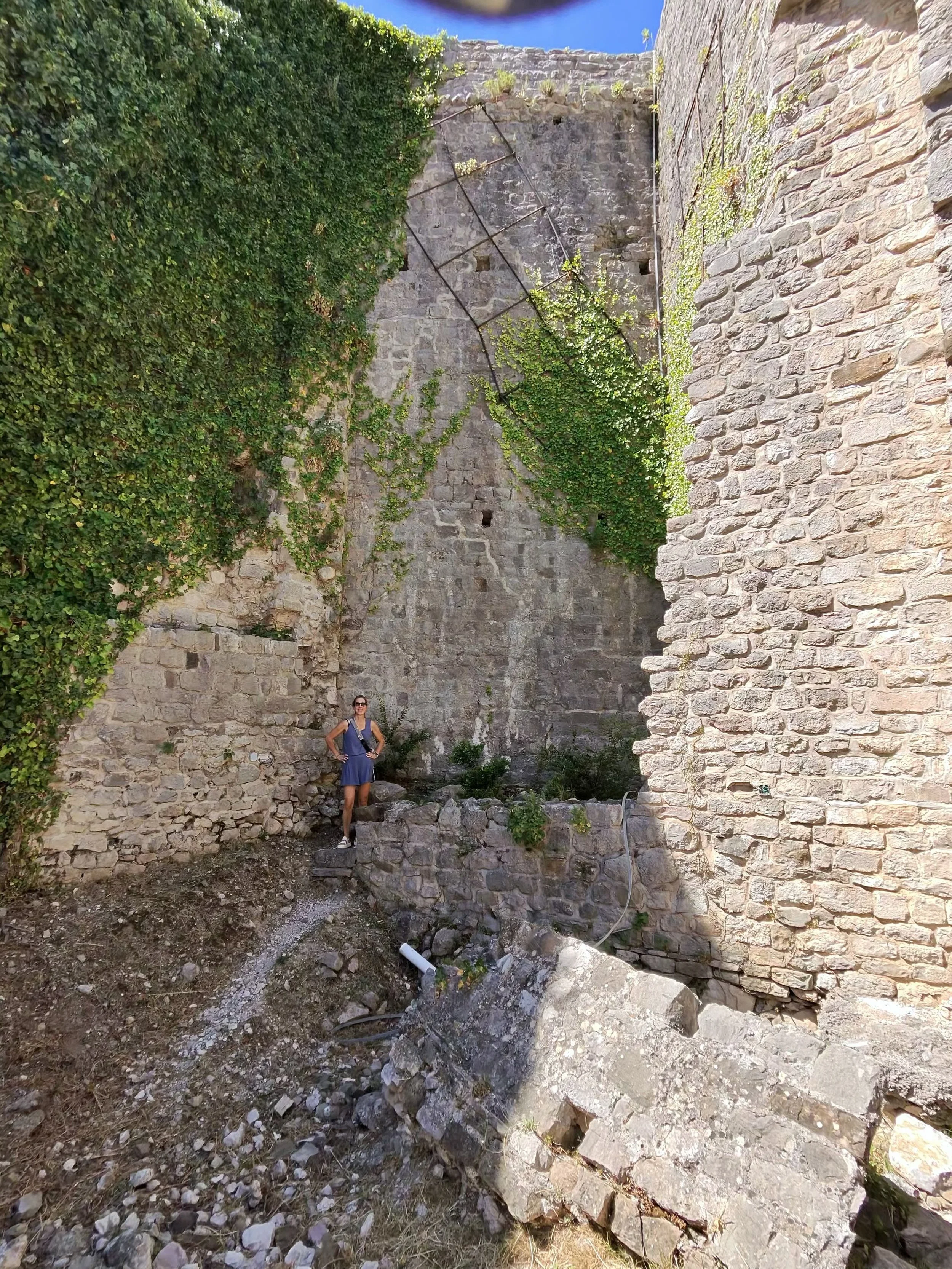
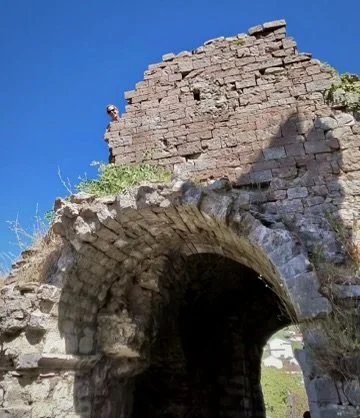
We quickly stopped trying to figure out what everything had been and just wandered — it was so much more fun.
After a relaxing morning exploring Stari Bar, we headed back to the ship, met the boys, ate a quick lunch and headed back to Bar. This time, we were headed to the beach.
As I mentioned earlier, we love a good rock or pebble beach, but in Montenegro I learned there were limits to that love. Our group wanted to spend some time relaxing at the Šušanj Beach, located just north of Bar. Once again, we headed to the taxi stand just outside the port entrance and I showed the driver the Google Maps location I’d save on my phone. Montenegrin is the official language, but many people speak English. But still, having a screenshot of exactly where we wanted to go helped. This is one of my favorite travel hacks!
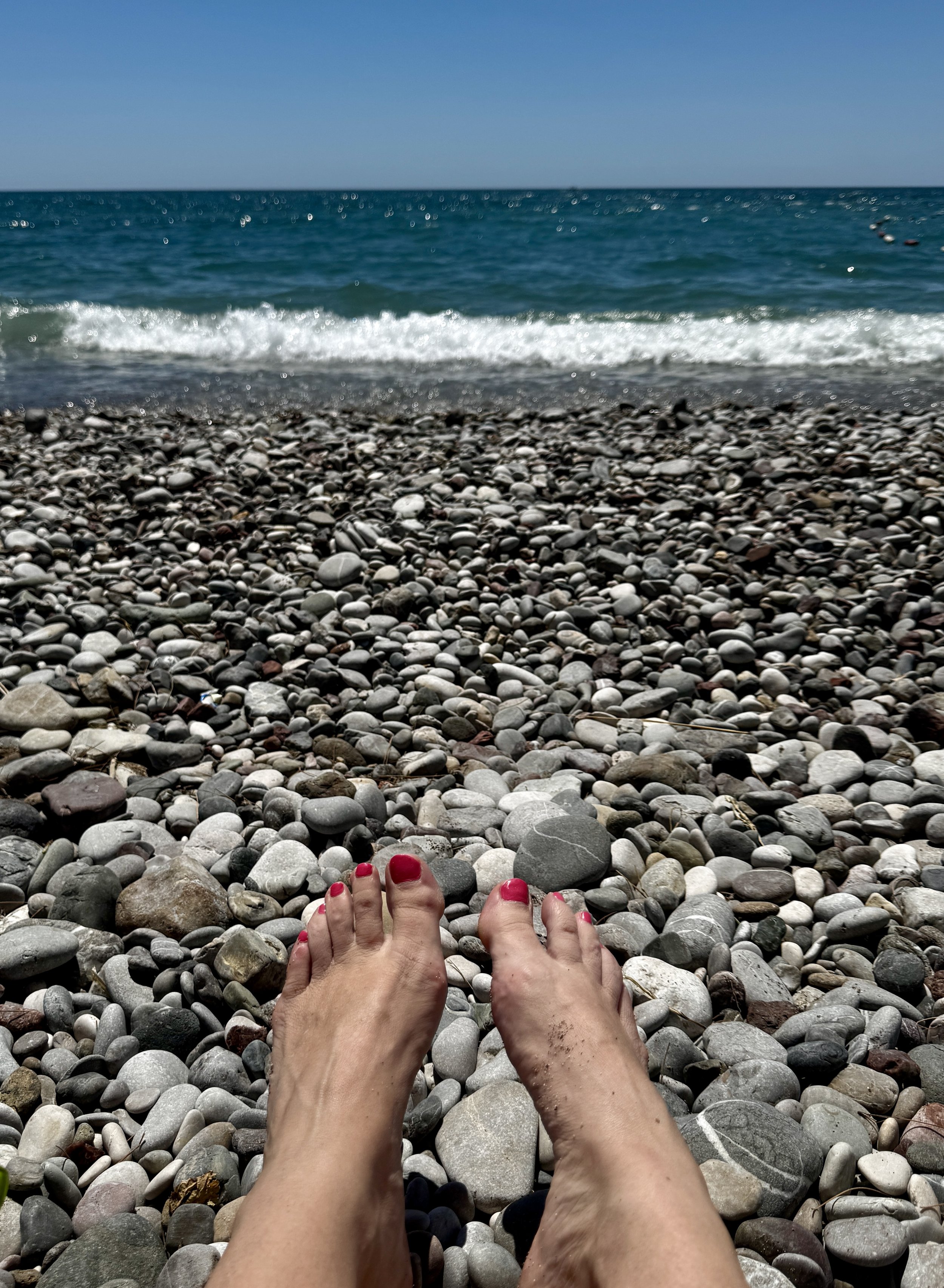
Šušanj is a true pebble beach and those rocks HURT! Everyone else had water shoes and no problem getting into the Adriatic. Mine unfortunately were back on the ship. I tried going barefoot, but didn’t get far. Then I tried wearing my almost flat sandals, which was even worse. The sandals kept shifting on the rocks and I was twisting my ankles like a little girl wearing heels.
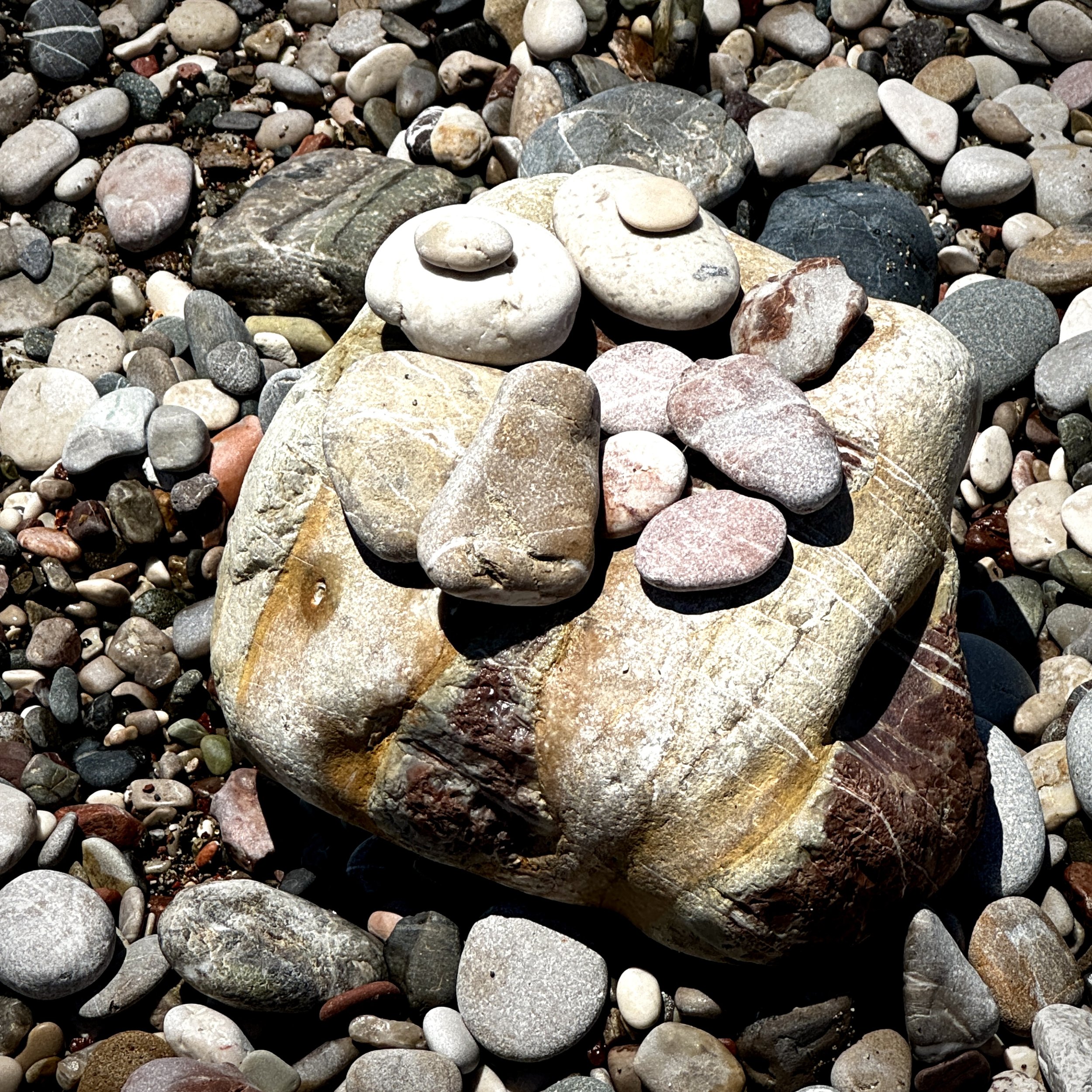
Eventually, I admitted defeat. Everyone else went swimming while I sat on the beach and combed through the rocks instead. Lesson learned: when visiting rocky beaches in Montenegro, bring water shoes!
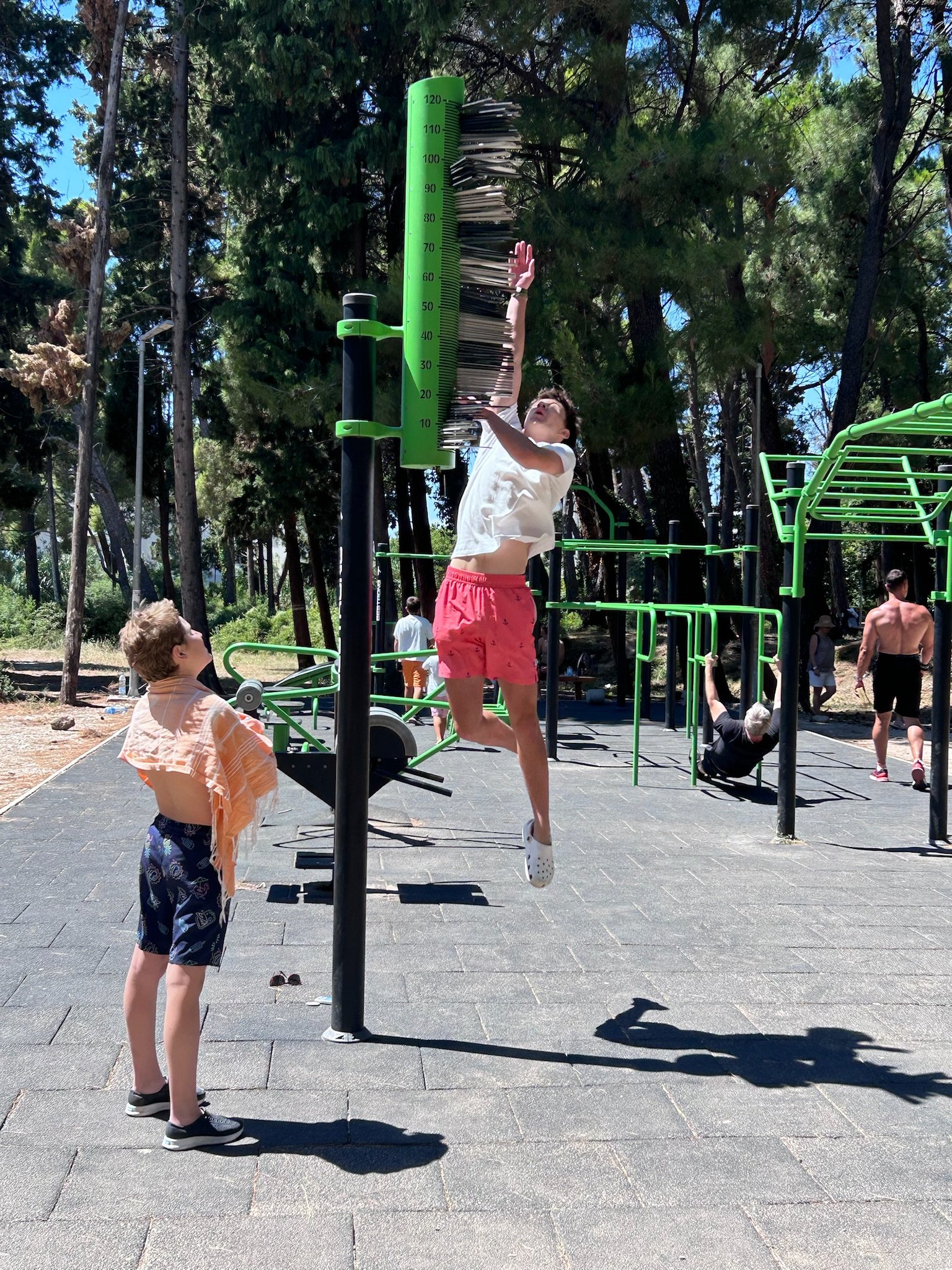
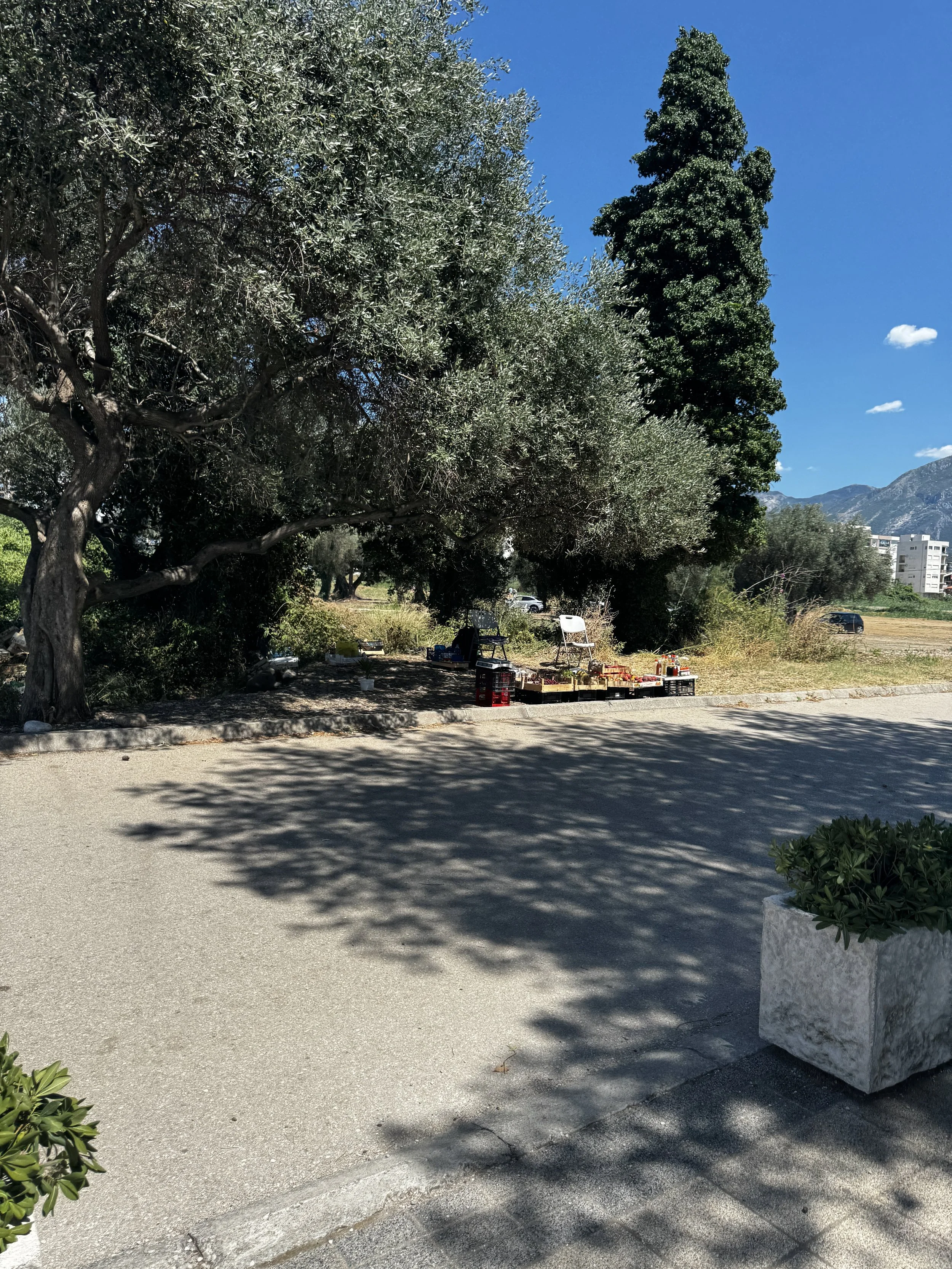
Rather than taxi back, we decided to hoof it and I’m glad we did. It was an easy walk and gave us a glimpse of everyday life in Bar that we would’ve missed from the cab. We passed tiny beachside restaurants, kids playing soccer, a random outdoor gym and small stores tucked into what looked like private homes. We passed people selling fresh produce from makeshift stands under the trees. It was a Sunday so there weren’t many tourists around and I loved seeing this “real” version of Bar.
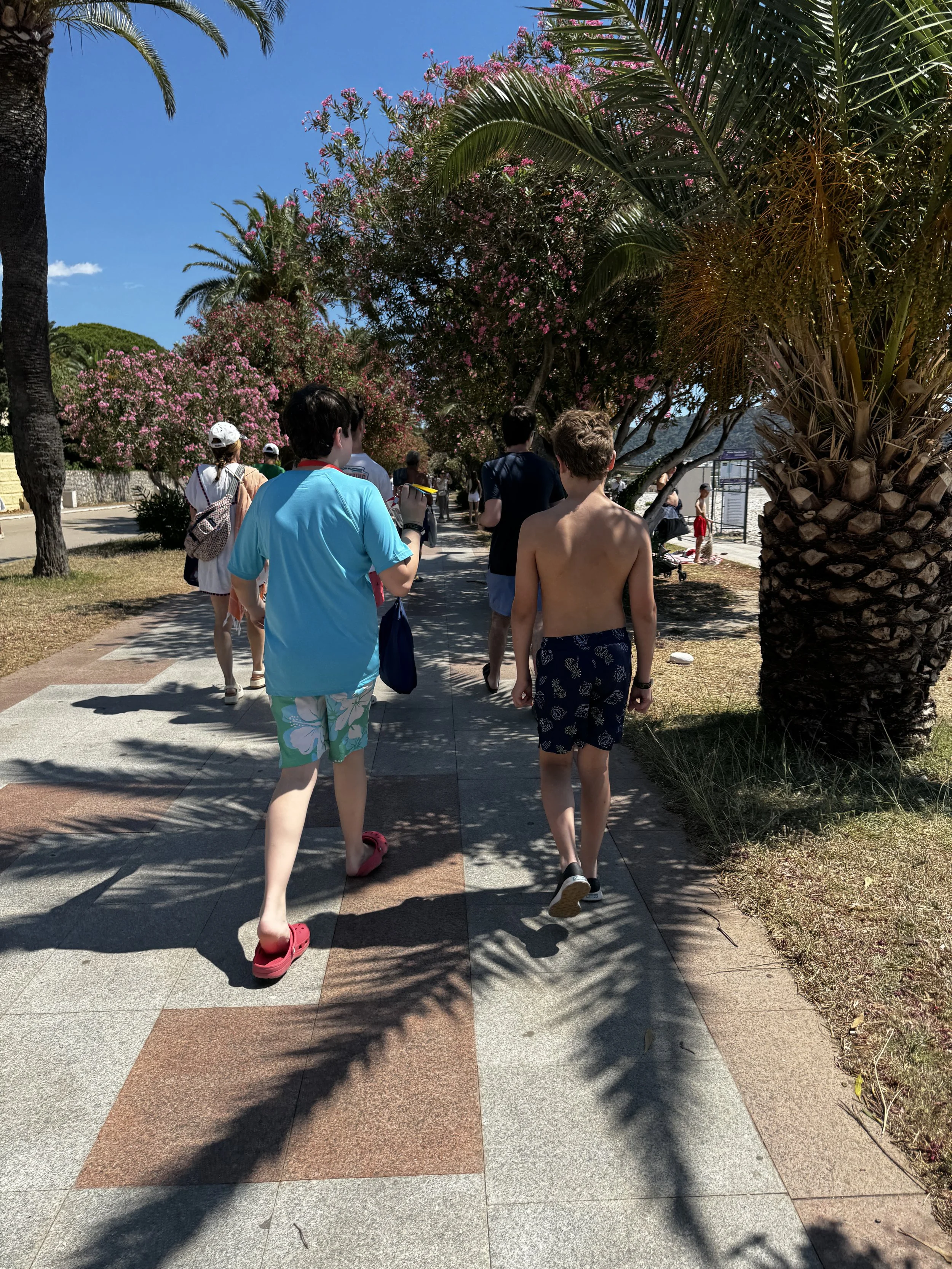
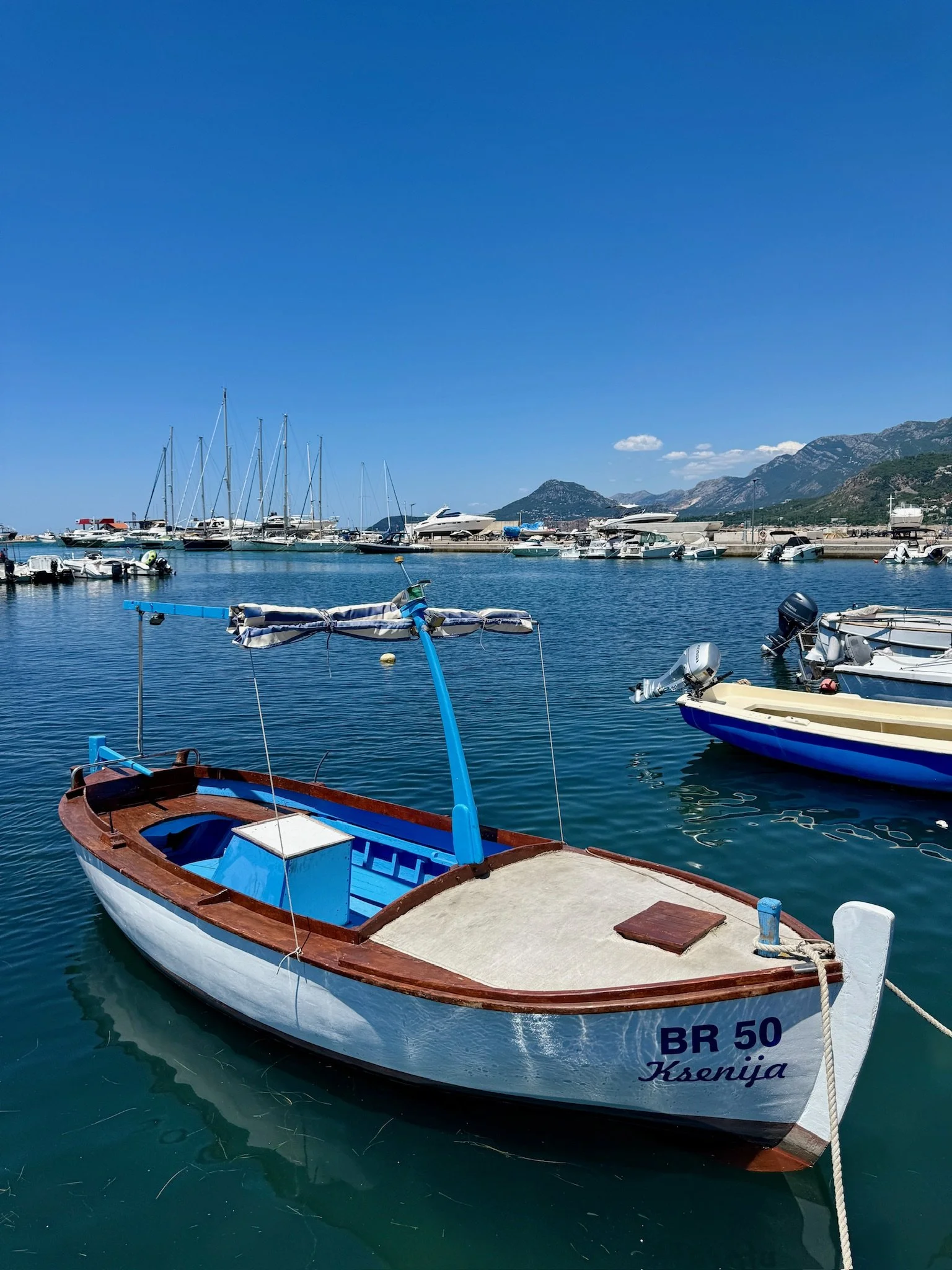
Eventually the promenade brought us along the marina, with fishing and small sailing boats bobbing in the water and the mountains rising behind them. It was a pretty ending to a day in a port I hadn’t been particularly excited about in the first place.
Dubrovnik and Bar couldn’t have been more different. Dubrovnik was busy, beautiful and instantly recognizable — exactly the kind of port you’d expect on a Mediterranean cruise. Bar was a port we’d never planned to visit.
In Dubrovnik we wandered the old streets and I finally got to see a place I’d wanted to visit for years. In Montenegro, we visited the ruins of a nearly forgotten town, shopped along a cobbled street, attempted a swim at a local beach and walked back through the city where everyday life was happening all around us.
I wouldn’t choose one experience over another. That’s what I loved about our cruise. Dubrovnik was the port I knew I wanted to see. Bar was the one I didn’t know I wanted to see.
And maybe that’s one of the best things about cruising. Sometimes the famous port lives up to its hype. And sometimes the “replacement” port you were disappointed about turns into the place you’re still talking about when you get home.